17 Sage Wedding Table Decor Ideas
The eucalyptus was wilting by 4 p.m. That was the moment I realized sage wedding decor isn’t just about picking a pretty color—it’s about choosing greenery, linens, and centerpieces that hold up under July sun and champagne toasts. Sage green has quietly overtaken dusty blue and blush as the reception palette of the moment, and for good reason. It flatters every skin tone in the wedding photos. It plays well with gold, cream, terracotta, and even moody plum. Ahead, seventeen table decor ideas that lean into sage without tipping into “prom night 2004″—from velvet runners and taper candles to pressed-herb menu cards and the one centerpiece trick florists swear by.
Go All Green With the Centerpiece
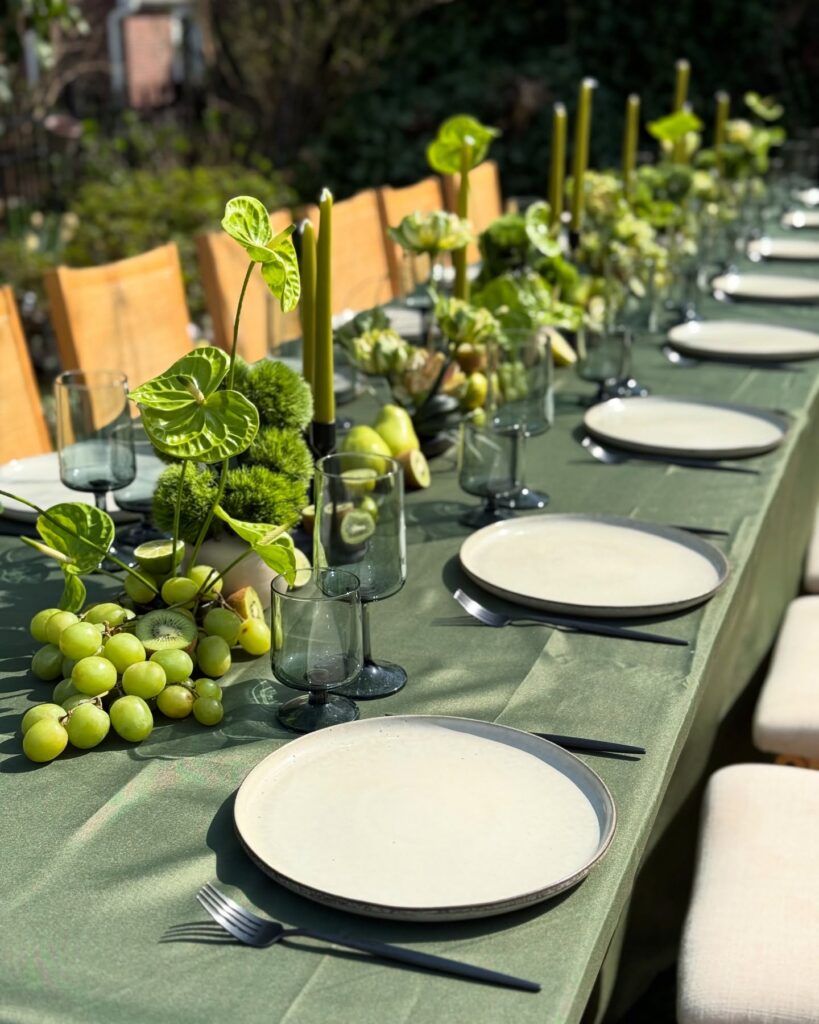
Mixing anthurium leaves, green grapes, kiwi halves, and round chrysanthemums along the runner is what makes this work — everything is green, so the variety in texture carries the whole thing without it looking scattered. The olive taper candles in black holders tie into the same palette without being matchy. If you can’t source anthuriums, large hosta or tropical philodendron leaves get you to a similar place.
Dark smoked glassware and matte black cutlery are doing a lot of the heavy lifting here against that sage linen, so don’t swap those for silver. This suits someone who wants drama without florals that read as formal. Fruit as decor is genuinely underrated — it fills volume cheaply and guests actually eat it after.
Sage Linen Runner
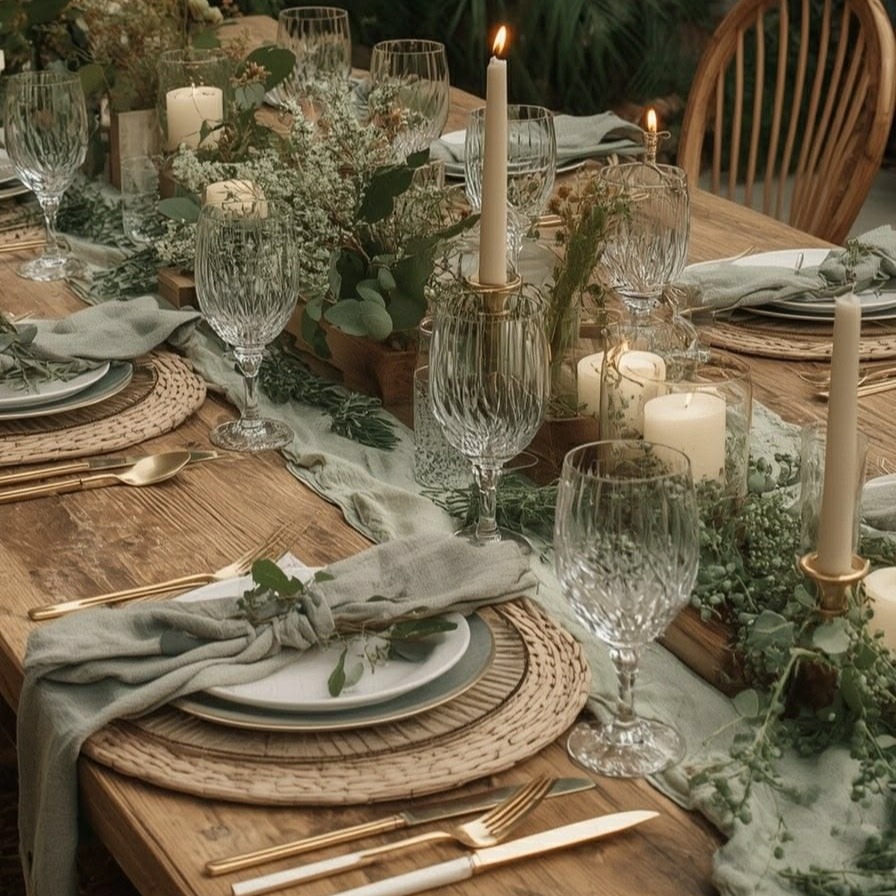
Let the sage runner sit a little loose instead of pulling it flat, because the folds make the plates, rattan chargers, and glassware feel less staged. Keep it narrow enough that guests still have room for cutlery and wine glasses without shifting things around all night. The candles can sit right on top, but use holders with a base so melted wax does not end up in the fabric.
Simple enough. If your tables are darker wood, this muted sage works better than a brighter green, especially with gold flatware and small bunches of eucalyptus tucked near the napkins. I’d skip oversized flower arrangements here, since the low greenery already does the job without blocking faces across the table.
Little Lampshades Down the Runway
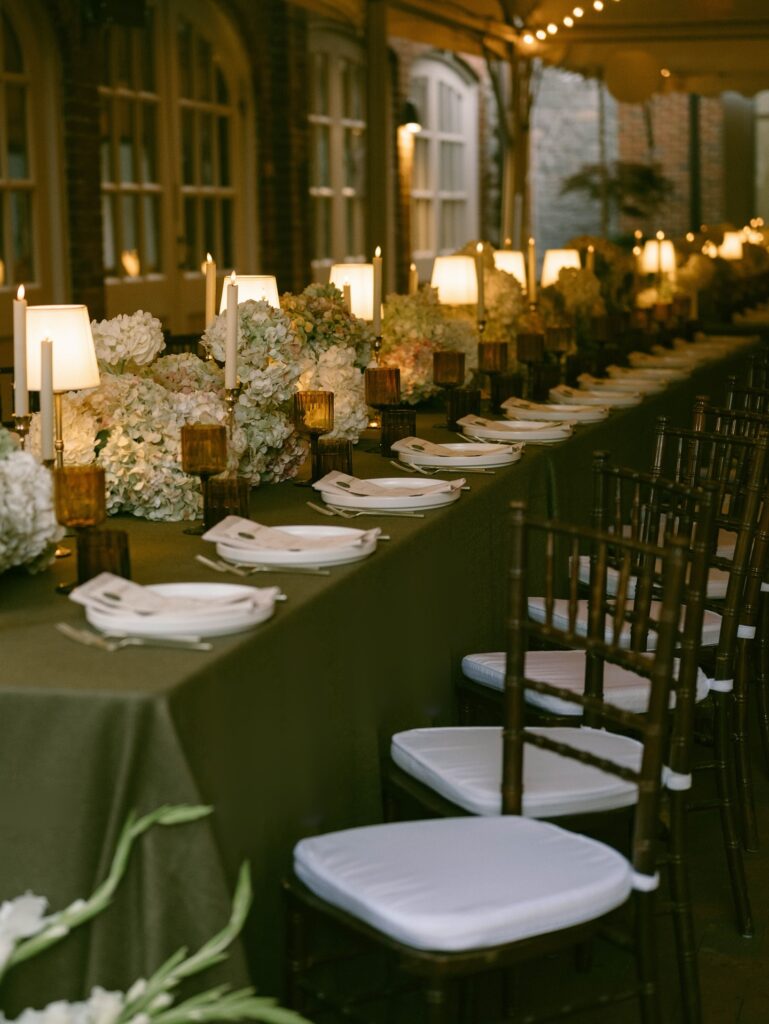
The taper candles get the credit but the real move here is the row of small shaded lamps running the length of the table. They sit low, just above the hydrangeas, and throw a pool of light onto each place setting instead of leaving everything to the string lights overhead. You’d need to rent them, and you’d need power — either battery packs or a very tidy extension cord taped under the linen. Worth asking your venue about before you commit.
The sage tablecloth reads darker under this lighting, closer to olive, which is something to know if you picked your linen in daylight. Pair it with cream hydrangeas and amber glass, like they’ve done here, and the green stops feeling springy and starts feeling like a dinner party.
Draped sage linen
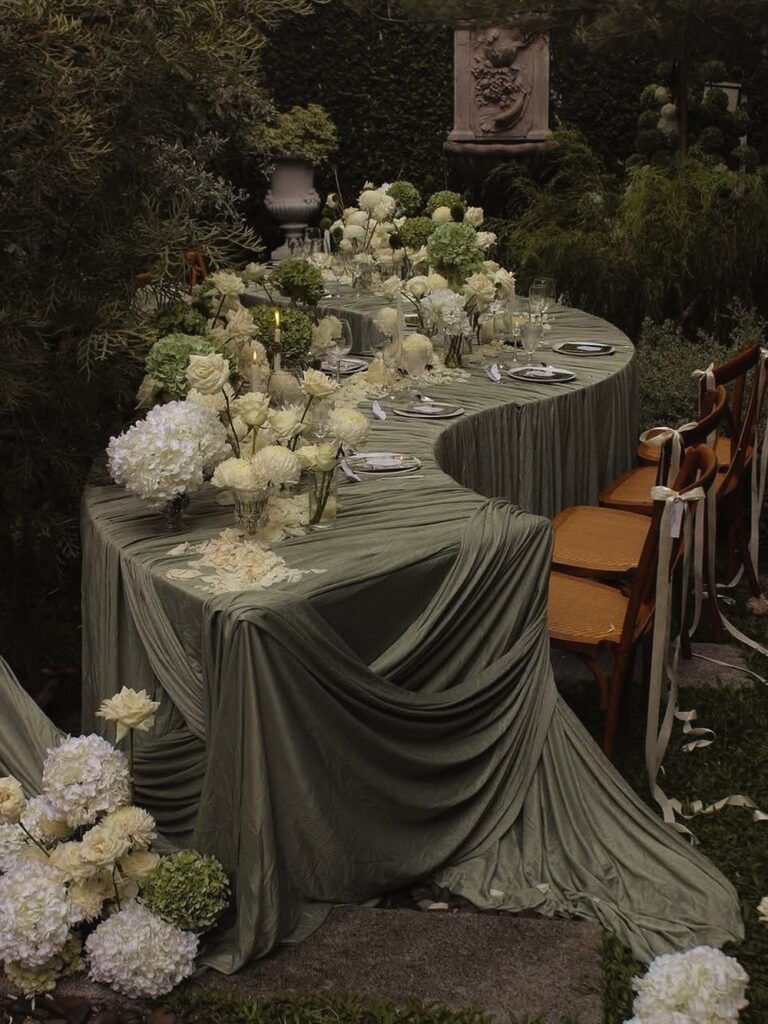
Start with the cloth. That sagging, gathered sage linen is doing most of the work here, so use far more fabric than a standard table drop and let it pool at the ends instead of pulling it tight. It suits a curved or serpentine table best, because the folds read better when the line of the table keeps moving.
Keep the flowers in the same muted lane. White hydrangeas, garden roses, and a few green pom-pom shapes break up the table without fighting the fabric, and the low glass vases stop the whole thing from feeling heavy. Less shine, more texture.
This one needs space. If guests are squeezing past chairs, the trailing fabric will get stepped on all night, so I’d only use this setup for a garden dinner with a wide path and a fairly small guest count.
Pink Taper Candles Against Sage Linen
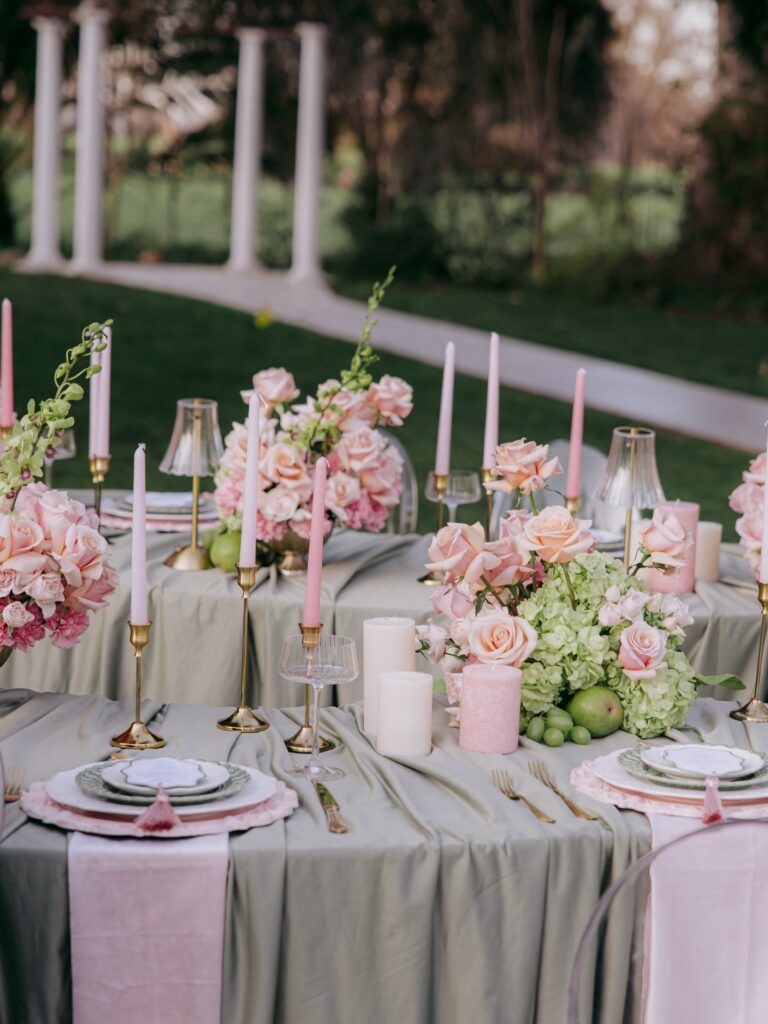
Tall pink tapers in gold candlesticks are doing a lot of work here. They pull the eye upward between the flower arrangements, which keeps the table from feeling flat even with those large low centerpieces taking up most of the surface. The sage tablecloth underneath is what makes the pink read as deliberate rather than just soft — without that contrast, the whole thing would blur together.
If you’re hiring a florist, ask them to tuck a few limes or green hydrangea into the base of the arrangements the way they’ve done here, because that green-on-green detail is what ties the cloth to the flowers. Pink napkins across each place setting close the loop. One thing worth knowing — this many candles and floral pieces is a significant budget line.
Scaling down to two centerpieces instead of four gets you the same color story.
Sage Cloth Base
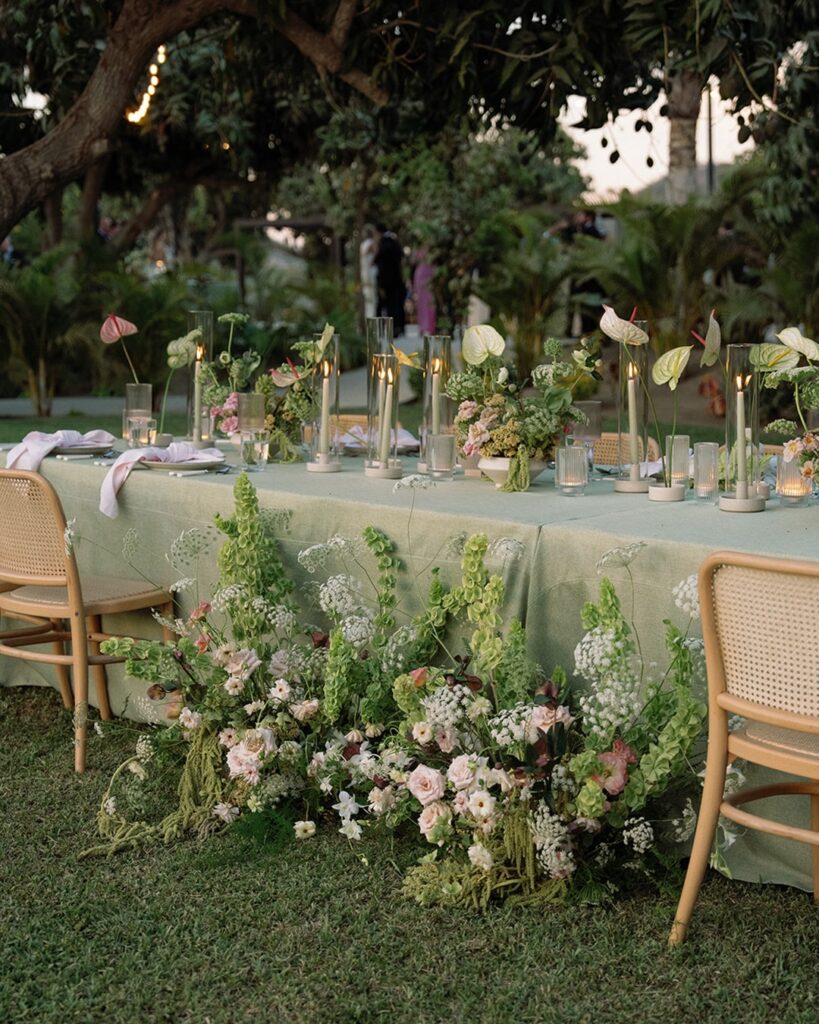
Let the sage cloth do most of the work here, especially if your dinner is outdoors with grass already under the table. Keep the candles in slim glass cylinders so the table still has height without blocking people from talking across it. That matters.
A few pale anthuriums in narrow vases will give the setting shape without needing huge centerpieces all the way down. I’d spend more on the flowers placed at the table edge and less on the middle, because that spill of greenery and pale blooms is what people will notice in photos. Cane chairs fit this look better than covered banquet chairs.
Knotted Napkins on Woven Placemats
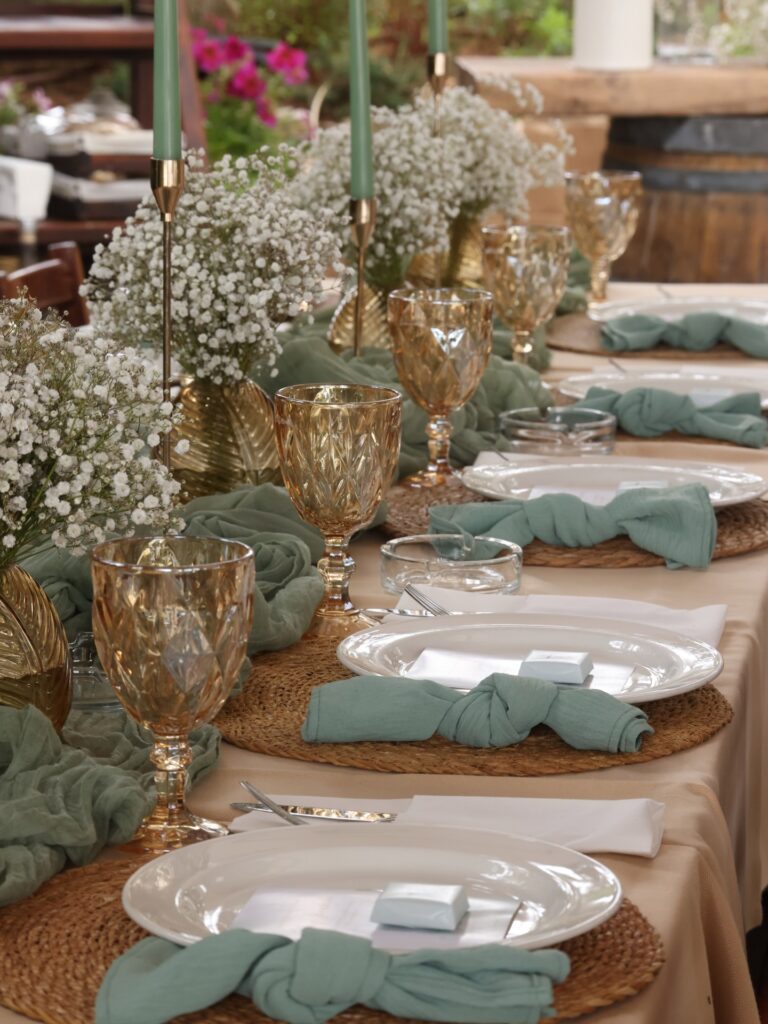
The sage napkins here are tied in a loose knot right on the plate, with a little favour box tucked into the loop. That’s the whole trick. Skip napkin rings entirely — a knot holds its shape, costs nothing, and gives you somewhere to park a place card or a wrapped almond.
Cheesecloth or gauze napkins knot best because they’re soft enough to sit flat. Stiff linen fights you.
The round jute placemat underneath is doing a lot of work too, breaking up the beige tablecloth so the pale plates don’t disappear. If your tables are dark wood, you can lose the mats. On a cream cloth like this one, they’re the thing keeping each setting from looking washed out.
Sage with black seating
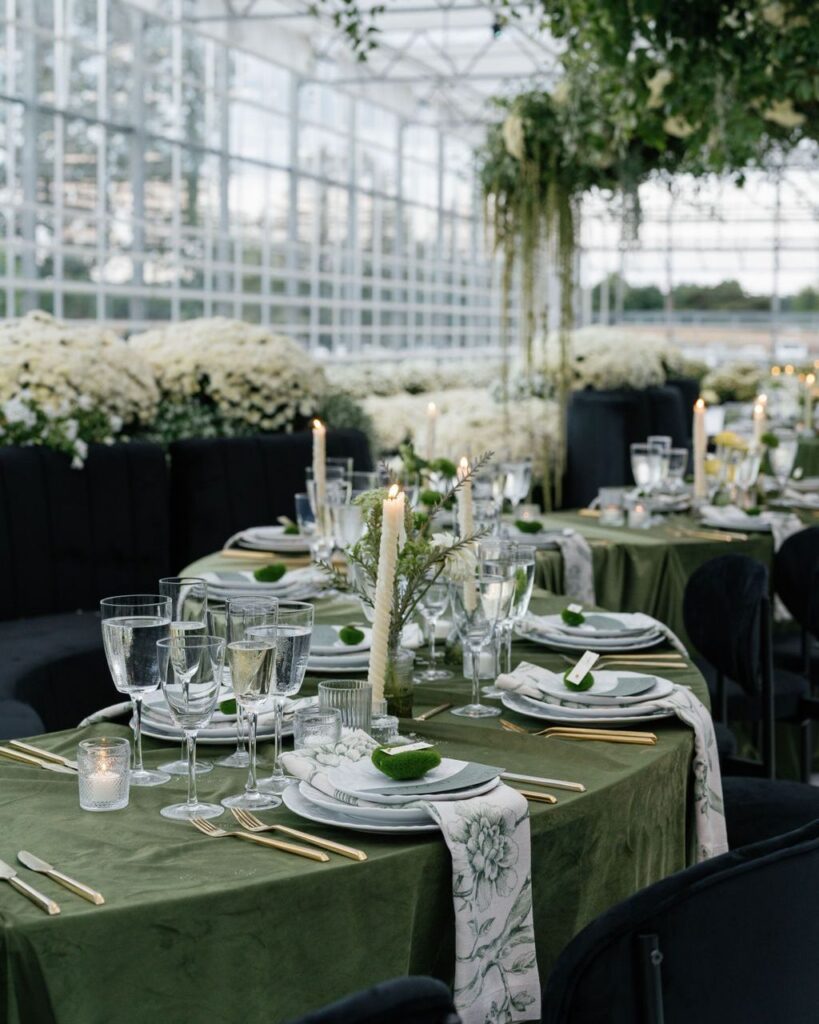
Start with the sage tablecloth, then bring in black through the chairs or banquette if your venue has a lot of glass or white around it, because that darker block underneath keeps the whole table from looking washed out in photos. The floral runner style works best when you keep the center low and broken up. Use a few taper candles, short green sprigs, and plenty of water glasses so the table still feels full without a huge arrangement sitting between guests.
The printed napkin draped over the edge is what makes this feel less stiff. Do that with one place setting every few seats instead of all of them. Much better.
I’d skip very bright gold cutlery here unless the room is dim, since sage, black, and soft candlelight already carry enough contrast.
Citrus and Flowers Down the Middle
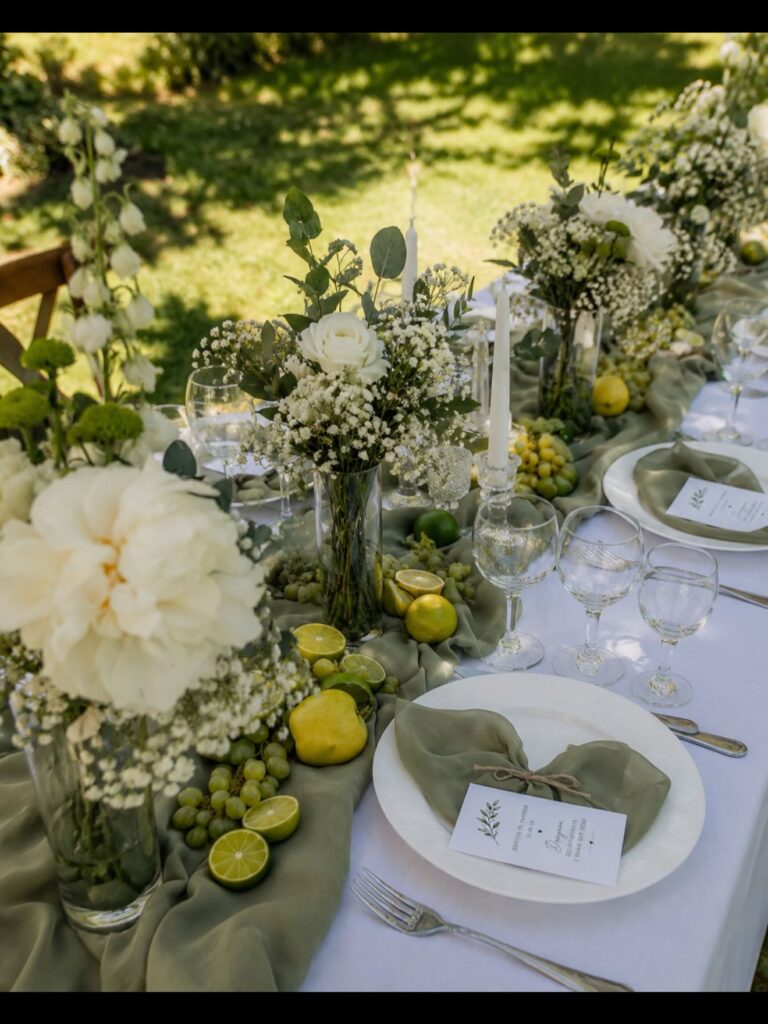
Loose sage chiffon runs the length of the table, and then fruit just gets placed directly on top of it — halved limes, whole lemons, small clusters of green grapes sitting between the flower vases. No bowl, no tray. That’s the part most people overthink when they first see this look, wondering if there’s some trick to it.
There isn’t. The fruit acts as filler between arrangements so the table doesn’t feel sparse in the gaps. White peonies and baby’s breath do the heavy lifting on the floral side, which keeps the cost reasonable since neither is hard to source.
Worth noting: cut citrus goes soft after a few hours in the sun, so for an outdoor reception, whole fruit holds up better than halved pieces.
Sage Napkins With Gold Plates
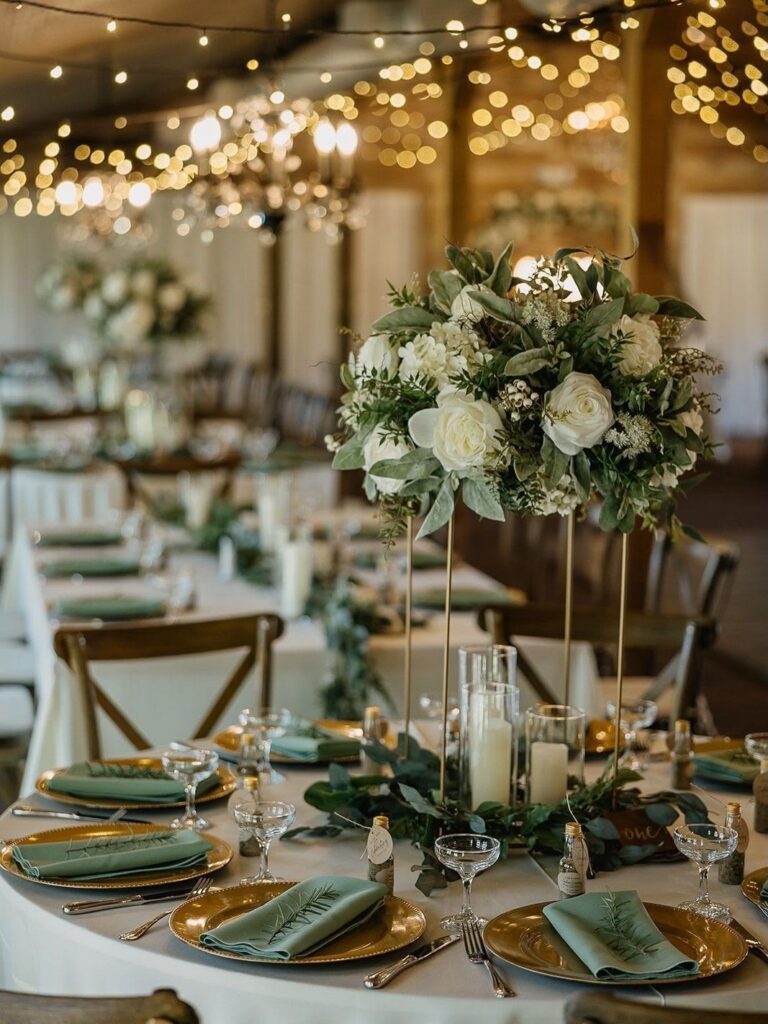
Fold the sage napkins into a wide rectangle and place a single sprig on top, because that tiny bit of greenery keeps the gold charger from looking too hotel-banquet. Keep it flat. The raised floral arrangement works best when the stems are thin enough that guests can still see faces across the table.
Use white roses, small filler flowers, and plenty of muted leaves if you want the sage to feel present without buying all sage-colored items. I’d skip bulky chair bows here; the table already has height, candles, glassware, and those little favor bottles. For long tables, repeat the napkin color first, then add one tall arrangement every few seats.
Pale blue tapers with sage linen
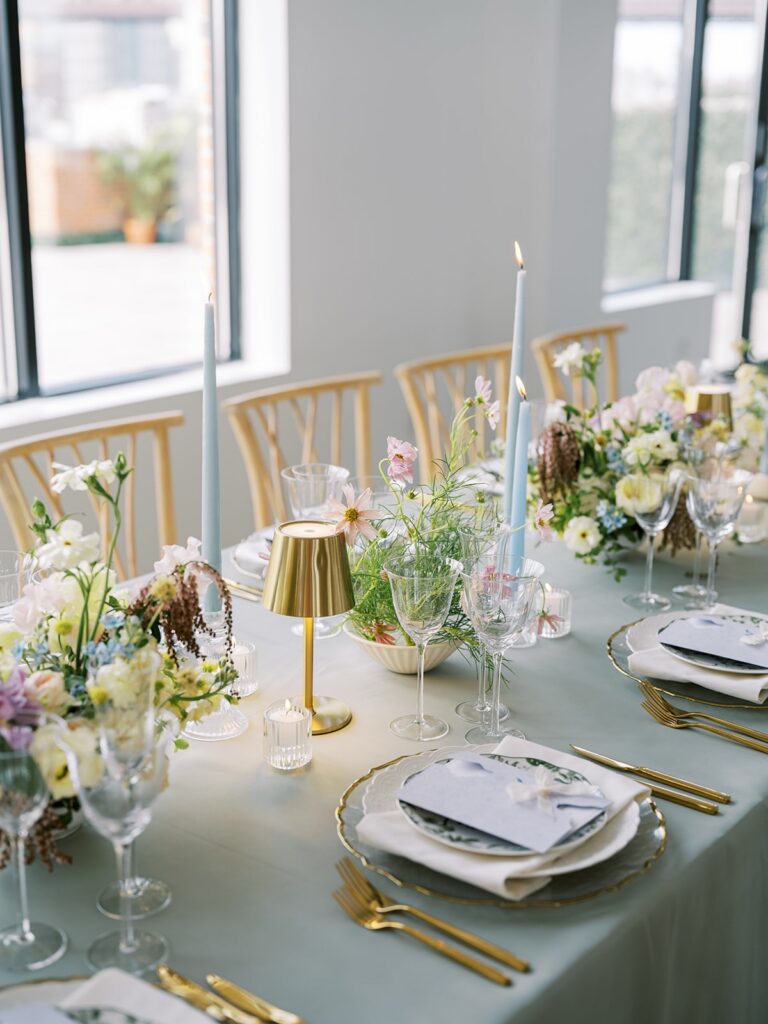
The powder blue candles are doing most of the work here. Against the sage tablecloth, they read almost dusty, not nautical, which is the trick. Skip white tapers if you’re going sage — they flatten everything. Blue keeps the palette in the cool family without turning matchy.
Mix the heights. Tall tapers, then those small ribbed votives closer to the plates, plus the little gold cordless lamp in the middle. Three light sources at three levels. That’s what makes a long table feel considered instead of sparse.
One thing I’d change: the gold lamp is cute but reads a bit hotel-bar next to the softness of everything else. A frosted glass hurricane would sit better. Otherwise, the gold flatware and rimmed chargers tie the warm metals back in.
Sage with gold lamps
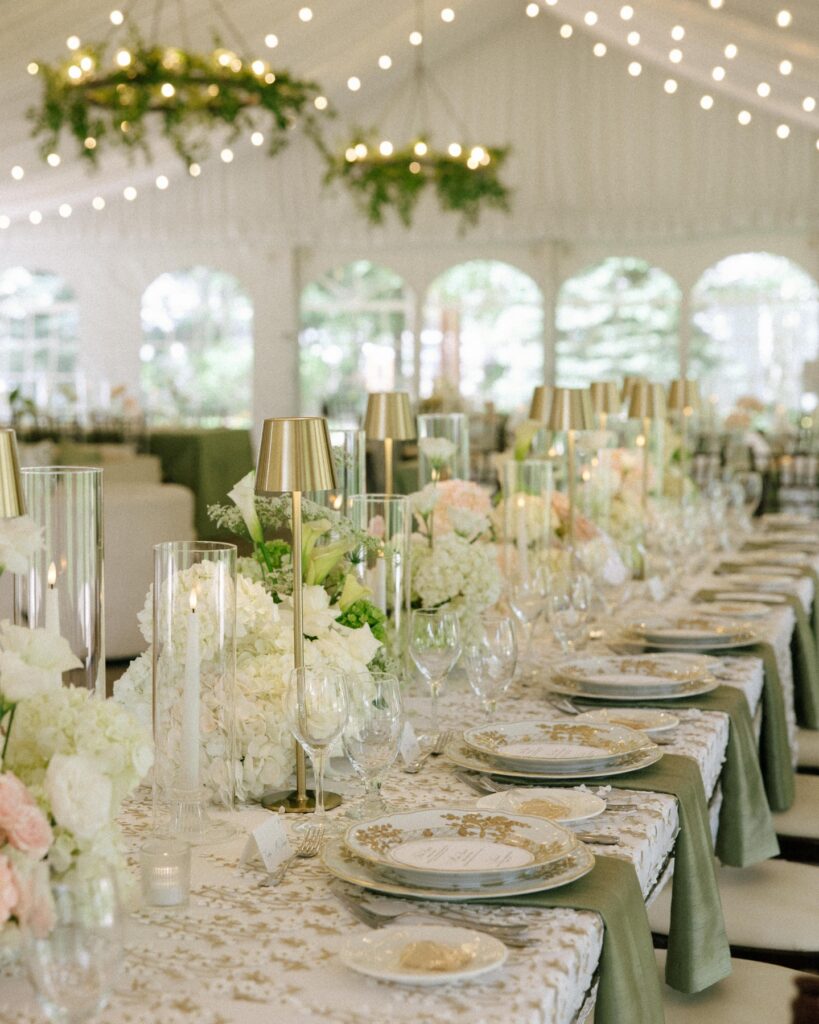
Start with the sage layer first. Here, it works because the green shows up in a long runner and napkins instead of fighting the patterned cloth, so the color reads steady all the way down the table.
Then bring in a row of small gold lamps. They do more than candles when your reception runs past sunset, and the metal base keeps the setup looking structured even with loose hydrangeas and taller glass hurricanes in between.
Keep the flowers mostly white. Blush is enough.
This suits a tented wedding especially well, where overhead string lights can leave the table looking a bit flat unless you add light at eye level too. If you want to cut cost, skip the lamps and keep just three or four hurricanes per table, but I wouldn’t drop the sage fabric layer because that’s the part holding everything together.
Toile Linen as Your Sage Base
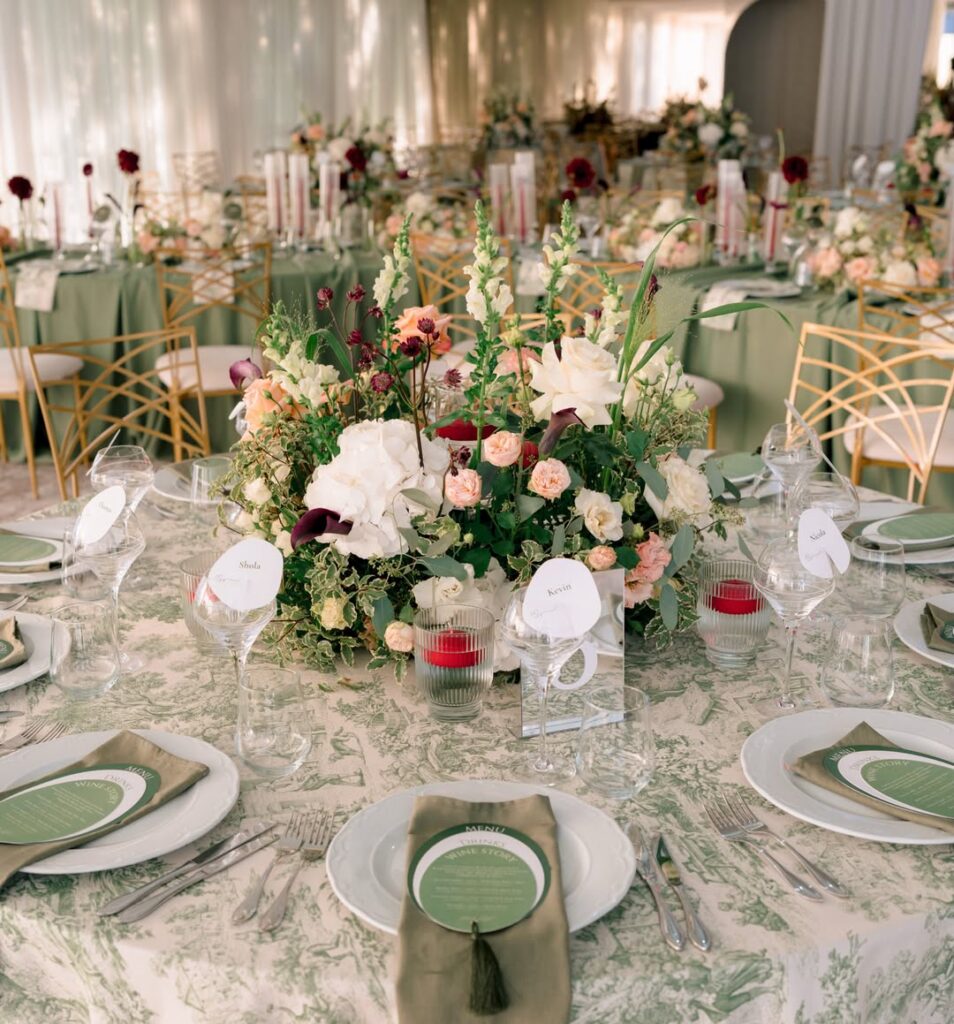
Starting with the tablecloth does a lot of the work here. The green and cream toile print reads as sage without being a flat block of color, which means the rest of the table doesn’t have to carry as much weight. Round menu cards in the same green, placed on white chargers with a sage napkin folded over them — that kind of repetition in three different textures is what makes the palette feel thought-through rather than accidental.
The floral centerpiece pulls in peach, burgundy, and deep purple, so the sage linen never feels too expected. If toile feels too vintage for your venue, a sage linen with a subtle jacquard weave gets you to a similar place. Gold chiavari chairs against this color, genuinely one of the easier combinations to get right.
Sage With Garden Color
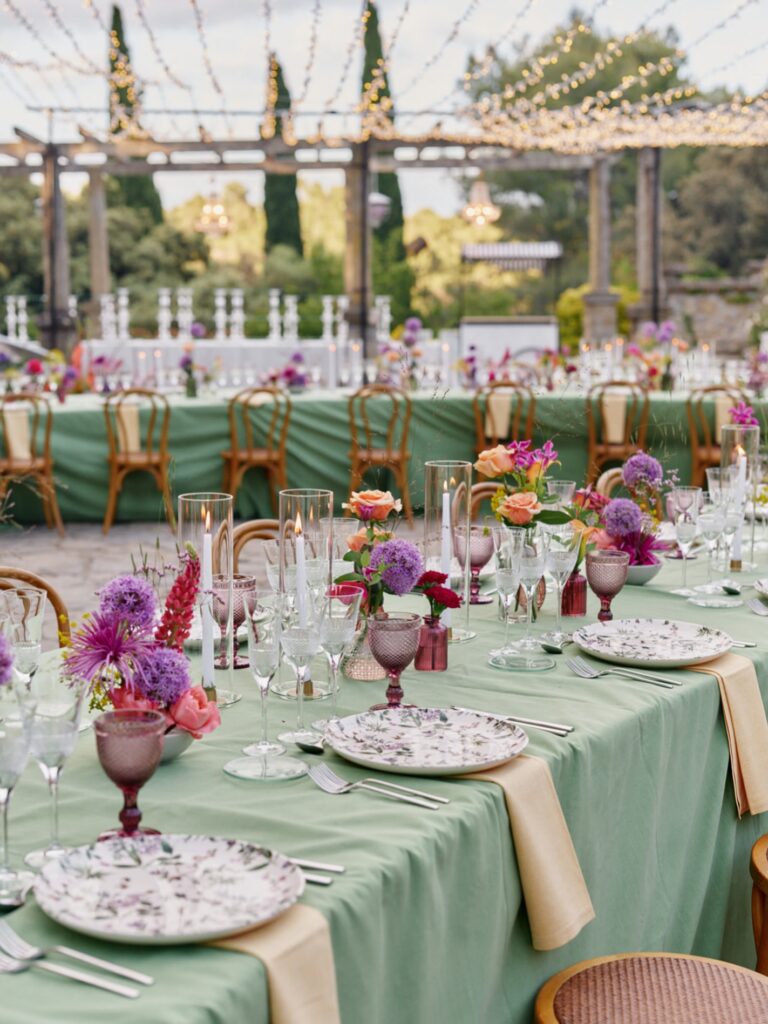
Across a sage tablecloth, let the color come from smaller pieces instead of changing the whole base. Keep the base plain. If your venue already has greenery around the patio, this setup works because the sage cloth links the table to the garden without adding more leaves everywhere.
Use cream napkins to break it up. Floral plates, plum goblets, and pink or purple blooms can sit on top without making the table look too planned. I would skip matching every glass in purple; a few pieces beside clear wine glasses do enough.
Tall candle cylinders help too.
Long Tables with Black Lanterns
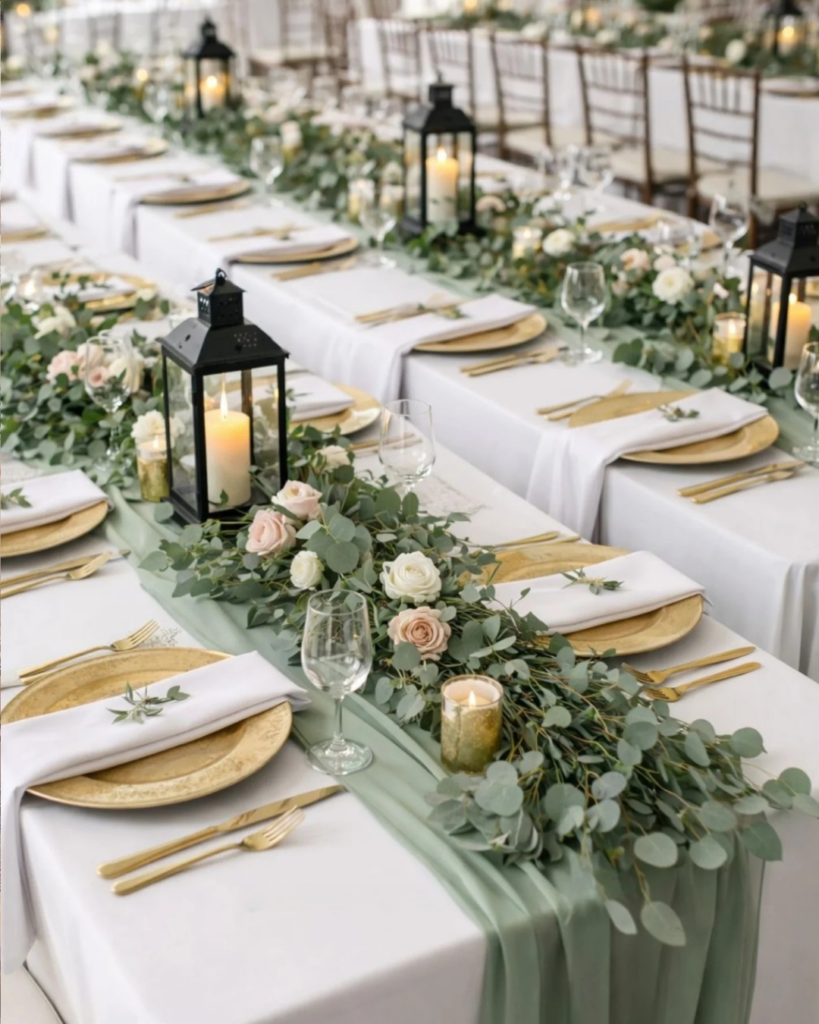
The black lanterns are what save this setup from looking like every other sage-and-gold wedding. Without them, you’ve got soft green runner, blush roses, gold chargers — pretty, but it all sits in the same tonal range and starts to blur down a long table. The lanterns break that up. They give your eye something to land on every few seats.
Space them evenly, one every third or fourth place setting, and use real pillar candles inside rather than LEDs if the venue allows it. The flicker matters more than you’d think once the sun drops.
One thing I’d change: the eucalyptus garland here is dense enough that guests across from each other can barely see past it. Thin it out in the middle stretch, or keep the height low so conversation still works.
White florals on sage
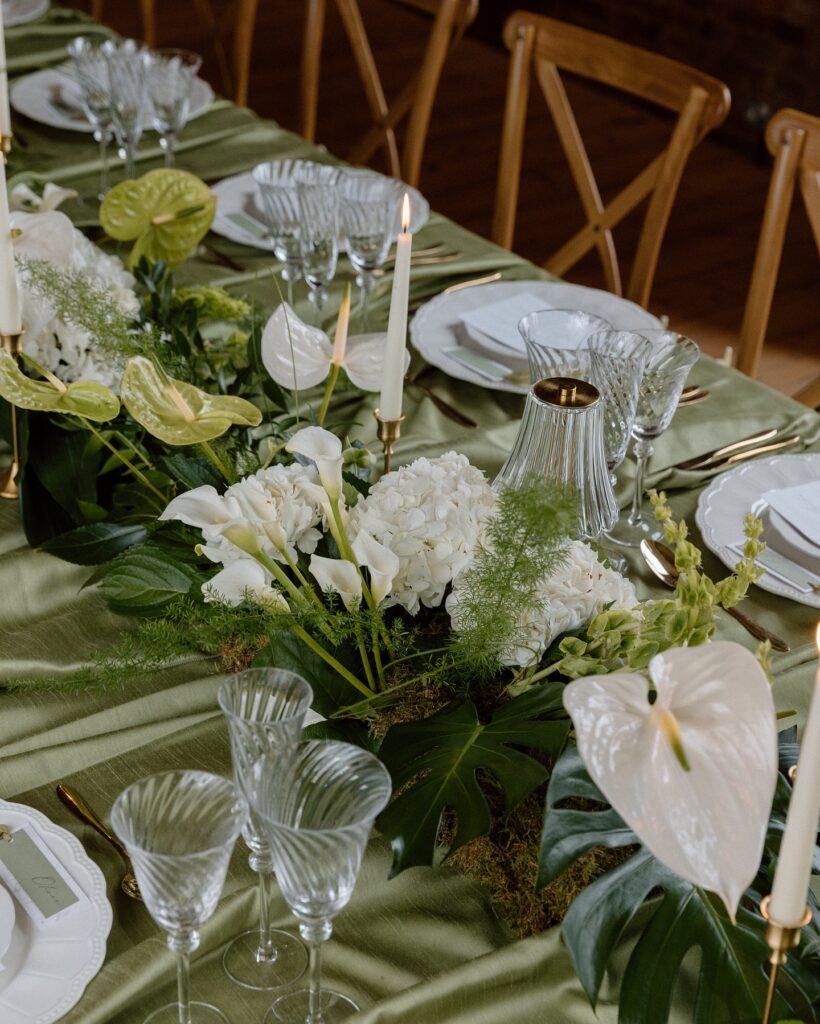
Start with the cloth. A sage table runner or full linen like this gives you the color without forcing it into every other detail, which is useful if your venue already has wood chairs or darker floors doing part of the work. Then keep the flowers mostly white — hydrangeas, calla lilies and anthuriums all show up clearly against sage, and the mix of round heads with those glossy, flatter blooms stops the arrangement from looking like one big mound.
The gold candlesticks help. They break up all the green and white and add a little height without blocking people across the table, especially if you keep the taper candles thin and spaced out instead of clustering them.
Use clear ribbed glassware if you can. I’d skip overly colorful goblets here because they would start competing with the sage linen and the anthurium leaves.
Mix Textures Within One Color Family
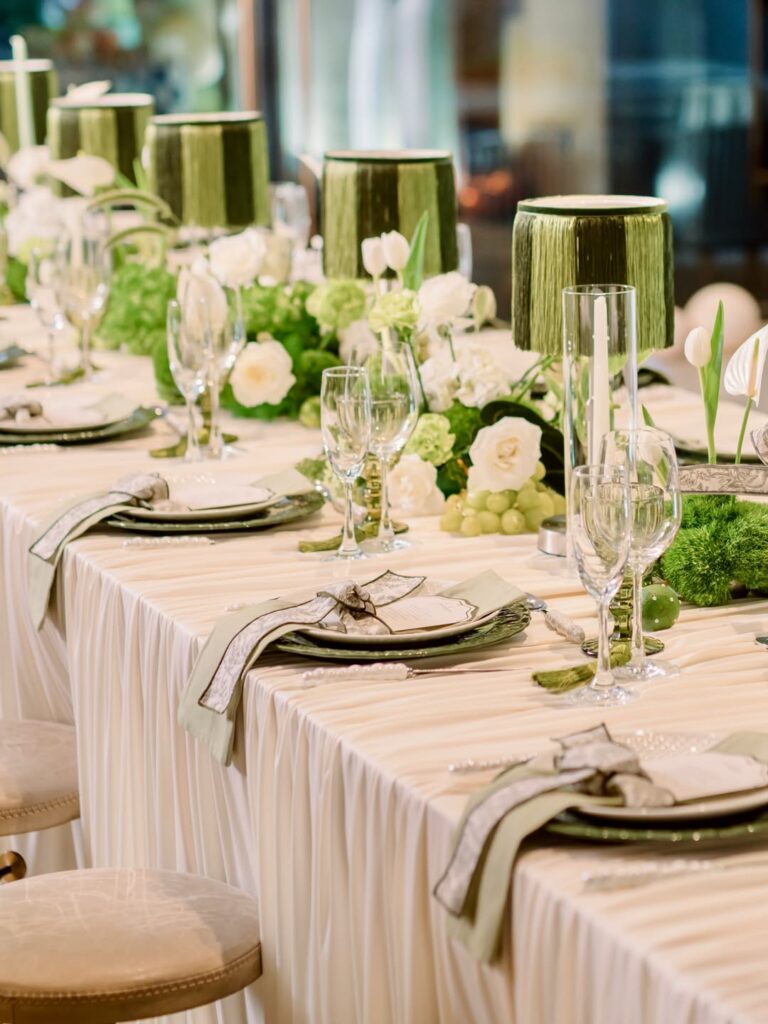
The fringe on those dark green lampshades is doing a lot of work here — same color as the charger plates and the moss balls, but a completely different surface. That’s the move. When everything sits in the same green-and-cream range, you can pile on quite a few different textures without it looking messy.
Ribbed linen, smooth glass, dried moss, fresh flowers — they all read as one table because the palette holds them together. For a wedding on a tighter budget, you could skip the fringed lamps entirely and lean harder into the florals and moss clusters. The striped tablecloth under a sage runner is worth keeping though; that layered linen look adds depth without needing a single extra centerpiece.