21 White and Green Wedding Decor Ideas
The eucalyptus was everywhere. Draped down the aisle, tucked into napkin folds, spilling out of milk-glass vases like it had grown there overnight. That single silvery-green sprig has quietly become the workhorse of modern wedding design, and it’s the reason so many couples are ditching heavy florals for a palette that feels lighter, cleaner, and a little more like a garden after rain. White and green. Two colors, endless range. From candlelit cathedral ceremonies to backyard receptions strung with bistro lights, the following 21 ideas break down exactly how to pull off the look—arches, tablescapes, cake details, aisle moments, and the small touches guests actually remember.
Flowers Along the Table Front
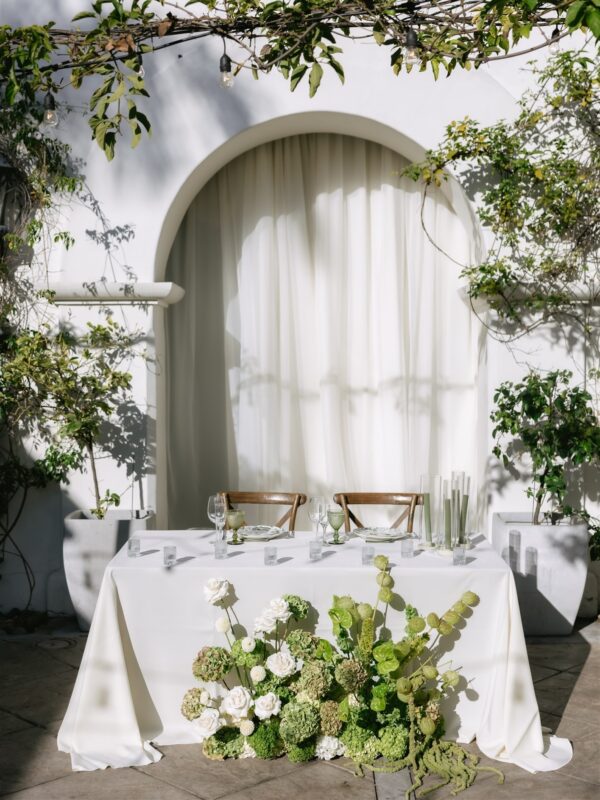
Placing florals along the front edge of a sweetheart table rather than on top of it frees up the actual surface for place settings, glassware, and candles without everything feeling crowded. The arrangement here mixes white garden roses with green hydrangea, scabiosa pods, and what looks like bells of Ireland — all low, sprawling, and uneven at the edges. That looseness is what makes it work.
A tight, uniform arrangement in the same spot would look a bit stiff. If you’re working with a florist, ask specifically for trailing stems that drape slightly. The white linen pooling on the ground pulls it together — a short tablecloth would cut the whole thing off at the knees.
Green Glassware On White
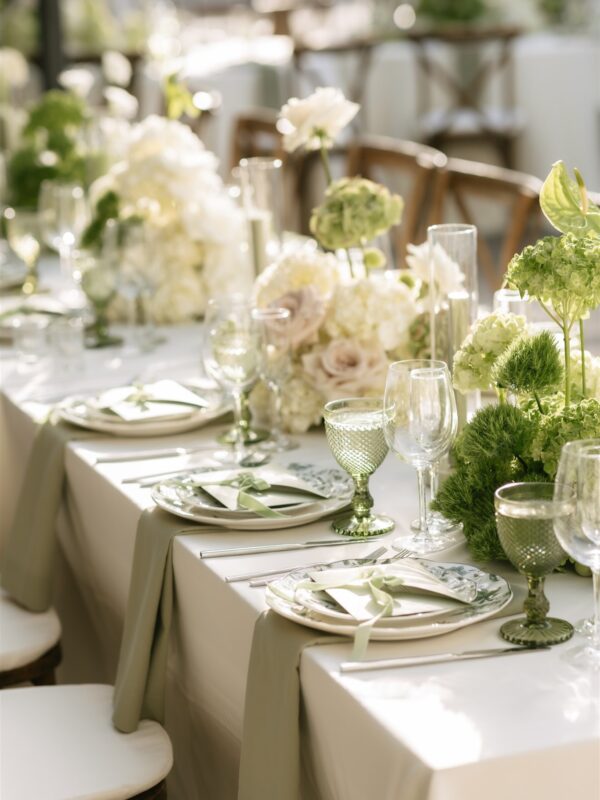
Start with the glasses before you spend half the budget on flowers. Green goblets do a lot of the work here because they repeat down the table, sit beside clear wine glasses, and make even plain white plates feel planned. Keep the linen cream or off-white if your venue has strong sun, since pure white can look a bit sharp in afternoon light.
Use small ribbons. I’d keep the flowers low, especially the round white hydrangeas and those mossy green stems, so guests are not talking through a hedge all dinner. Skip tall vases unless your tables are very wide.
Staggered Pedestals With Floor Florals
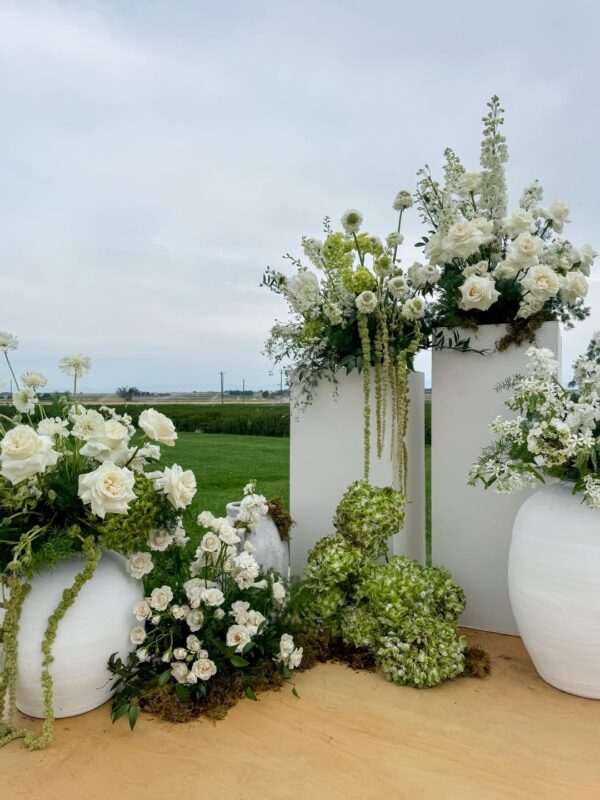
Three white pedestals at different heights, plus urns spilling onto the ground. That’s the whole trick here. The tall arrangements do the drama with roses and delphinium reaching up, while the shorter urns catch your eye at ground level with hanging amaranthus and clumps of moss. What makes it work is the empty space between the pillars — you can actually see the field behind, which keeps the whole setup from feeling like a wall of flowers.
If you’re renting pedestals, three is the minimum. Two looks unfinished. One thing I’d skip: the moss piles on the floor. They read a bit unfinished up close, and unless the venue floor is really plain, they get lost. Swap in a low garland or a few more roses instead.
Olive table linen
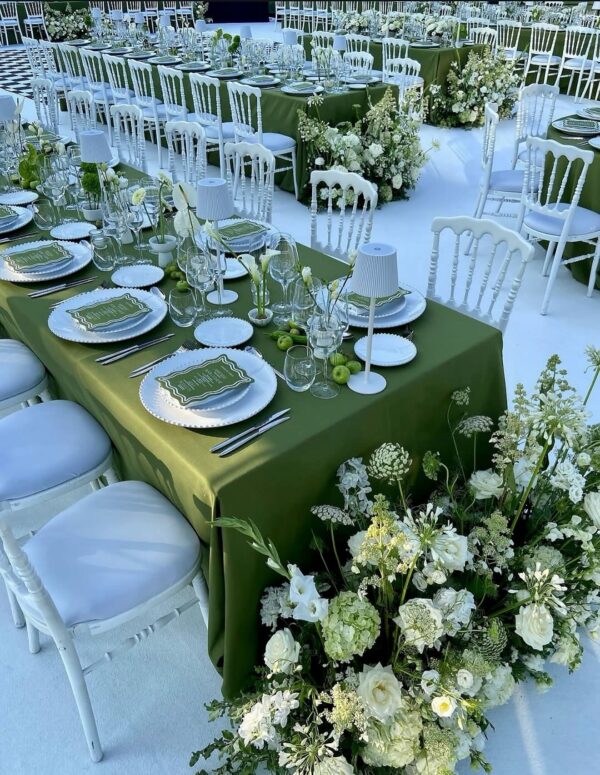
Start with the tablecloth, honestly. That deep olive green does most of the work here because it gives the white chairs, plates and flowers something solid to sit against, and without it the whole setup would drift into looking washed out under daylight.
Keep the flowers loose. The arrangements on the floor and at the table edge have that just-cut look, with white blooms, airy filler stems and a few round green heads mixed in, which stops the green-and-white palette from turning stiff or overly formal.
The scalloped menus matter too. Repeating that wavy edge on top of plain white plates adds pattern without needing extra colors, and it ties in nicely with the softer shapes in the florals.
I’d skip overly tall centerpieces here. Low lamps, clustered glassware and flowers already fill the table, so height would just get in the way of conversation.
Layered Signage With Offset Panels
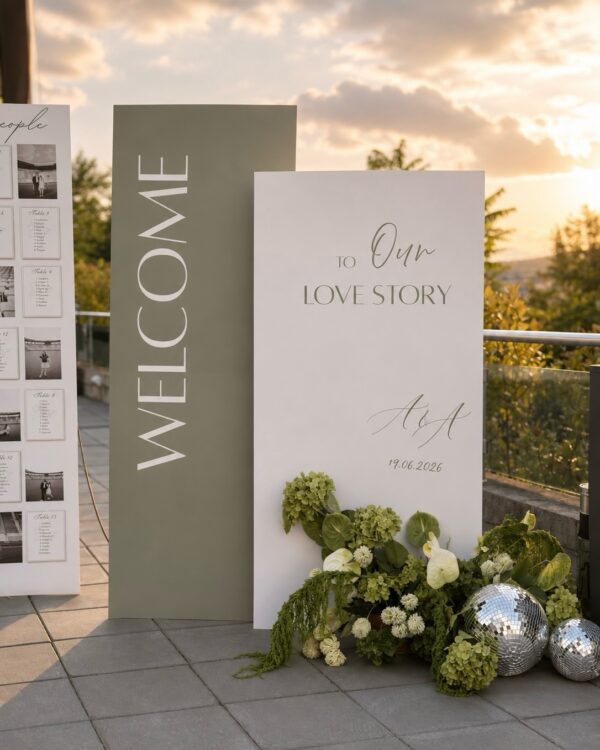
Three panels doing three different jobs — that’s what makes this work. The sage green board handles the welcome, the white one carries the date and initials, and the seating chart runs separately to the left. Splitting information across panels like this means nothing looks crowded, and you can size each one to the text it actually holds rather than squeezing everything onto a single board.
The flower cluster at the base ties the two front panels together visually without needing a frame or arch. Green hydrangeas and white calla lilies are easy to source and hold up reasonably well outdoors. I’d probably skip the disco balls unless your reception leans that way — they read a little disconnected here.
Renting foam boards and getting them wrapped in matte vinyl is usually cheaper than custom acrylic, and the effect is nearly the same.
Grass And Orchid Corner
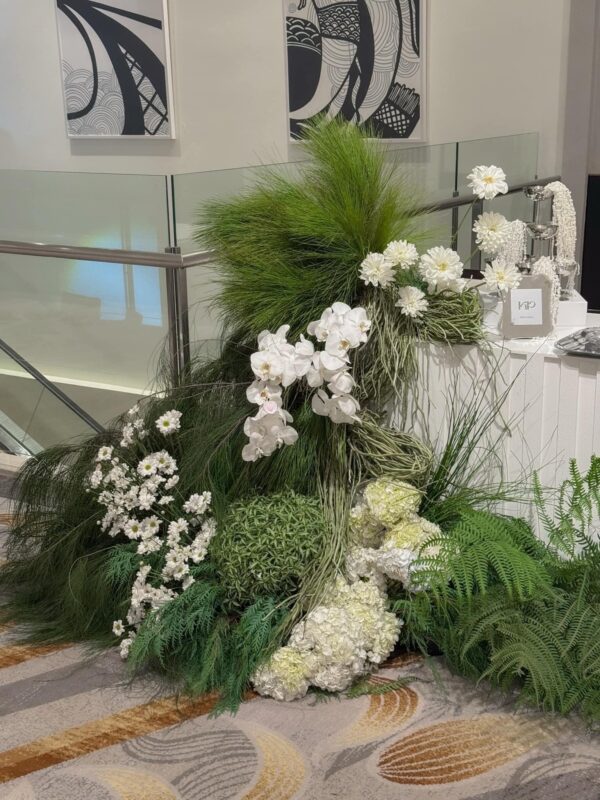
Tucked beside a stair rail or reception desk, this kind of green-heavy setup gives you height without needing a full floral wall. Start with tall fountain grass or pampas-like stems at the back, then bring in white orchids so the eye has something softer to land on. Keep the base messy on purpose, with ferns spilling out and small white daisies sitting lower.
It needs layers. If you are using this near a welcome table, leave some breathing room around cards, candles, or signage, because the long grass can easily start eating into the display. I would skip scented flowers here, since guests may stand close to it for photos.
Ribbed Pillar Vases In A Cluster
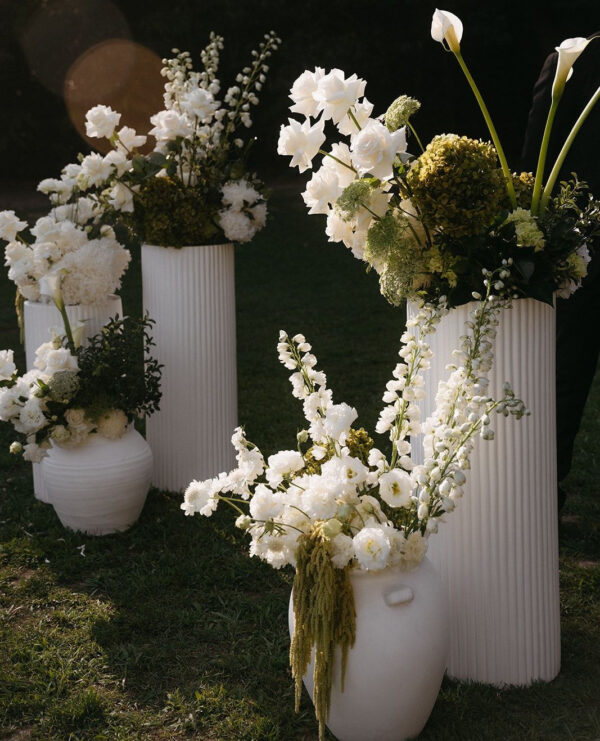
Instead of one big arrangement at the altar, group tall ribbed pillars at different heights and let the flowers spill out the top. The mix here works because it’s mostly white — roses, delphinium, calla lilies, a bit of hydrangea — with green amaranthus trailing down the front vase to break up all the cream. That trailing bit is the part I’d insist on. Without it, the whole thing looks stiff.
Ribbed or fluted pillars are easy to rent now, and they photograph better than glass because they don’t reflect the harness of afternoon sun. Good for outdoor ceremonies where you want structure but not an arch. If your budget’s tight, do three pillars instead of five and skip the calla lilies — they’re pricey per stem and one bloom does the same job.
Draped stage with florals
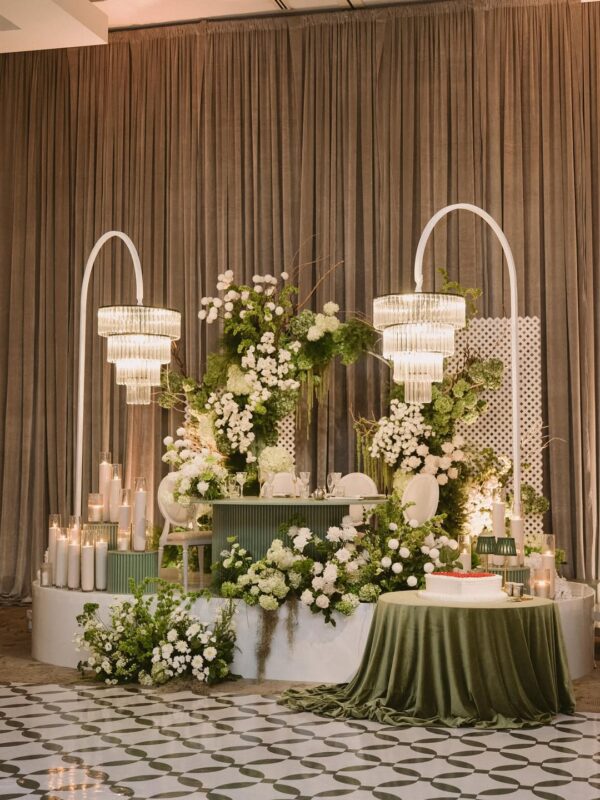
Start with the backdrop. Floor-to-ceiling taupe draping gives the white flowers somewhere to land, so the arrangement doesn’t disappear the way it can against a plain white wall.
Then build one raised focal area instead of scattering everything around the room, using low white platforms, a green pleated table front, and two tall arch frames with chandelier-style pendants to pull the eye upward without needing a floral ceiling install, which is usually more trouble than it’s worth.
The flowers should stay loose. White roses, hydrangeas, and smaller filler blooms mixed with climbing greenery are enough.
Candles help here. Use them in grouped cylinders at different heights near the base and along the side tables so the setup still looks finished before guests fill the room.
I’d skip the extra lattice panels unless your venue wall needs covering.
Linking Round Tables With Florals
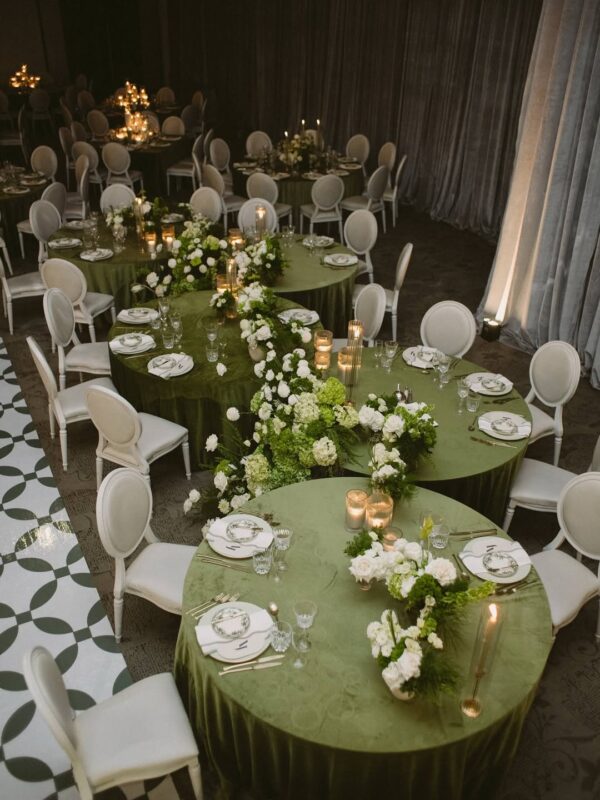
Running a floral garland across multiple round tables like this is a good way to make separate seating feel like one long arrangement without actually committing to a banquet layout. The green velvet tablecloths are doing a lot of the groundwork here — the white hydrangeas and roses read much brighter against that depth of color than they would on white linen. Keep the flowers low so guests across the table can actually see each other.
Budget-wise, you can cut the flower volume significantly if you fill gaps with trailing greenery and moss, which holds up better through a long reception anyway. The chairs matter too — those oval-back whites stop the whole thing from feeling too heavy. Bentwood or ghost chairs would shift the mood considerably.
Chandeliers Over Greenery
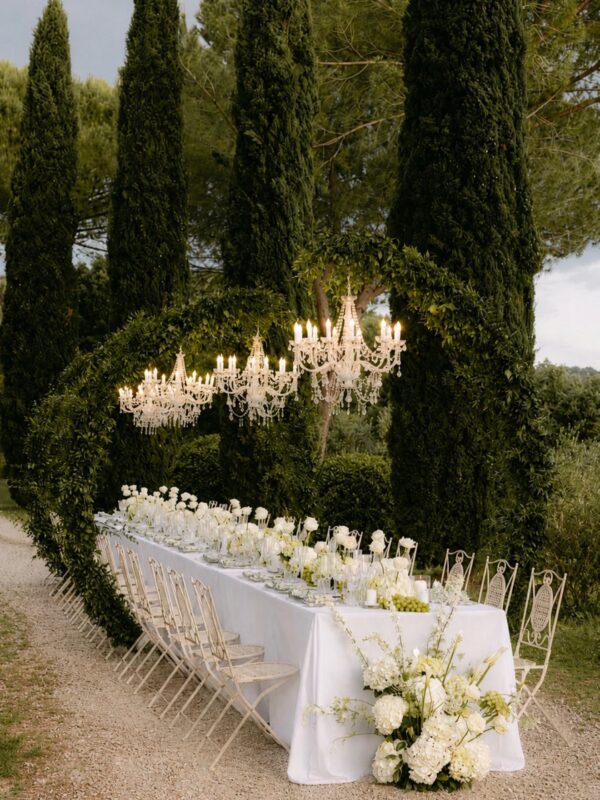
Hanging crystal chandeliers from tree branches gives the dinner table a proper focal point without adding more things to the tabletop. Keep the table mostly white, then let the greenery around it do half the work. The tall cypress trees in this setup make the chandeliers feel placed, not random, which matters if you are doing this outdoors.
Use strong rigging, not thin decorative wire, because wind and uneven branches can make this more annoying than it looks. Very important. I’d keep the florals low down the table like this, with one larger arrangement at the end, so guests can still talk across the candles and glassware.
Arched Backdrop With Wild Florals
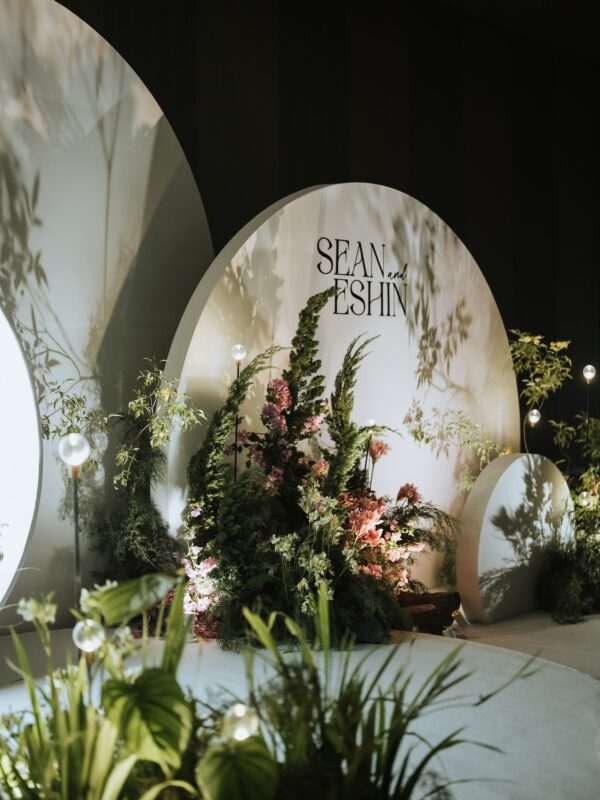
The circular panels behind the couple’s names are doing most of the work here. Three arches, staggered in size, with the tallest one carrying the monogram. What makes this land is the planting at the base — tall ferns shooting up past the couple’s names, softer pinks and corals tucked in low, trailing greenery spilling onto the floor.
If you’re recreating this, skip the temptation to fill every inch of the arch. The negative space around the lettering is what keeps it from looking like a garden centre display. Globe lights on thin stems around the perimeter add small points of light without competing.
One thing I’d change. The ferns are gorgeous but they wilt fast under event lighting, so ask your florist about sword fern or leatherleaf as a longer-lasting swap.
Flower towers by the aisle
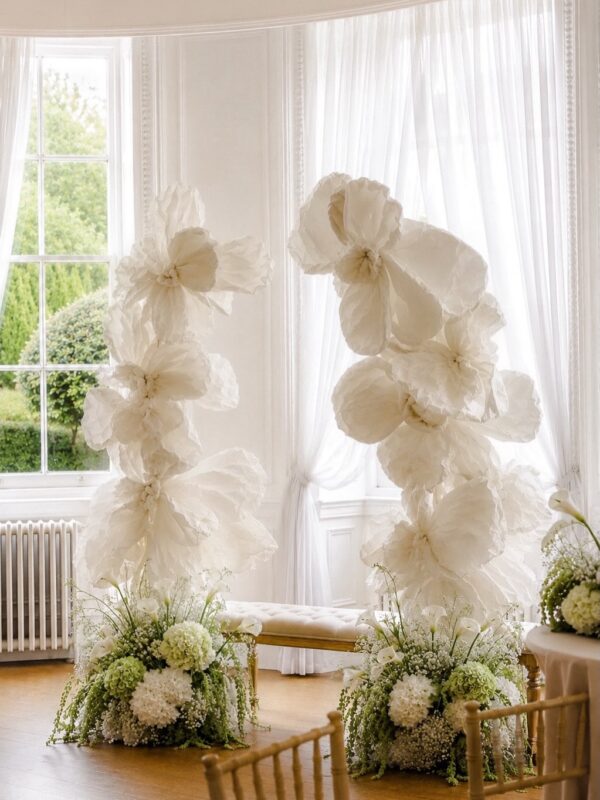
Start with two tall freestanding pieces instead of a full arch. These work because the oversized white paper flowers give you height and shape up top, while the low bases packed with hydrangeas, baby’s breath and trailing greens keep the whole thing from looking bare at floor level.
Best for an indoor ceremony. The sheer curtains and pale room in this setup let the white flowers show up properly, so in a darker venue I’d add a little more green through the middle of each stand or the top can disappear into the background once guests are seated.
Keep the chairs plain. Gold or light wood works better than anything fussy, and a small bench between the arrangements is enough if you want a spot for a reading or a signing moment without adding another focal point.
Velvet Tablecloth With Floor Greenery
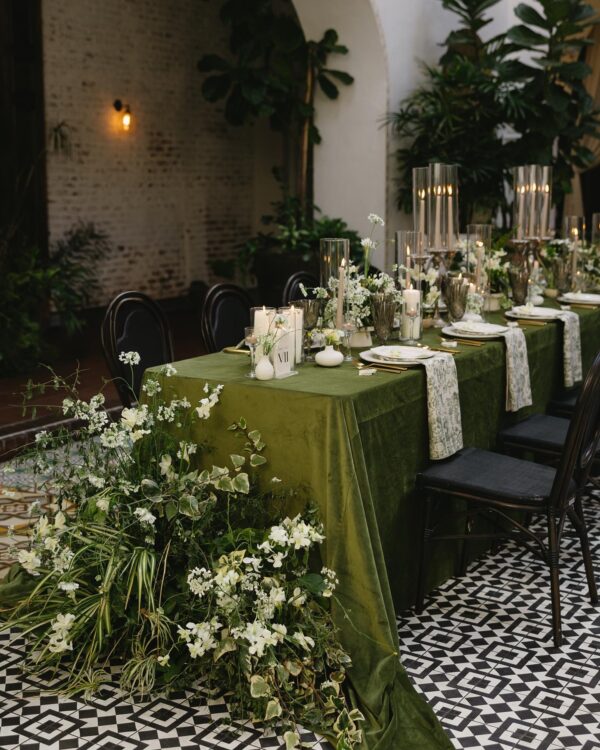
The olive velvet cloth here does a lot of the work before a single candle gets lit. Pairing it with a cascade of trailing ivy and white blooms that spills off the table end and onto the floor is the move — it blurs the line between the table and the room in a way that feels intentional rather than overdone. The tall hurricane candles keep the eye moving upward.
For the runner, something textured in ivory or grey sits better against velvet than plain white, which can look too stark. This setup suits long rectangular tables well; round tables lose the trailing-end effect almost entirely. If the venue already has strong architectural detail like that exposed brick, you can keep the florals loose and unstructured.
Glass Chandeliers Outside
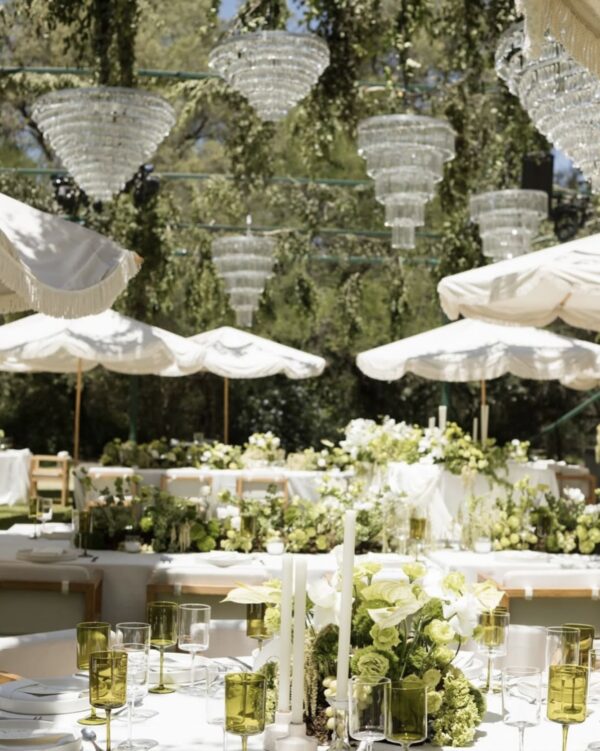
Above the tables, those tiered glass chandeliers give the whole setup a proper ceiling, which is useful when the reception is out in the open under trees. Keep the rest low. Use white flowers along the table, green-tinted glasses, and slim candles so the hanging pieces do not have to compete with tall centerpieces.
The umbrellas help too. They break up the sun and make the chandeliers feel planned instead of random. I would only do this where there is safe rigging from a pergola, strong branches, or a rented frame; fake chandeliers tied badly with wire are more trouble than they are worth.
Sage Draped Ceiling With Silver
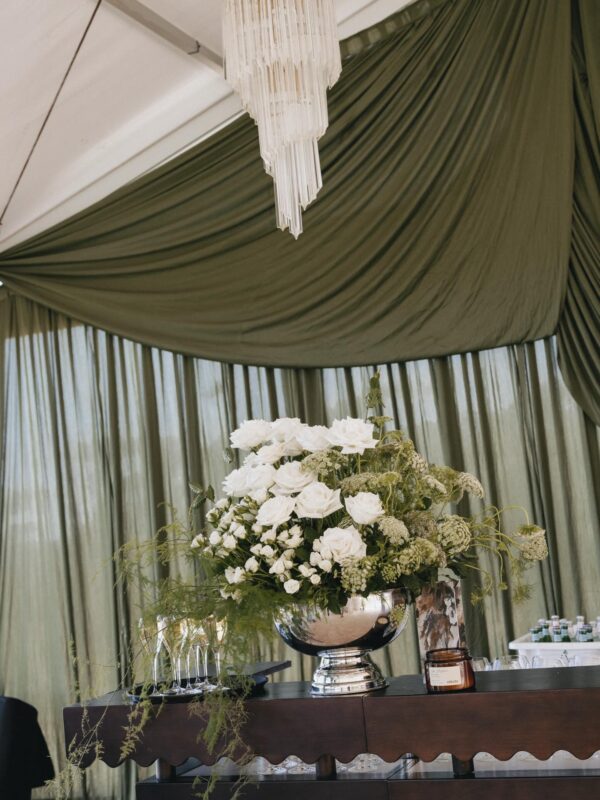
The green fabric draped from the tent ceiling is doing most of the heavy lifting here. It softens the whole structure and pulls the eye up toward the beaded chandelier. If you’re working with a plain marquee, this is the swap I’d actually recommend over floral installations, which cost a fortune and wilt by the reception.
Pair sage drapery with a silver footed bowl of white roses and Queen Anne’s lace. The metal picks up the light. The white flowers stop the green from feeling heavy.
One thing I’d change. Skip the amber candle jar on the bar — the label fights the palette. Use an unbranded pillar or a small silver votive instead. Keep the trailing greenery loose at the edges of the bowl.
Draped stairway entrance
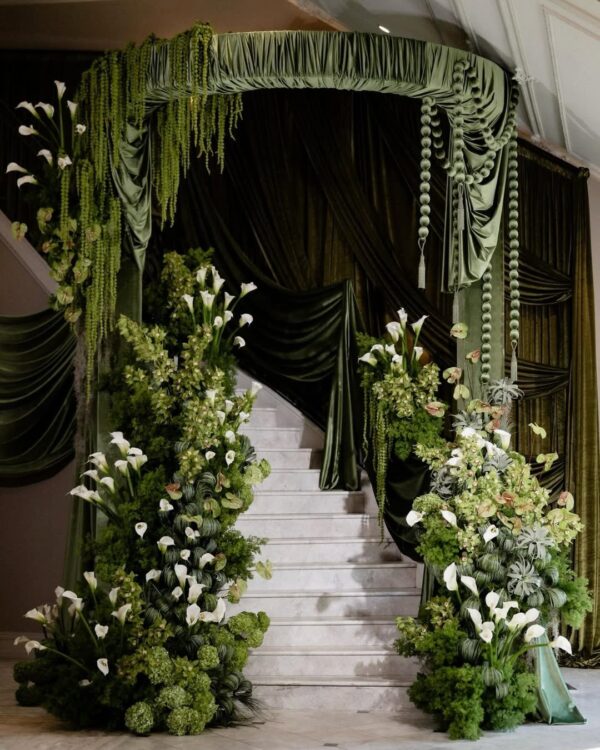
Start with the canopy, not the flowers. The gathered green fabric does most of the work here because it frames the stairs, drops low at the corners, and makes the whole entrance feel finished before you add a single stem.
Then keep the florals narrow and climbing. Use white calla lilies in upright clusters, tuck in trailing amaranthus or smilax from the top, and build the base with dense green mounds so the arrangement looks rooted instead of perched there.
This suits a venue with height. If you try it in a flat ballroom doorway, the drape can look heavy fast, especially once the fabric starts pooling and blocking the path.
I’d skip overly mixed flowers here. Too many bloom shapes would fight with the folds and tassel detail, while the tight white-and-green palette keeps the whole thing from turning busy.
Dark Draping Above White Tables
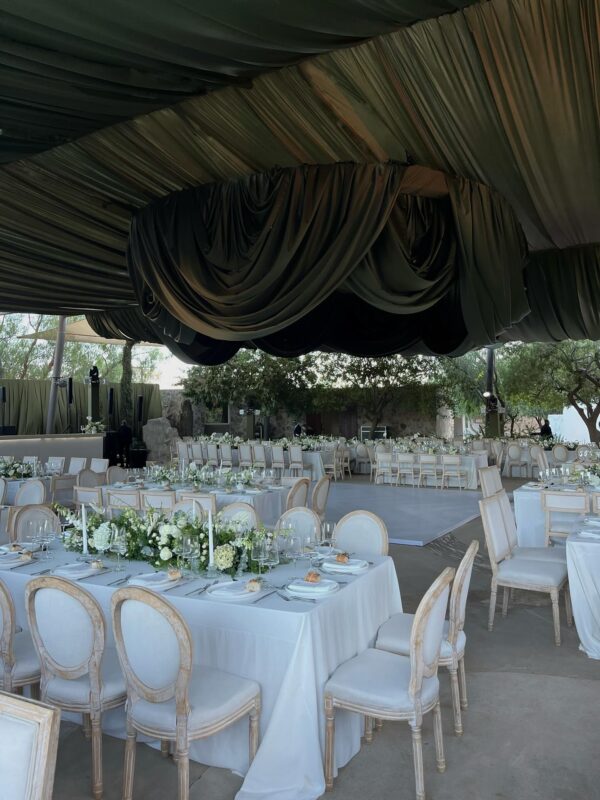
That olive-black fabric pooled across the ceiling is doing a lot of heavy lifting — it makes the white linens and green florals on the tables below read much brighter than they would otherwise. The contrast is the whole point. If you’re working with an outdoor pavilion or a tent structure, ask your rental company about ceiling draping in a deep forest green or near-black tone rather than the usual ivory.
The long runners of white blooms and greenery down the center of each table stay pretty straightforward — hydrangeas, white roses, trailing eucalyptus — but because the overhead fabric is so dark, even a modest arrangement looks like it has more weight to it. Works best for evening receptions where the lighting can play up that contrast.
Green Arch Backdrop
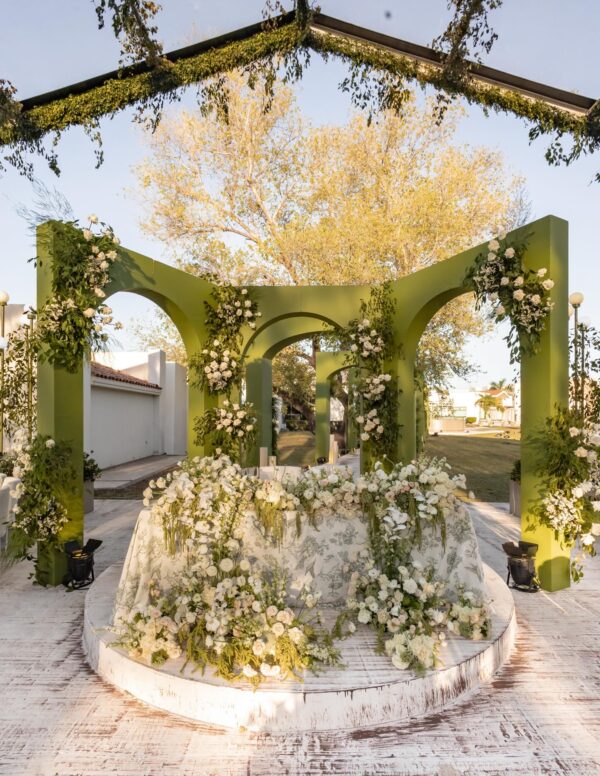
Start with the arch shape, because that is doing half the work here. A painted green frame with cut-out arches gives you height without needing a full floral wall, and the white flowers can sit in clusters instead of covering every inch. Much cheaper, usually.
Use heavier arrangements at the base, then let smaller bunches climb the sides so the whole setup feels connected from the floor to the top beam. The round platform also helps if you want the couple seated in the center for a ceremony or reception entry. I’d skip the overhead greenery if your venue already has trees behind it, since too many hanging pieces can make the frame look busy.
Draped Fabric With Sculptural Florals
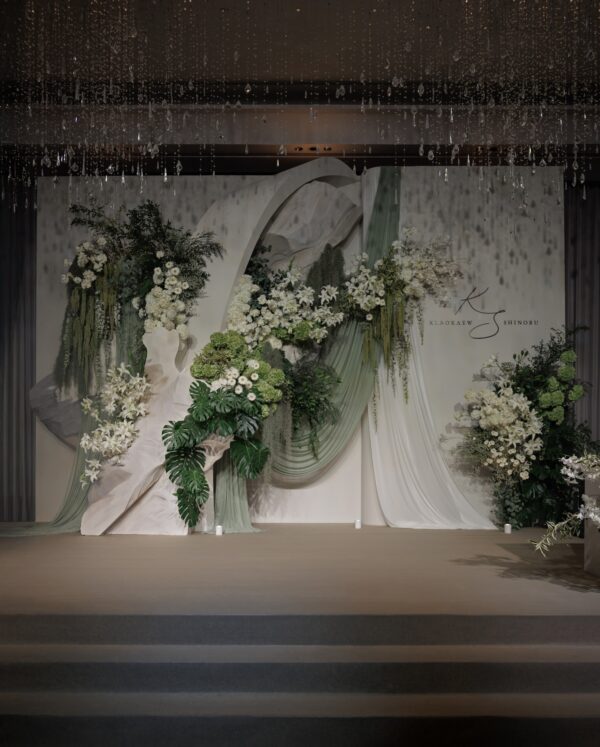
The sage and ivory fabric panels are doing the heavy lifting here. They’re twisted and pinned into these soft curves behind the flowers, which means you don’t need a solid backdrop wall — just enough structure to attach fabric to. Monstera leaves anchor the arrangement at the base. Above them, white orchids trail down and hanging amaranthus adds the green fringe.
If you’re recreating this, the crystal strand ceiling is where I’d pull back. It reads beautifully in photos but it’s expensive per square metre and guests barely register it once seated.
Stick with two fabric tones, not three. Muddies quickly otherwise. And keep the floral clusters asymmetric — one tall side, one low side, one accent piece off to the right like they’ve done with that smaller arrangement near the steps.
Draped green backdrop
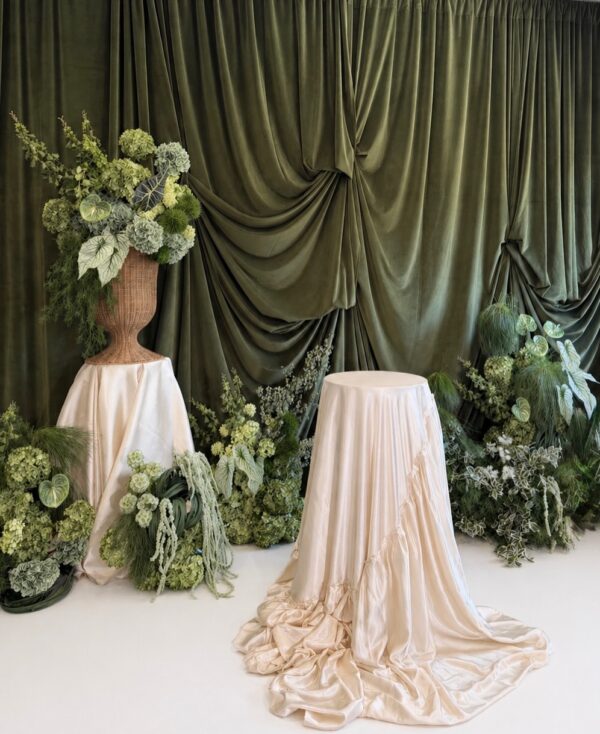
Start with the backdrop here. Floor-to-ceiling olive drape gives you most of the effect, especially if you gather and pin sections off-center so the fabric falls in loose swags instead of straight panels. That part matters more than people think, because the movement in the cloth keeps an all-green wall from looking flat, and it also gives the white linen-covered plinths something clean to sit against.
Keep the flowers low and clustered. Use hydrangea, amaranthus, trailing greens, and a few oversized pale leaves around the base rather than spacing arrangements evenly across the front. Much better.
I’d skip bright white blooms for this one and lean cream or green-white instead, since stark white can look a bit chopped up against such a dense, moody green. This suits a ceremony corner, photo spot, or cake table backdrop.
Floor Arrangements That Frame the Table
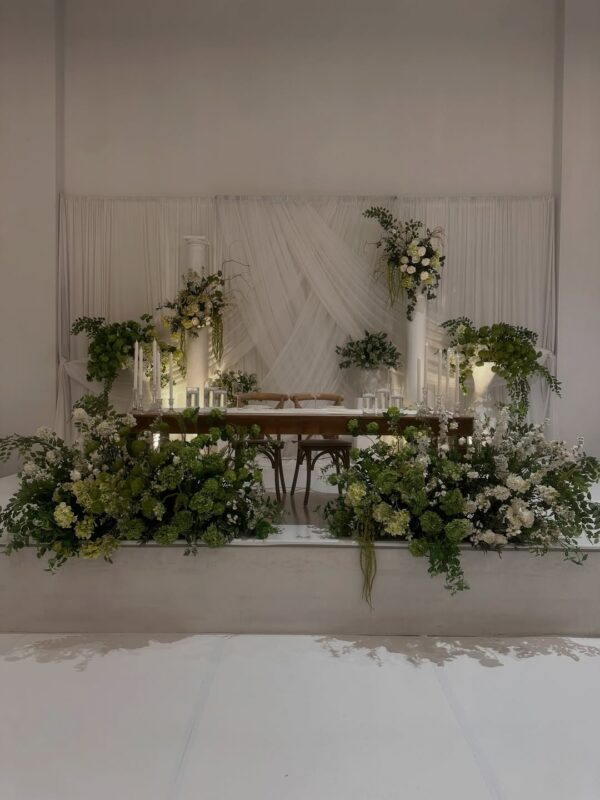
Those large floor clusters of green hydrangea and white blooms sitting at the base of the sweetheart table do a lot of the heavy lifting here — they make the whole setup read as one complete installation rather than a table with stuff on it. To pull this off, you don’t need to match the florals on the table to the ones on the floor exactly, but keeping the same two or three varieties throughout ties it together. The floor pieces work best on a flat, pale surface like the white floor here, because they actually show up.
Dark wood or patterned flooring swallows them. This look suits smaller wedding parties well — fewer people walking past means the arrangements stay intact through the night.