17 Mexican Wedding Table Decor Ideas
Terracotta vases spilling over with marigolds. That’s the image that stopped me mid-scroll last spring, and it’s been rattling around in my head ever since. Turns out, Mexican wedding decor has a way of doing that—grabbing you by the sleeve with a single burst of color or a hand-embroidered runner and refusing to let go.
From papel picado strung above long banquet tables to talavera-tiled centerpieces glowing under string lights, the details carry stories, not just style.
Below, I’ve pulled together 17 table decor ideas that lean into that rich, layered tradition—some bold, some quietly romantic, all rooted in something real. Whether you’re planning a full-on fiesta reception or just want to weave a little heritage into your tablescape, there’s something here worth stealing.
Go Heavy on the Flowers
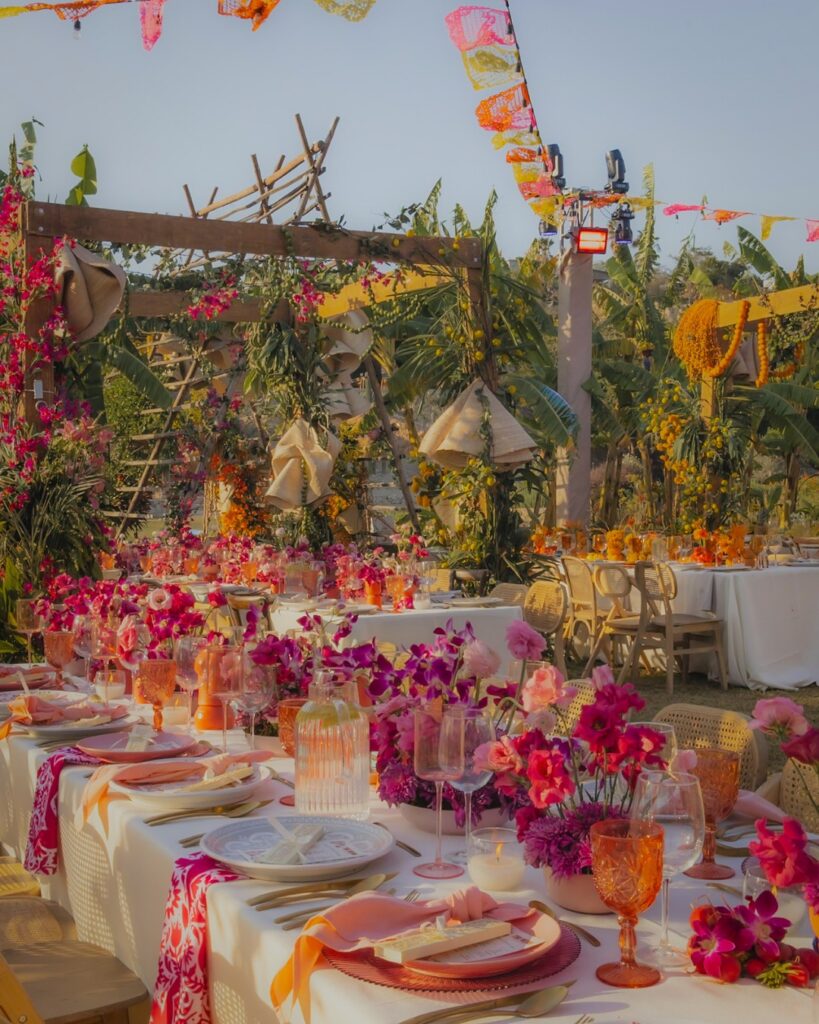
The flowers here are doing most of the work — purple dendrobium orchids, hot pink ranunculus, magenta dahlias, all bunched low and close together so the table itself almost disappears under them. No tall centerpieces. That’s the move.
Keep everything below eye level so it reads as one continuous line of color down the length of the table rather than individual vases competing with each other. The orange-tinted glassware picks up the warmer tones in the arrangement, which is worth thinking about when you’re choosing rentals. Mismatched amber and blush glasses are easier to find than you’d think at vintage hire places.
If the full flower budget isn’t there, concentrate the arrangements in the middle third of the table and let the colored napkins and charger plates carry the ends.
Blue Glass With Brass
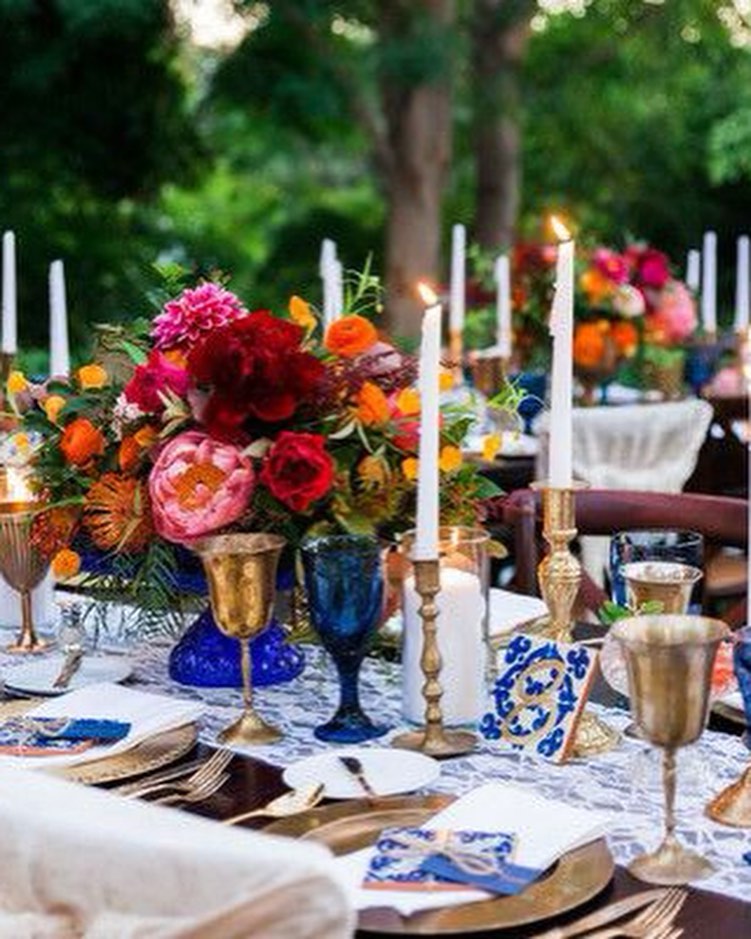
Start with the goblets, because the blue glass does half the work before any flowers arrive. Use mismatched brass cups, low gold chargers, and tall taper holders so the table has shine at different heights without needing many extra pieces. Keep the candles white.
If you are using heavy flowers like peonies, dahlias, or garden roses, tuck in orange marigolds or ranunculus to pull it back toward a Mexican wedding look. The patterned napkin or tile-style card is the small detail I would repeat at every place setting. I would skip very tall arrangements here.
Guests need to see each other.
Talavera Plates with Hot Pink
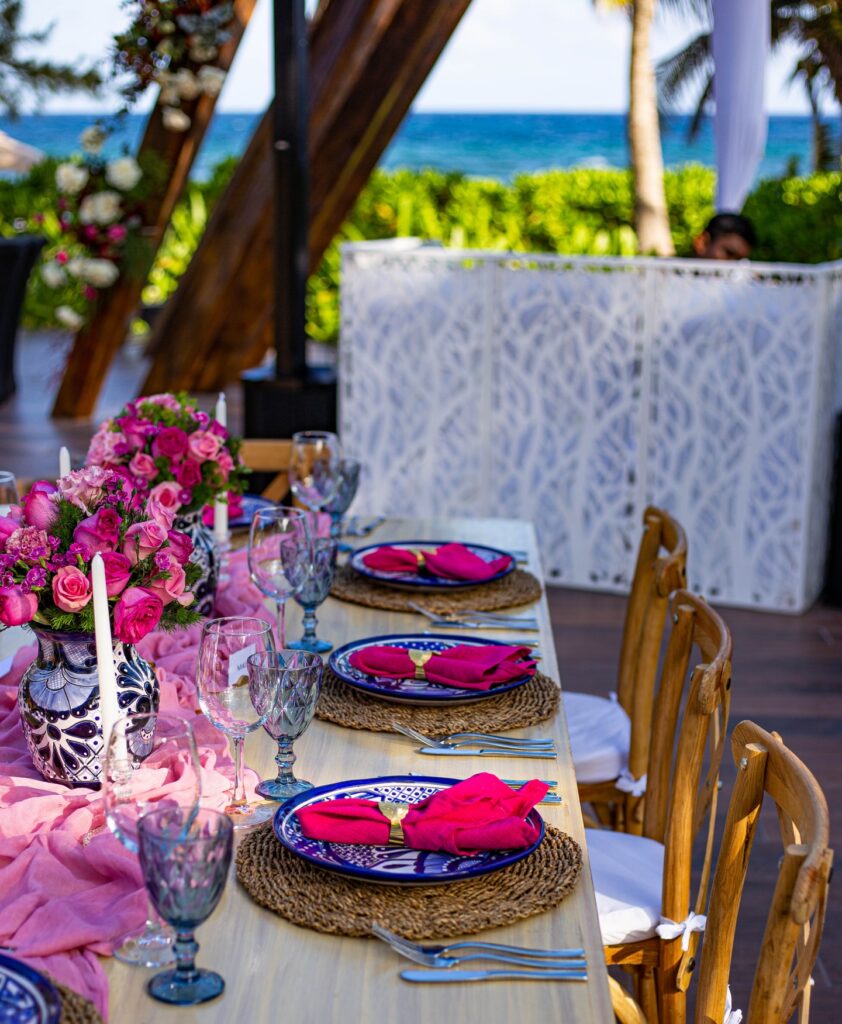
The blue and white Talavera plates are doing the heavy lifting here. That painted pottery is already busy, so pairing it with fuchsia napkins and pink roses works because the blue is deep enough to hold its ground against all that color. Woven seagrass placemats underneath keep the table from tipping into full formal mode.
If you’re recreating this, don’t skimp on the Talavera. The cheap printed versions look flat next to real hand-painted pieces, and you’ll notice it in photos. Rent if you have to.
One thing I’d rethink: the pink gauze runner plus pink flowers plus pink napkins is a lot of the same note. I’d swap the runner for something in a warm cream or a soft terracotta and let the plates and blooms carry the pink.
Clay cups and runners
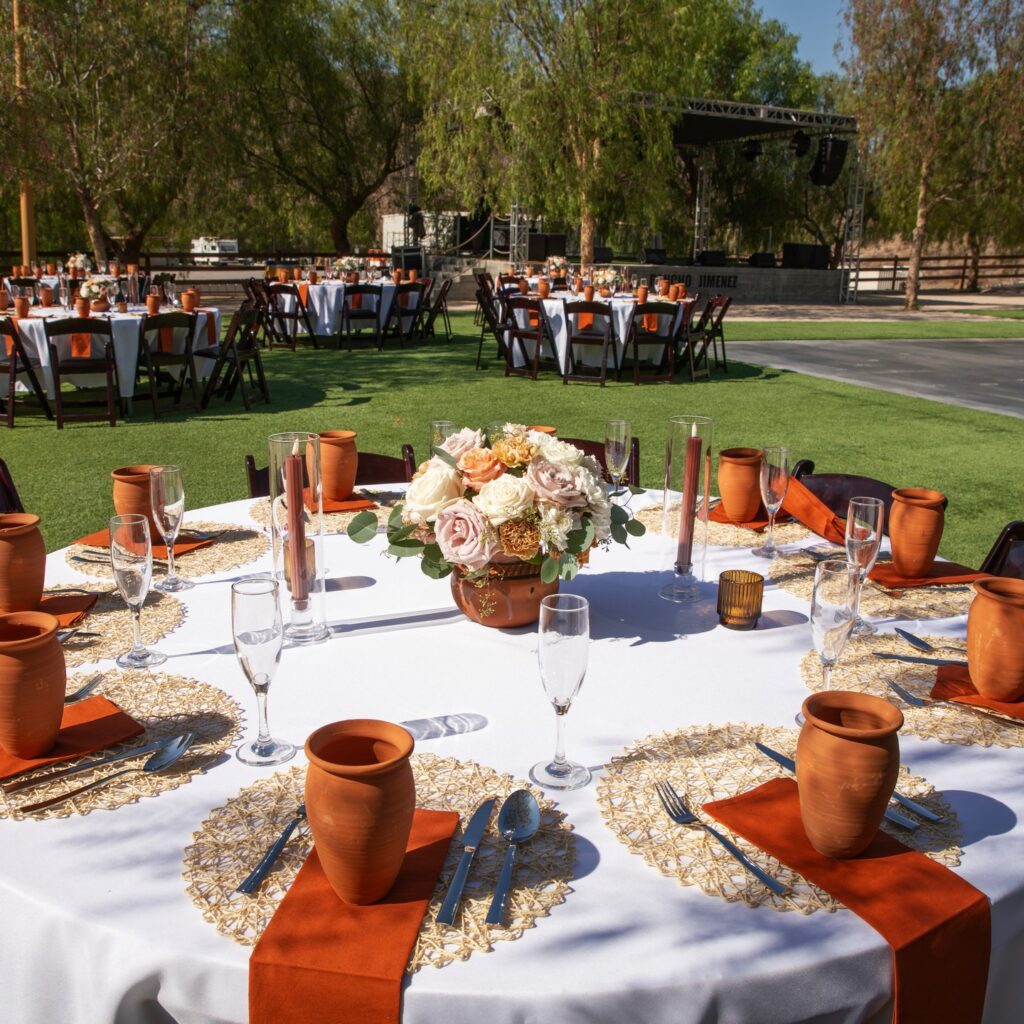
Start with the clay cups. They do a lot of the work here because they bring in that earthy orange tone without needing a busy centerpiece or patterned linen, and they instantly make a plain white table look more grounded. Then repeat that same color in a straight runner or folded napkin at each place setting so the table feels tied together instead of scattered.
The woven round placemats matter too, especially with smooth glasses and metal flatware on top, because that rough texture keeps the setup from looking like standard banquet decor. Good for an outdoor wedding.
If you want this look on a smaller budget, keep the clay only for the guest tables and use one low flower arrangement per table with roses, mums, and eucalyptus. I’d skip anything too tall here since the cups and candles already give the table enough shape.
Marigolds and Clay on Linen
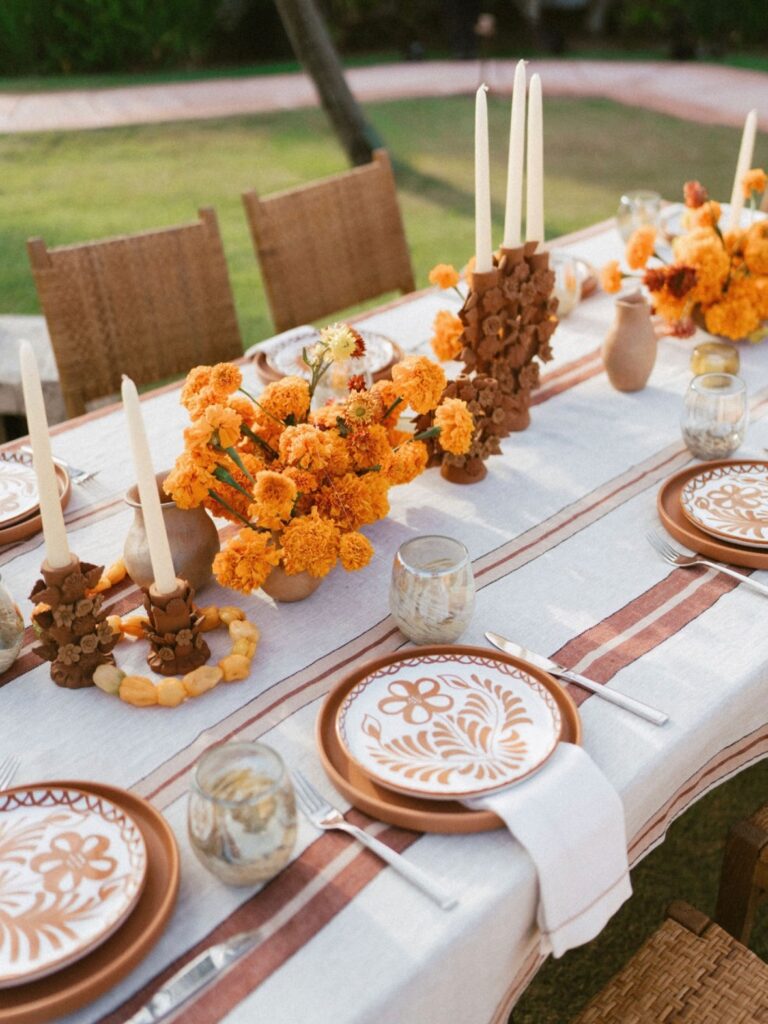
The terracotta stripe running down the center of that tablecloth is doing a lot of quiet work — it ties the clay chargers and the brown candleholders together without you having to think too hard about it. Marigolds are the obvious move for a Mexican wedding, but the key here is volume. Pack them into short stoneware vessels so they sit low and wide rather than reaching upward.
The molded chocolate-brown candleholders with flower detailing are the kind of thing you’d find at a Mexican ceramics market, and honestly worth hunting down over using plain brass ones. The hand-painted talavera-style plates pull the whole color story closed. If your venue is outdoor and informal, this setup reads really well — it’s not fussy, just deliberate.
Citrus Table Garland
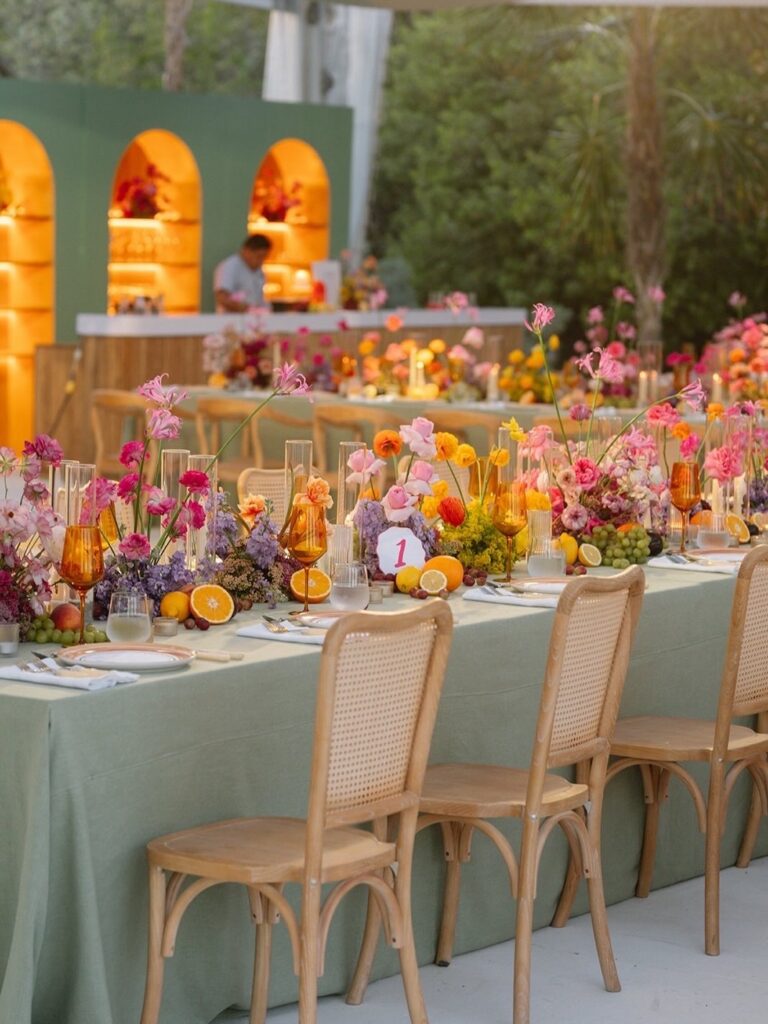
Before you add another vase, place the oranges first. Halved citrus, grapes, and a few small bowls of fruit can run between the plates, then the pink and orange flowers fill the gaps without making the table feel packed. Keep the stems loose.
The amber glasses help too, since they repeat the color of the fruit and make plain white plates look less flat. For a Mexican wedding, this works well with aguas frescas, palomas, or a menu with lime, chile, and fresh fruit already in it. I would skip very tall vases here, because guests will keep leaning around them all night.
Marigolds With Mini Pumpkins
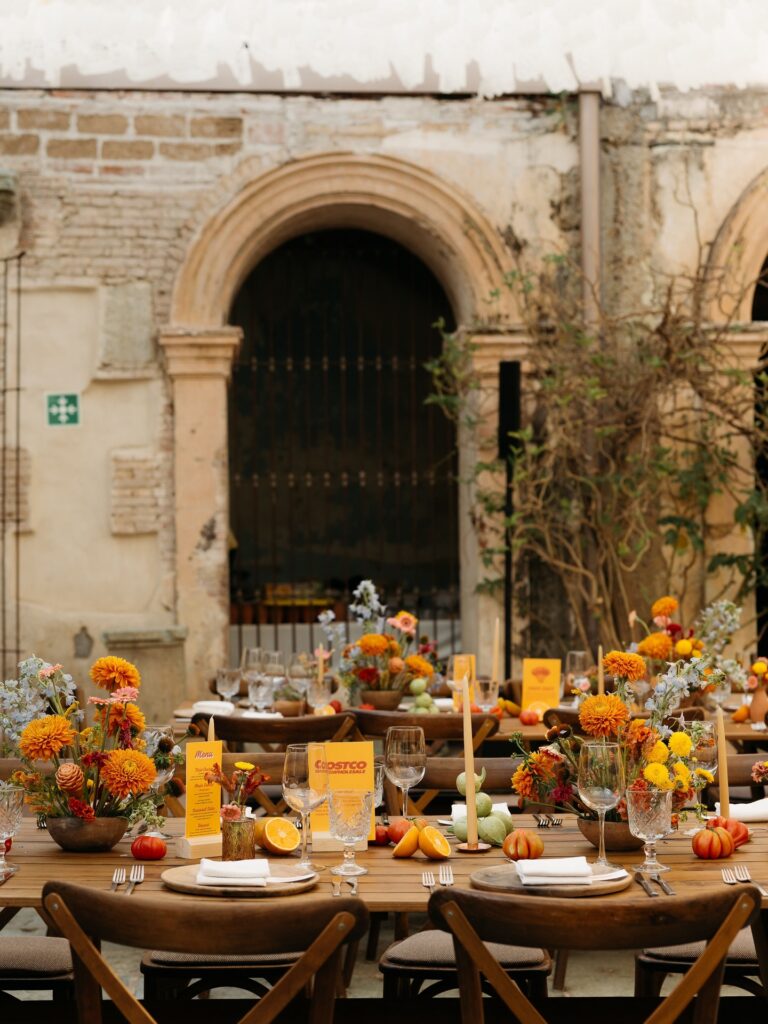
The trick here is committing to one color family and letting the shapes do the varying. Orange dahlias, marigolds, yellow taper candles, halved oranges scattered down the runner, and those little textured pumpkins tucked between the glassware. Pale blue delphinium is the one break in the palette, and it’s what keeps the whole table from going flat.
If you’re pulling this together yourself, buy the pumpkins from a farm stand rather than a florist. Half the price. Skip the sliced citrus though — it looks great for the first hour, then the cut sides dry out and the table smells like a juice bar.
Works best for a late October or early November wedding, outdoors, somewhere with old stone or brick behind it so the oranges have something to sit against.
Clay vases with bold blooms
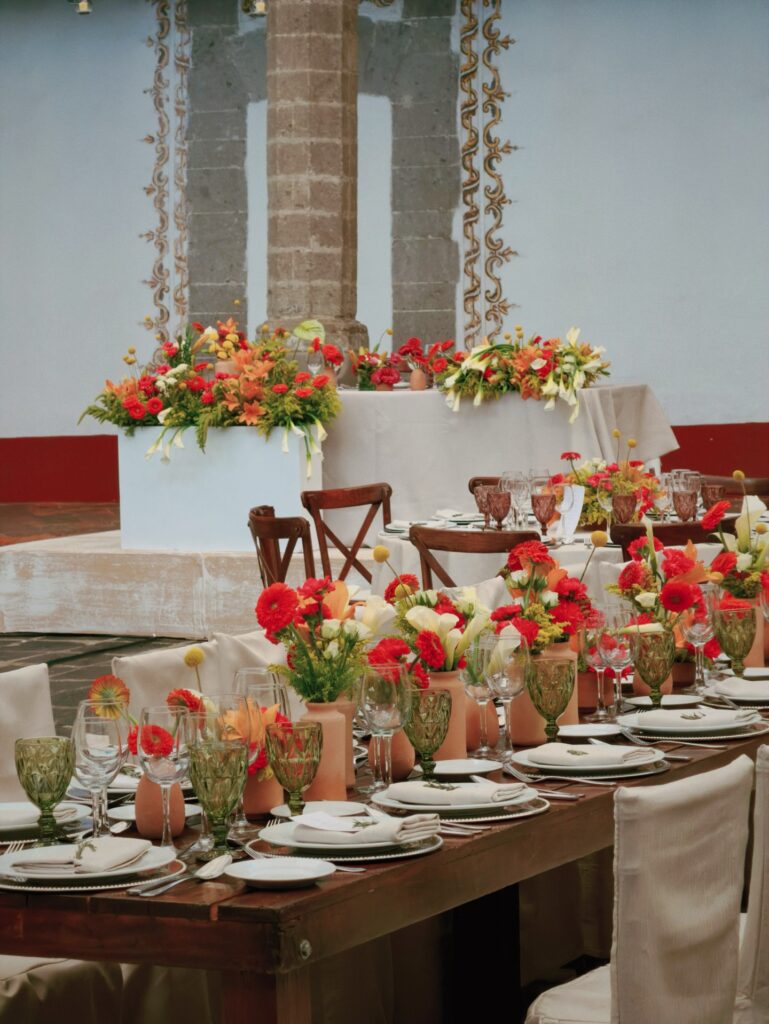
Start with the flowers, not the plates. This look works because the center of the table is packed with small clay bud vases and low arrangements in red, cream, orange and yellow, so the color feels spread out instead of stuck in one big centerpiece.
Keep the vessels short and slightly varied. That matters. Guests can still talk across the table, and you get that layered, collected look without needing a florist to build something massive.
The green goblets help more than people think. If you want the same richness on a smaller budget, rent colored glassware and keep the rest plain with white plates, folded napkins and dark wood tables.
I’d skip anything too polished here. Glossy vases or sleek chairs would fight the earthy pottery and the heavier carved glass, which are really doing the work.
Papel Picado as Your Ceiling
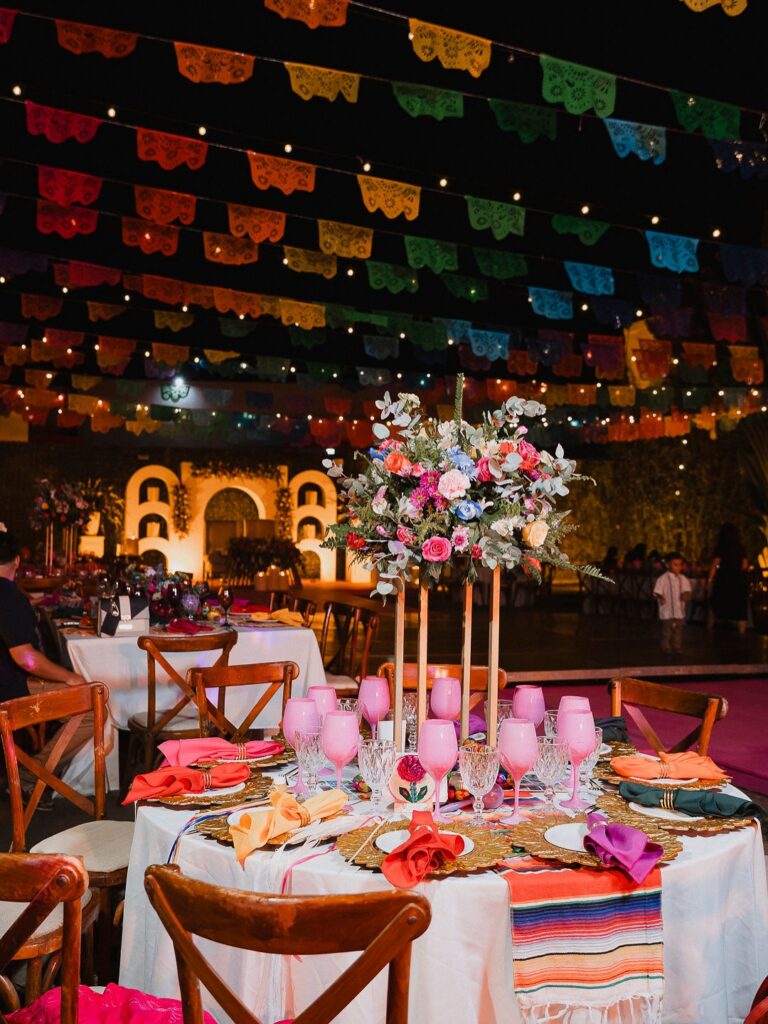
Running those cut-paper banners overhead does something that no centerpiece on the table can — it fills vertical space without blocking anyone’s view or conversation. The ones here are strung in full rainbow order across multiple rows, and the string lights woven between them are doing a lot of the heavy lifting once the sun goes down. If you’re working with a venue that has exposed beams or a pergola, this is very easy to hang.
Open courtyard with nothing to tie to? You’ll need to rent poles or work with your venue coordinator ahead of time, which adds a step most people underestimate. Buy papel picado in bulk — individual packs never cover enough ground.
Plastic versions hold up better outdoors overnight.
Flower Canopy Tables
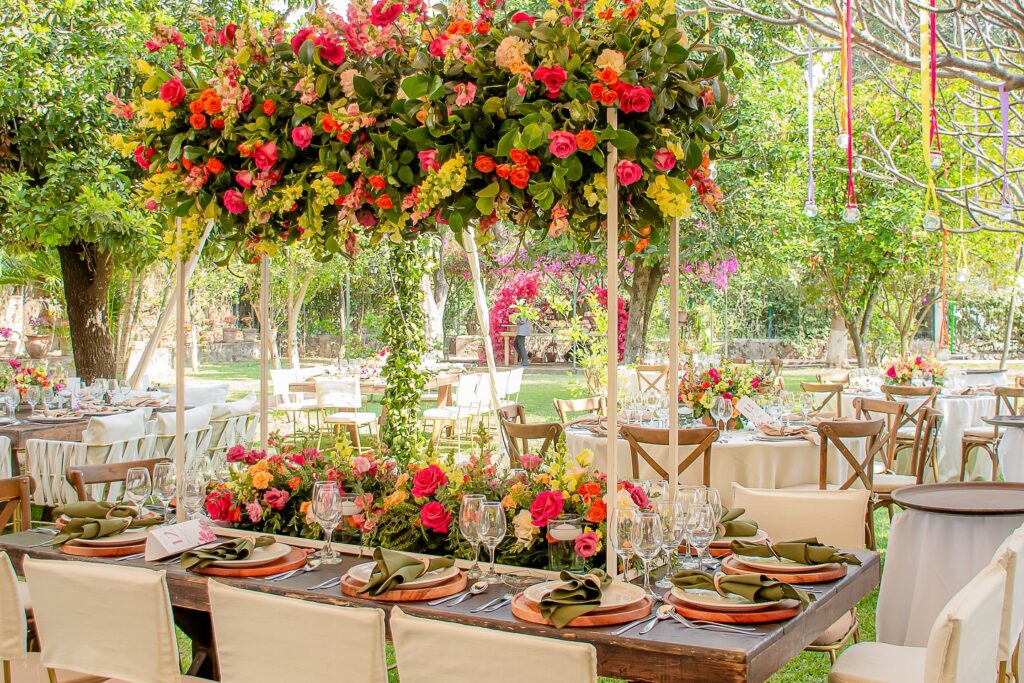
Once the flowers move overhead, you can keep the actual table much easier to manage. Use a wooden table, terracotta chargers, olive napkins, and clear glassware, then spend the bigger flower money on one hanging frame packed with roses, greenery, and a few yellow stems. Keep sightlines clear.
This works well for a Mexican garden wedding because the color sits above the guests, so the plates, cutlery, and glasses still have room to breathe during dinner. I would skip tall centerpieces here, since they will fight with the canopy and make the table feel crowded for no good reason.
All Red Everything
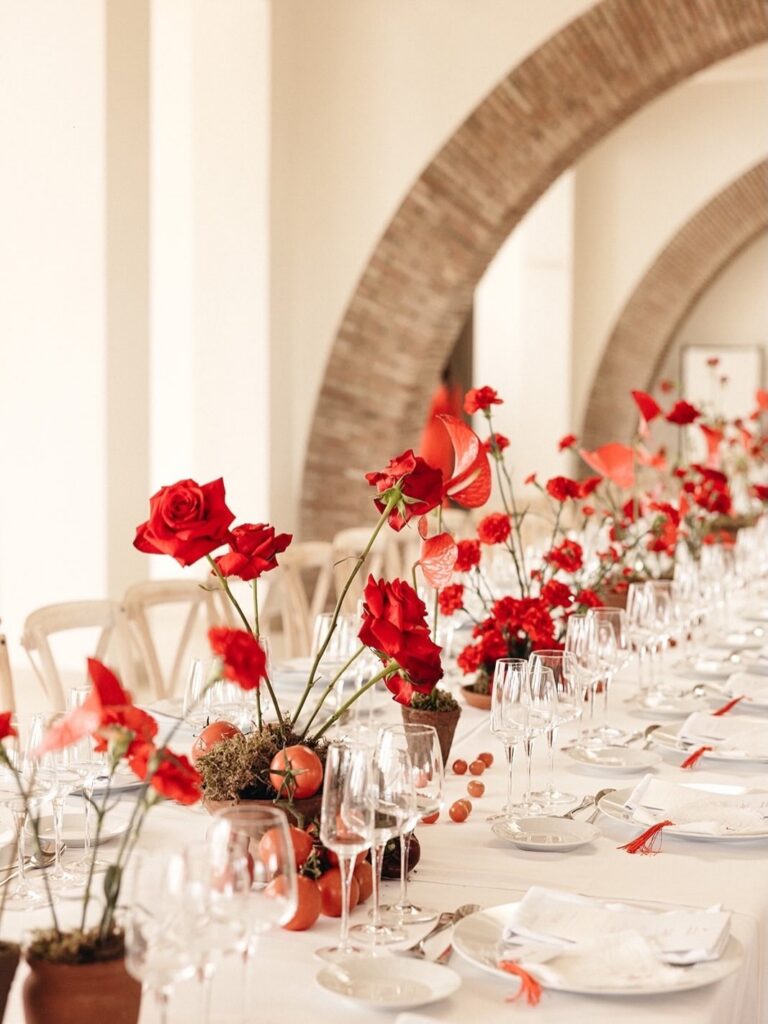
Red roses, red carnations, red anthuriums, and actual tomatoes on the vine running down the middle of the table. That’s the whole idea. Pick one color and commit hard.
The tomatoes are what make this work — without them it would just be a florist’s centerpiece, but the produce grounds it in something Mexican, something edible, something a little unexpected sitting next to the wine glasses. Little terracotta pots with moss tucked around the base help too. If you’re doing this, I’d skip the anthuriums.
They photograph well but they read tropical more than Mexican, and roses plus carnations plus tomatoes already carry the table. The red tassels on the napkins are a nice touch and cheap to DIY with embroidery thread.
Terracotta and woven layers
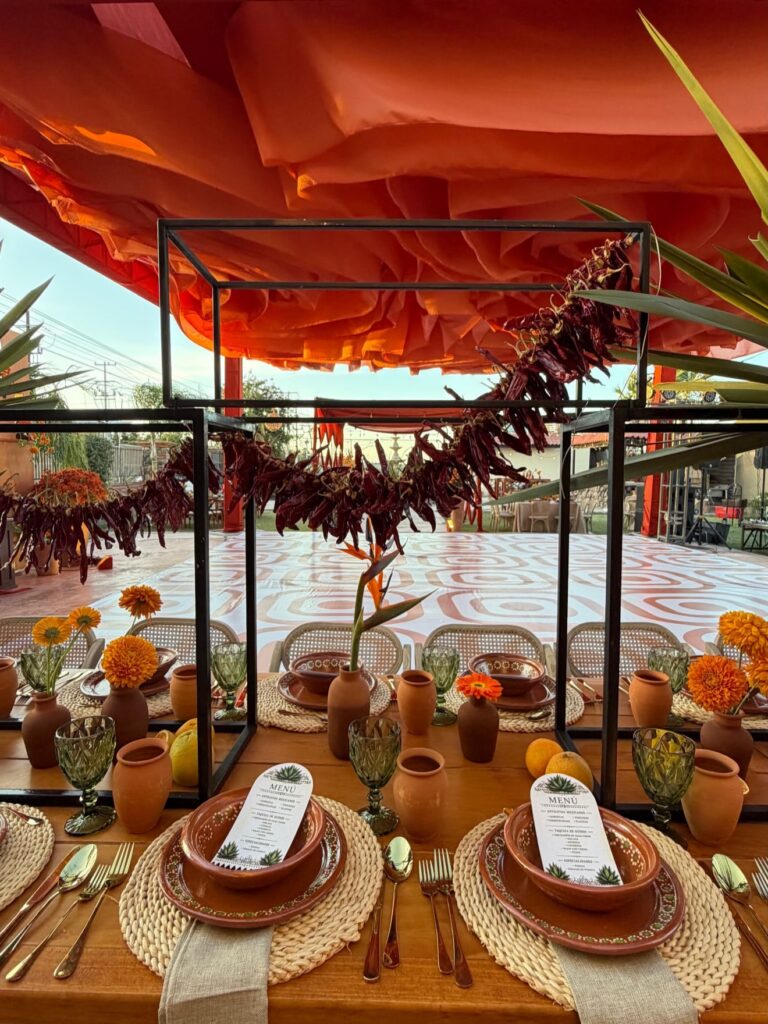
Start with the place setting. A terracotta bowl over a matching plate, then a round woven charger underneath, gives you enough texture and color that the rest of the table can stay pretty restrained. It works well for a Mexican wedding because the materials feel grounded and handmade, especially once you add small clay bud vases instead of one large arrangement that blocks conversation.
Keep the flowers tight and low. Marigolds are doing most of the work here, and they should, because that saturated orange already carries across the table without needing extra filler greenery.
The black metal frames are the part to think through. They give the table structure and help a hanging chile garland read as intentional, but on a crowded guest table I’d use just one frame per run or move them to the buffet instead.
Bougainvillea and Lemons Down the Middle
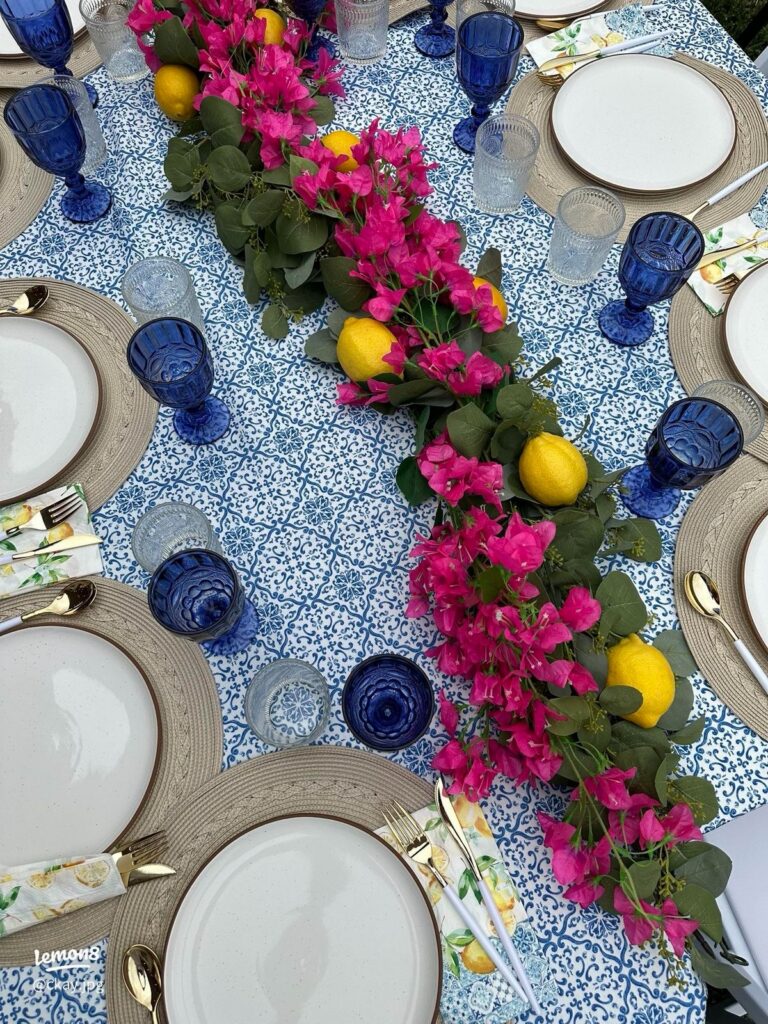
Running bougainvillea along the center like this works because the magenta holds its own against a busy blue-and-white tablecloth — a quieter flower would just disappear into it. Tuck whole lemons into the greenery every foot or so rather than clustering them, which is what keeps it looking loose instead of arranged. The eucalyptus fills the gaps without adding another color.
For the place settings here, the woven chargers do a lot — they break up the blue goblets and gold cutlery so nothing feels too matched. If you’re sourcing bougainvillea fresh, buy more than you think you need. It drops petals fast once it’s cut, so this is a same-day setup.
Silk works fine for this one, honestly.
Pepper Centerpiece
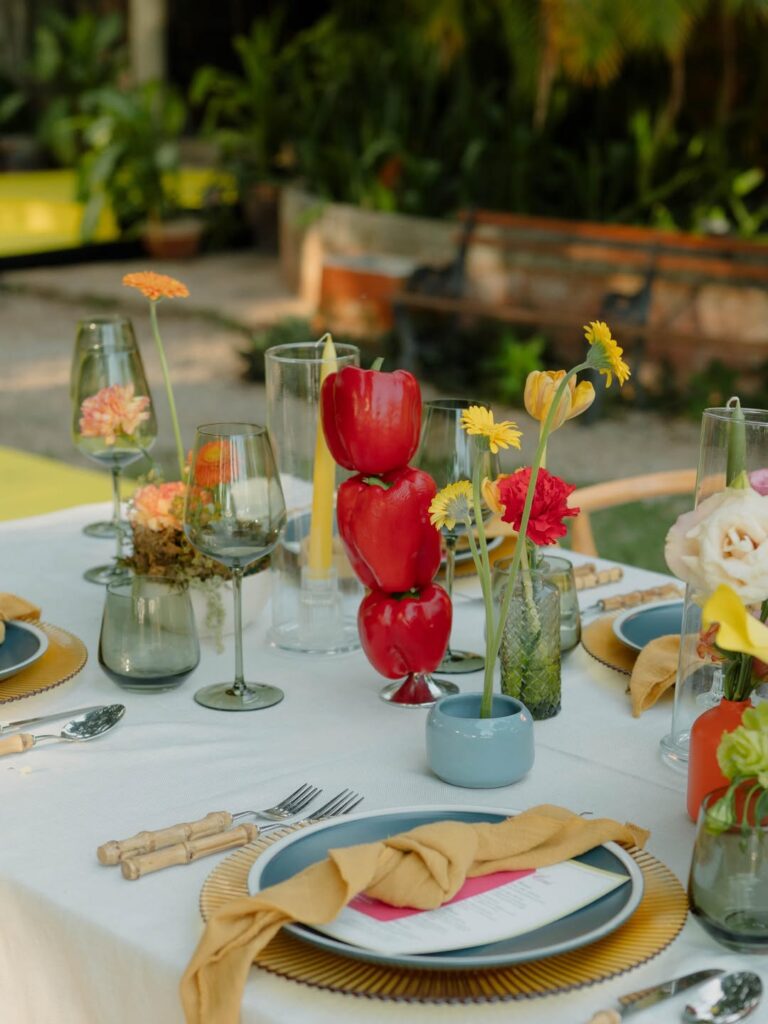
If your florist budget is already stretched, use produce for height instead of another vase. Three red peppers stacked on a low stand give the table a market feel, especially beside yellow napkins and blue plates. Keep the flowers lower.
That helps the peppers look planned, not like they were borrowed from the kitchen at the last minute. Run a wooden skewer through the peppers if the table will be bumped by guests reaching for drinks or salsa. I would skip this on very narrow tables, because tall loose pieces get annoying fast.
For round tables, though, one pepper stack in the center and a few single-stem vases around it is enough.
Overflowing Floral Runner in Sunset Tones
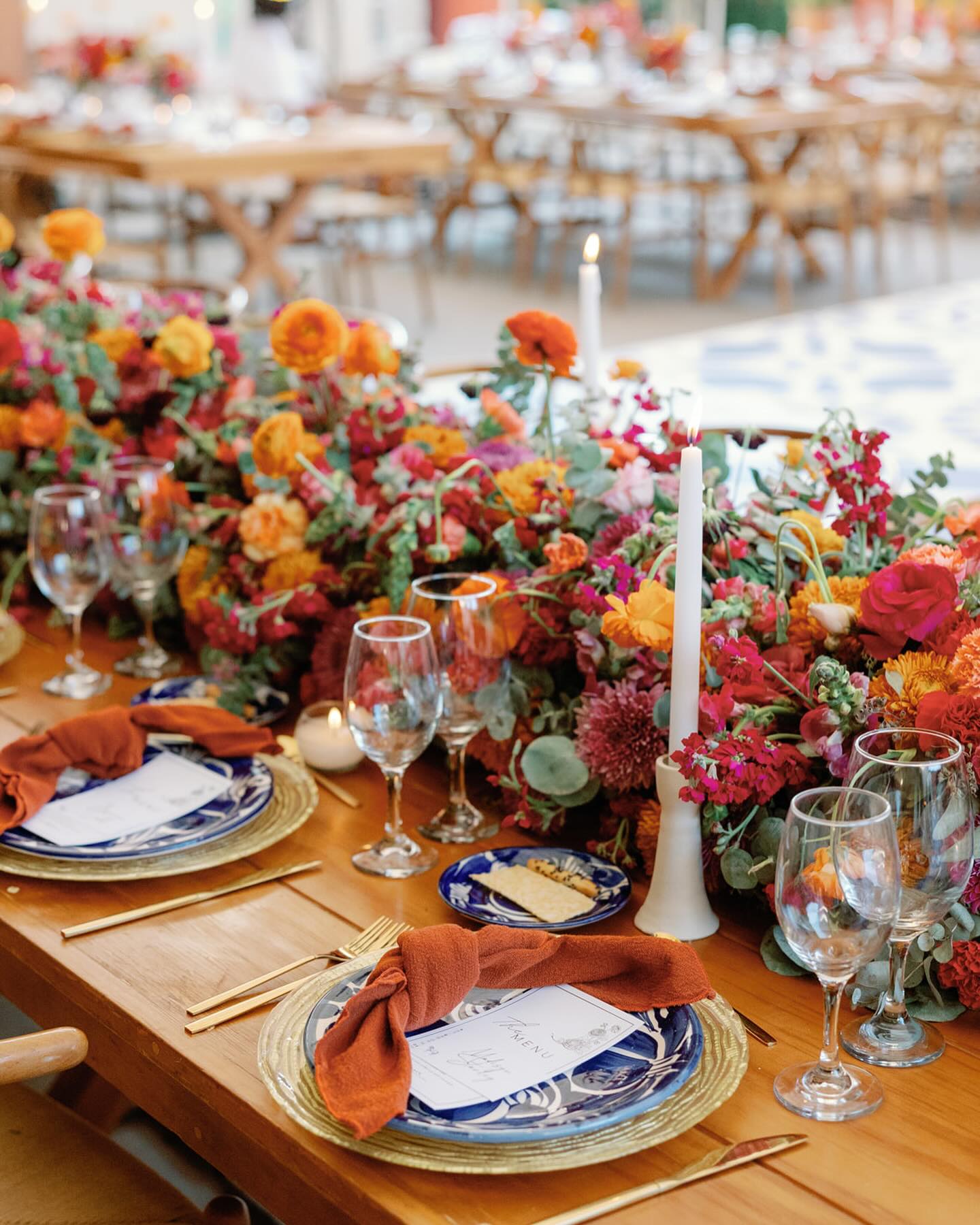
The whole length of the table is buried under ranunculus, dahlias, marigolds and eucalyptus in orange, magenta and deep red. That’s the point. A runner like this replaces individual centerpieces entirely, so you’re not fussing over matching arrangements down a long farm table.
To pull it off, ask your florist for a garland base built on chicken wire or foam bars, not loose stems. Otherwise it collapses by dinner. Keep the flowers low enough that guests across from each other can actually see faces.
The rust napkins and blue talavera plates keep it from tipping into chaos. Two colors on the table, everything else on the flowers.
One thing I’d change. Skip the taper candles sitting inside the florals — one dropped petal near a flame and you’ve got a problem.
Fruit on the arbor
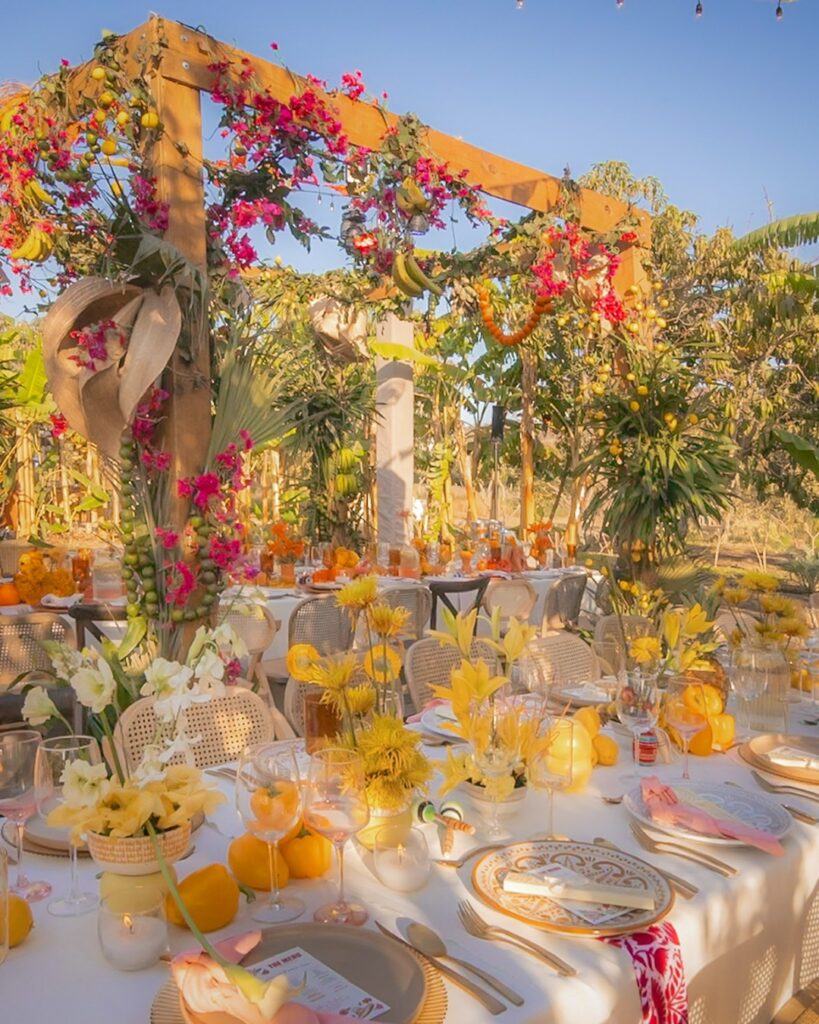
Start with the overhead structure. A plain wooden arbor does most of the work here because it gives you one clear place to hang bougainvillea, citrus, and even a few bunches of bananas without crowding the table itself.
That part matters, because once fruit goes overhead, the place settings can stay fairly light: a few yellow blooms in bud vases, scattered lemons, and amber glasses are enough, and the whole table still feels full when the sun hits it late in the day.
Use sturdy fruit. Bananas, small oranges, limes.
I’d skip anything too heavy unless your florist or rental team is securing it properly, since sagging garlands and loose stems over dinner are more trouble than they’re worth. This suits an outdoor wedding with a long family-style table, especially if you want color without bringing in lots of linens.
Terracotta and Olive as a Base
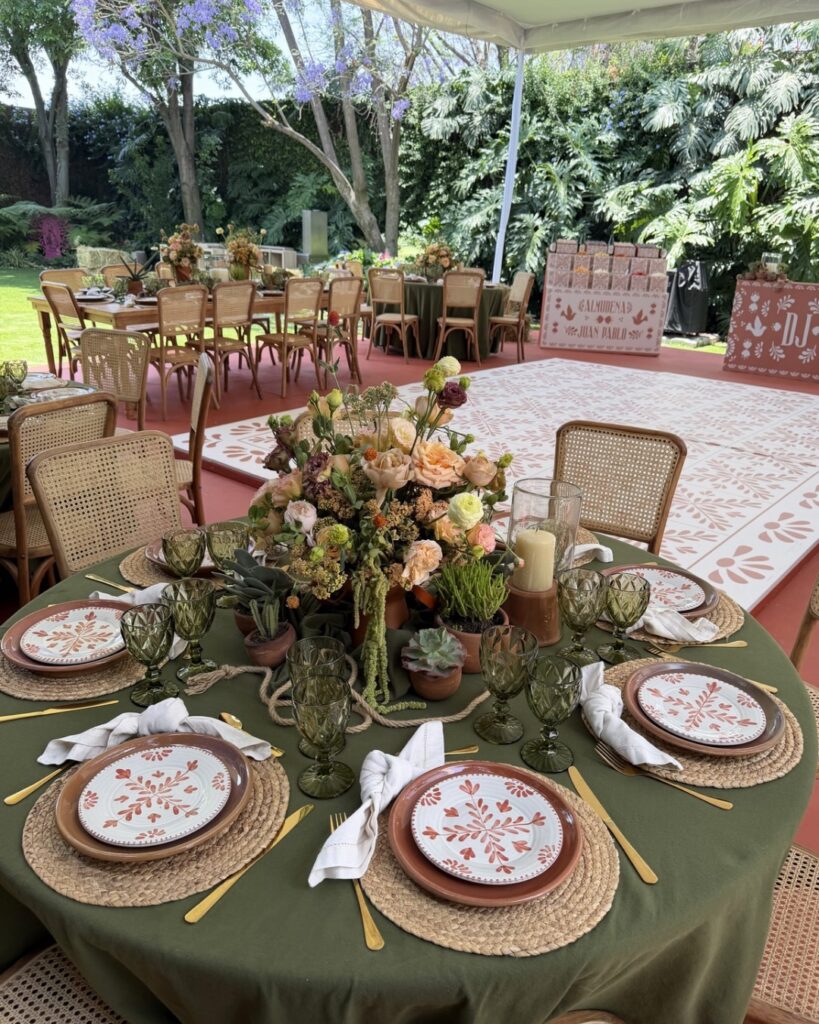
Woven placemats under terracotta chargers do a lot of the work here — the layering reads as deliberate without needing much else on the table. The white plates with rust-colored folk print are what tie everything to a Mexican reference without going overboard. If you can’t find printed plates like those, plain white on terracotta chargers still holds the palette together.
Smoked green glassware is worth hunting for. It reads differently than clear glass and keeps the color story going even when the table is mid-meal. The olive tablecloth is doing more than you’d think — a white or cream linen here would flatten the whole thing.
Gold flatware I’d skip in favor of brass, which sits warmer against this palette.