
27 Pastel Wedding Decor Ideas
This list has 27 pastel decor ideas for weddings, and each one comes with its own picture so you can see the colors before you decide. Some ideas suit couples who want a light touch of soft color in one spot. Others suit couples who want pastels to run through the whole day. Planners, parents, and friends who are helping with the details will find something to use too. Pastel shades are pale and soft, such as pink, mint, lavender, and light blue. You can pick one color or mix several. Go through the list slowly. Take your time. Save the pictures you keep coming back to, and use them to start a plan that fits your wedding day.
Pastel Urn Arrangements
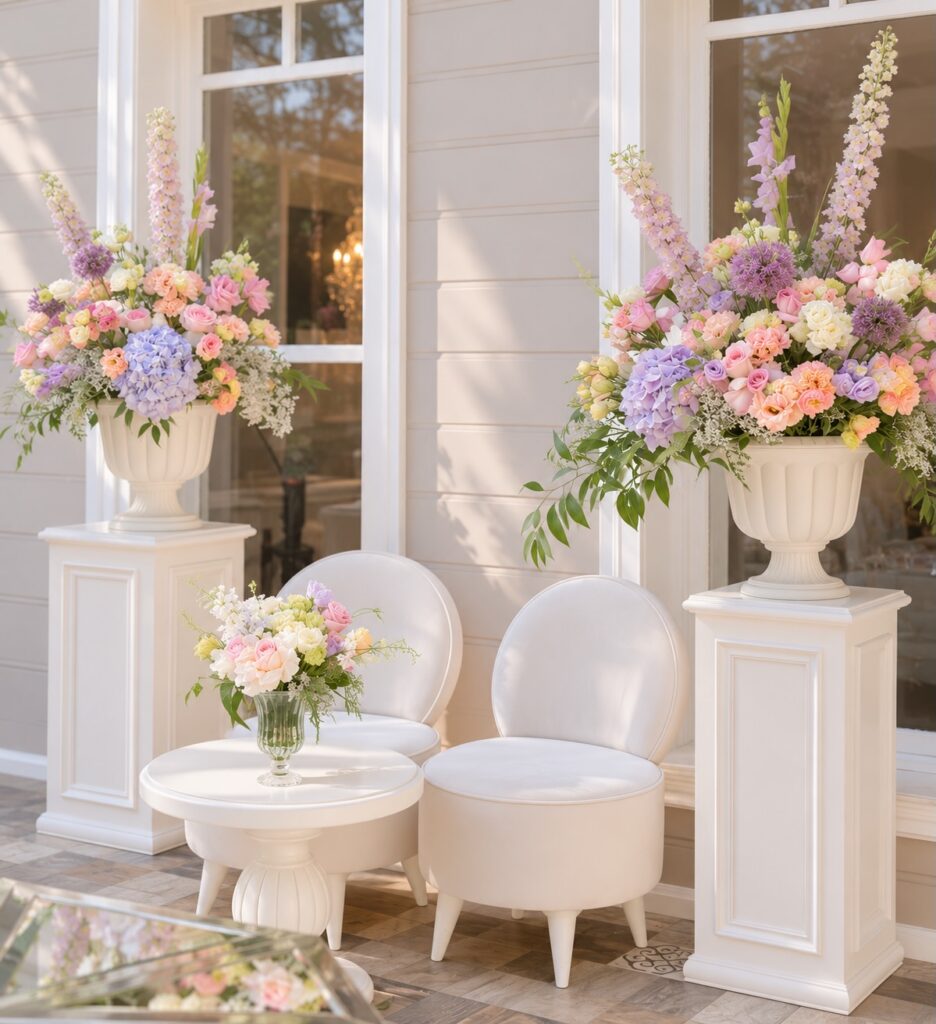
At a ceremony entrance or beside a small guest lounge, paired pastel urn arrangements frame the area without needing a floral arch. Set tall cream urns on matching plinths and fill them with roses, hydrangeas, and upright blooms. Their height can mark a doorway while leaving the path open. This approach works well for couples decorating a porch, terrace, or indoor threshold, especially when the venue has pale walls or white trim.
Couples after a spare look, or planning a narrow aisle with limited floor space, may prefer a few low arrangements instead. Two large urns need room on either side, and can crowd a small entrance.
Pastel Floral Wedding Signs
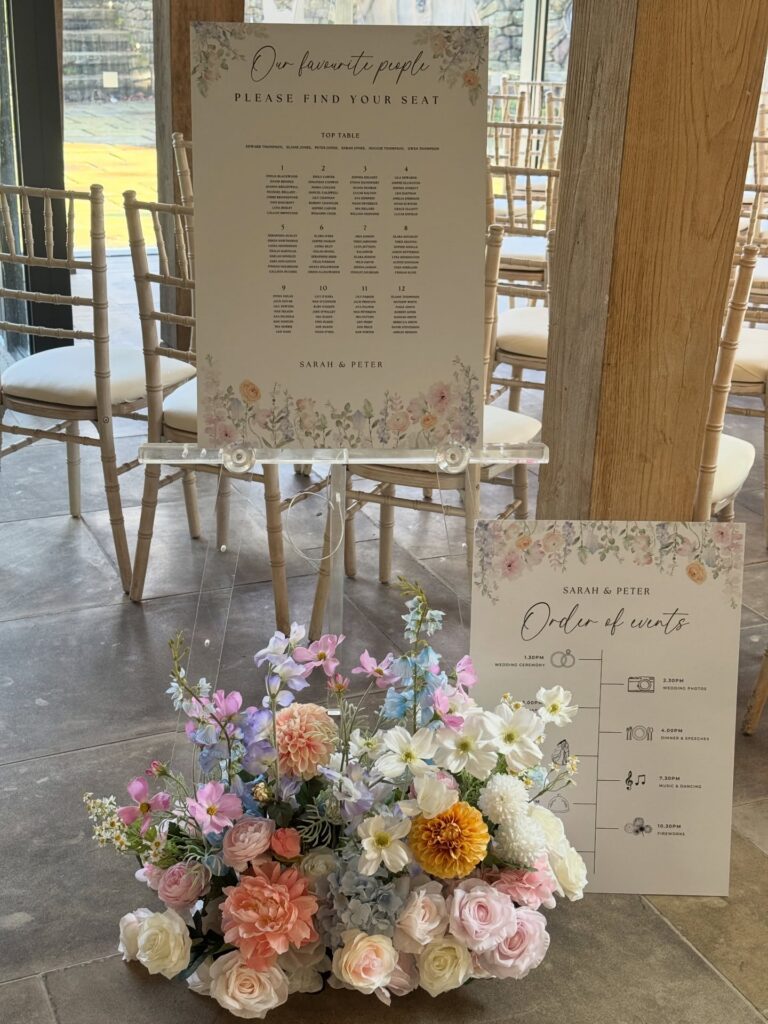
Frame your seating plan with pastel flowers, using a printed floral border and a low arrangement at the foot of the sign. Print the names on cream card mounted to foam board, with flowers along the bottom edge and a few stems in the top corners. A matching order-of-events board can sit beside it, repeating the same paper, type and flower colours without needing a second stand.
For the floor arrangement, use roses and dahlias for the larger blooms, then add smaller daisylike flowers and a few taller stems in pale blue or lilac. Arrange them in low bowls with chicken wire secured inside, letting the outer flowers hide the rims. If fresh flowers are beyond the budget, use silk stems for the larger heads and fill the gaps with foliage. A clear easel leaves the printed border visible; a plain wooden easel will also work if its ledge is narrow enough to leave the text clear.
Aisle Chair Sashes and Floor Flowers
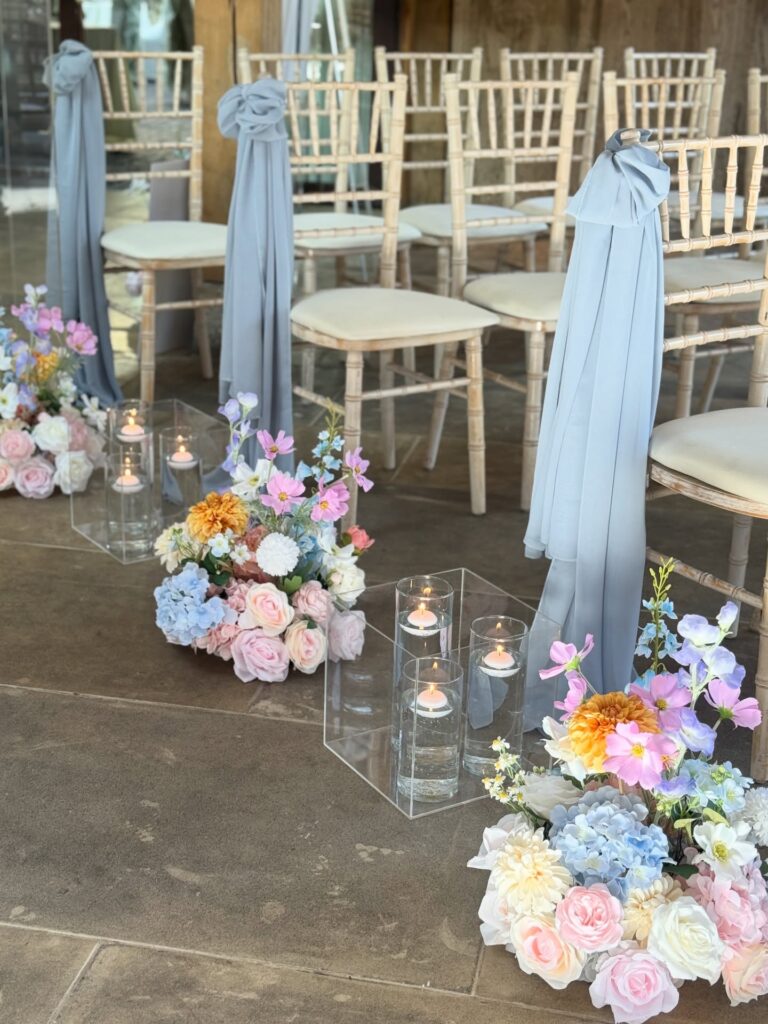
Chair sashes in dusty blue and low flower clusters along the aisle only work if the colors stay close in tone. Here the blue chiffon, the blue hydrangea and the pale pink roses sit in the same soft range, so the orange dahlias stay a small accent. Add more than one or two of those and they pull attention from everything else.
Keep the sashes loose and let them hang to the floor, because tight knots look fussy against the chair backs. Set the candles in glass at the same height as the flowers.
Pastel Painted Bar
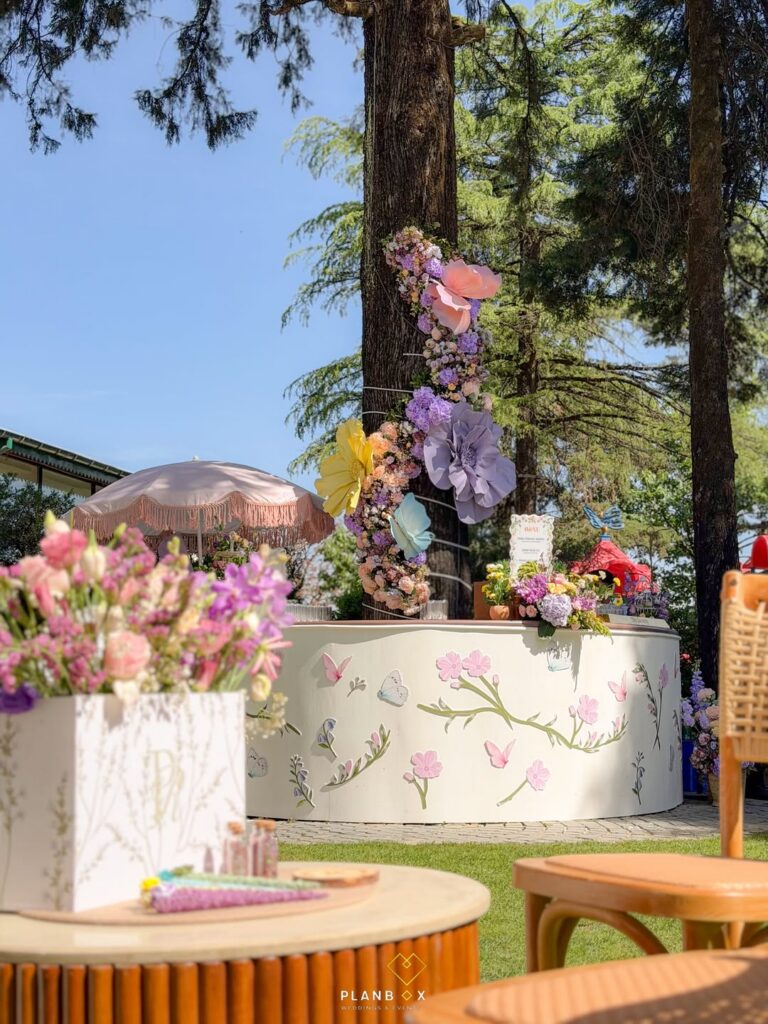
A curved bar front gives small pastel flowers room to spread without competing with the table settings. The painted design can stay loose, with thin stems and scattered blossoms across a pale cream ground. Soft pink, lilac, and muted green keep the pattern light; stronger colors would make the counter feel busier.
Changing the scale shifts the look. Tiny flowers make a fine border around the bar, while larger blooms turn the front into a clear focal point. I’d use a few large flowers among smaller sprigs, as on this curved counter, so the pattern has places for the eye to rest. Repeat one or two of those colors in the flowers on the counter, rather than matching every shade. That link ties the painted surface to the floral display without making them look identical.
Pastel Flowers on Clear Stands
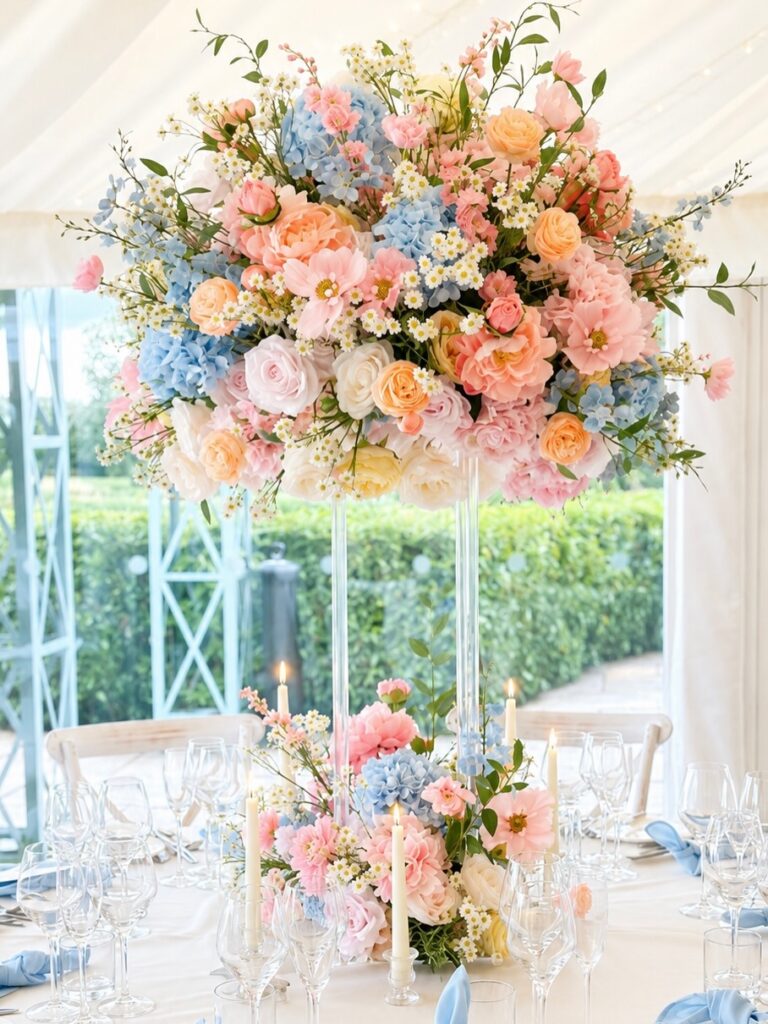
Raise a full arrangement of pastel flowers above the table on a clear stand, rather than building the entire display at plate level. The clear supports are the detail worth getting right: they leave a gap beneath the flowers, so the arrangement seems to hang over the table without a solid column cutting through the view. With an opaque pedestal, the same flowers would look heavier, and the support would become as noticeable as the blooms.
At the base, a smaller cluster of flowers repeats the pink, peach, and pale blue overhead. That link gives the tall arrangement a connection to the table without filling the gap between the two. Keep the lower cluster below seated eye level so guests can still see across it. Let a few stems reach beyond the edges of both arrangements; a tightly clipped outline would make the two tiers look more like stacked balls.
Mixed Pastel Flower Runner
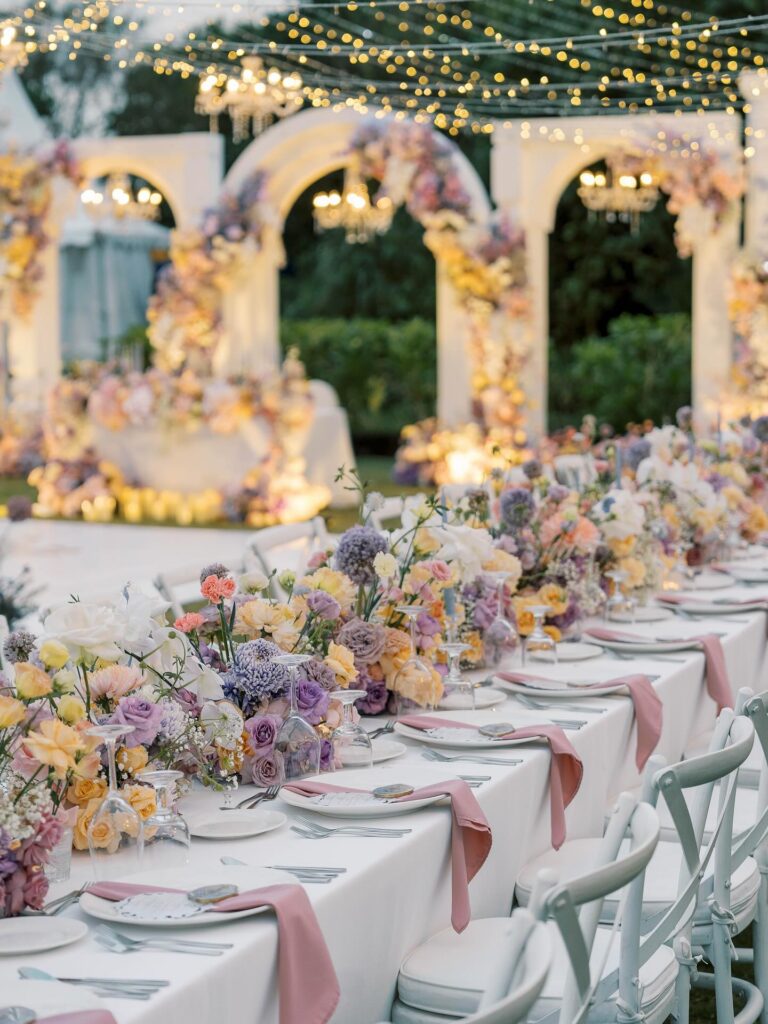
A long table with one continuous run of flowers down the middle, mixing lilac, peach, butter yellow and cream, gives a pastel wedding a single focal line. Start with the linens, because everything else is matched to them. A plain white cloth and dusty pink napkins give the flowers a quiet base, so the blooms can carry all the color.
Then choose the flowers in layers. Pick two or three main blooms in different sizes, such as roses, ranunculus and round allium-type heads, and add a few thin, airy stems so the arrangement has some height and movement. The step that matters most is keeping the colors close in strength. If one shade is much deeper than the rest, it pulls the eye and breaks the run.
Build the arrangement last, in small clusters set end to end rather than one big piece. Leave gaps for the glasses and plates, and keep the stems low enough that guests can see across the table. I’d go a little lower than feels natural.
Pastel Bridal Bouquet
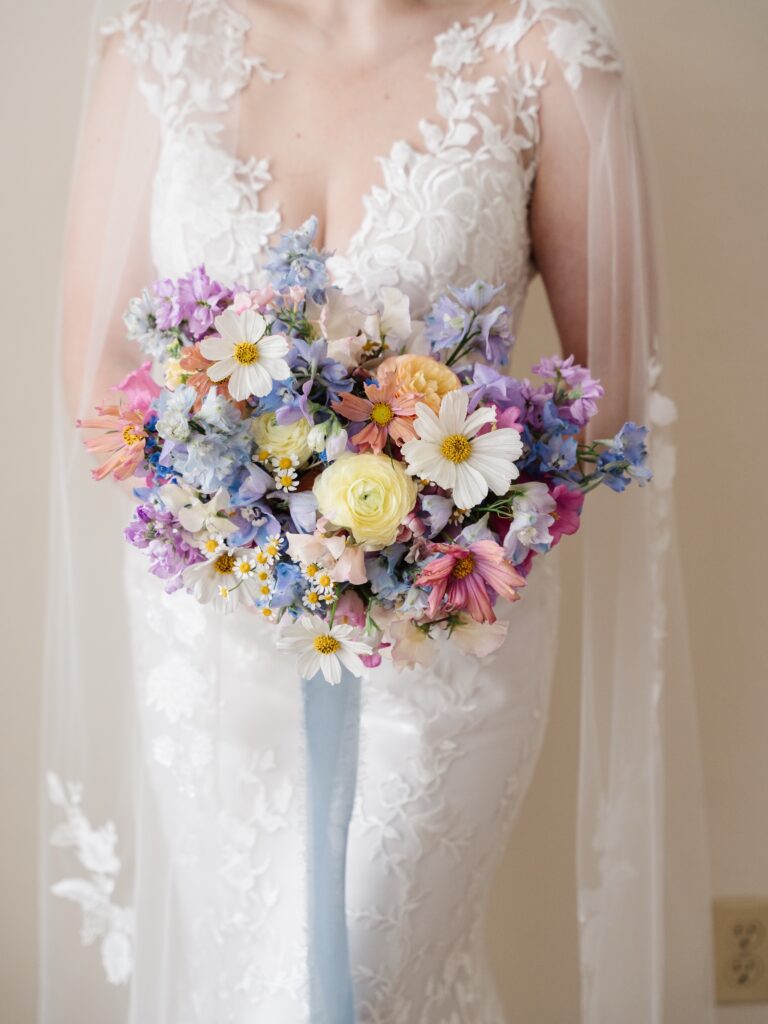
A pastel bouquet gives the bride a clear patch of color among the white lace and veil. Carry it low at the waist during the ceremony so it does not cover the dress bodice, then bring it along for portraits outside the venue or in a bright room.
Mixing pale blue, lilac, blush, and soft yellow keeps the flowers varied without making any one shade dominate. White daisies and a pale yellow rose add larger blooms that show up from a distance, while smaller flowers fill the spaces between them. At the reception, place the bouquet in a narrow vase near the guest book or at the edge of the sweetheart table when it is not being held.
Pastel Flower Pocket Sign
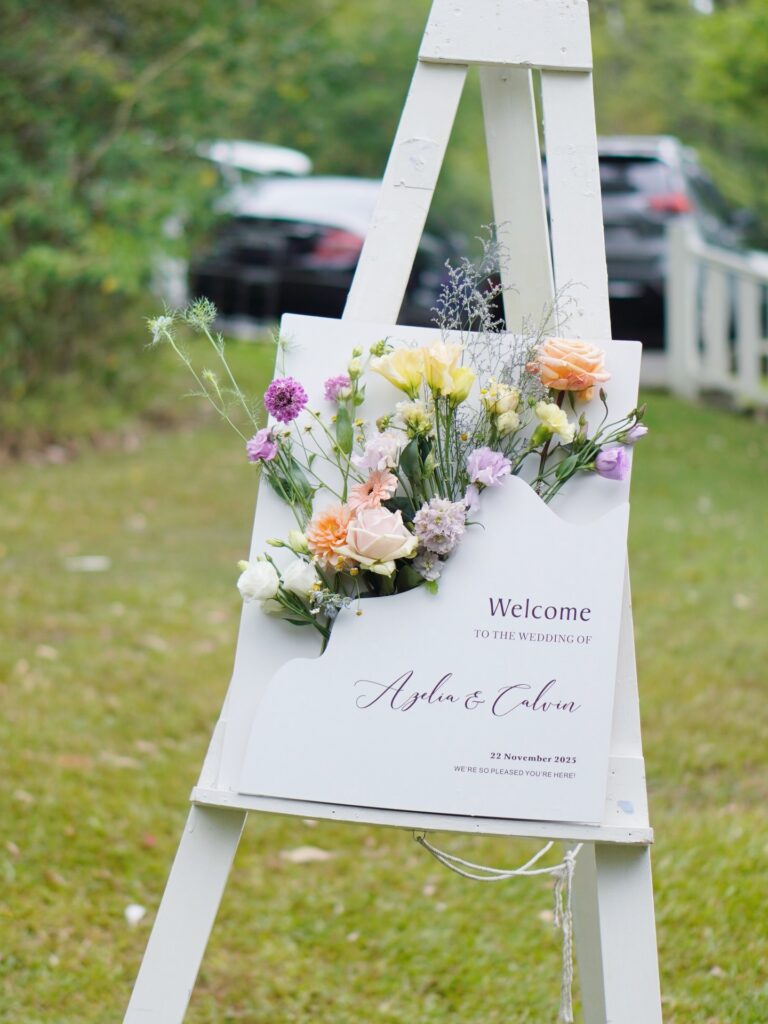
Tuck pastel flowers into a curved pocket on your welcome sign, with the stems hidden behind the front panel. The dip in the edge lets peach roses and lilac blooms spill toward the lettering while taller stems rise above it, leaving the names clear below.
Without that curve, a straight band of flowers would divide the board into two blocks. Letting a few blooms lean over the edge joins the flowers and lettering without covering the words.
Pastel Florals in Cream Vases
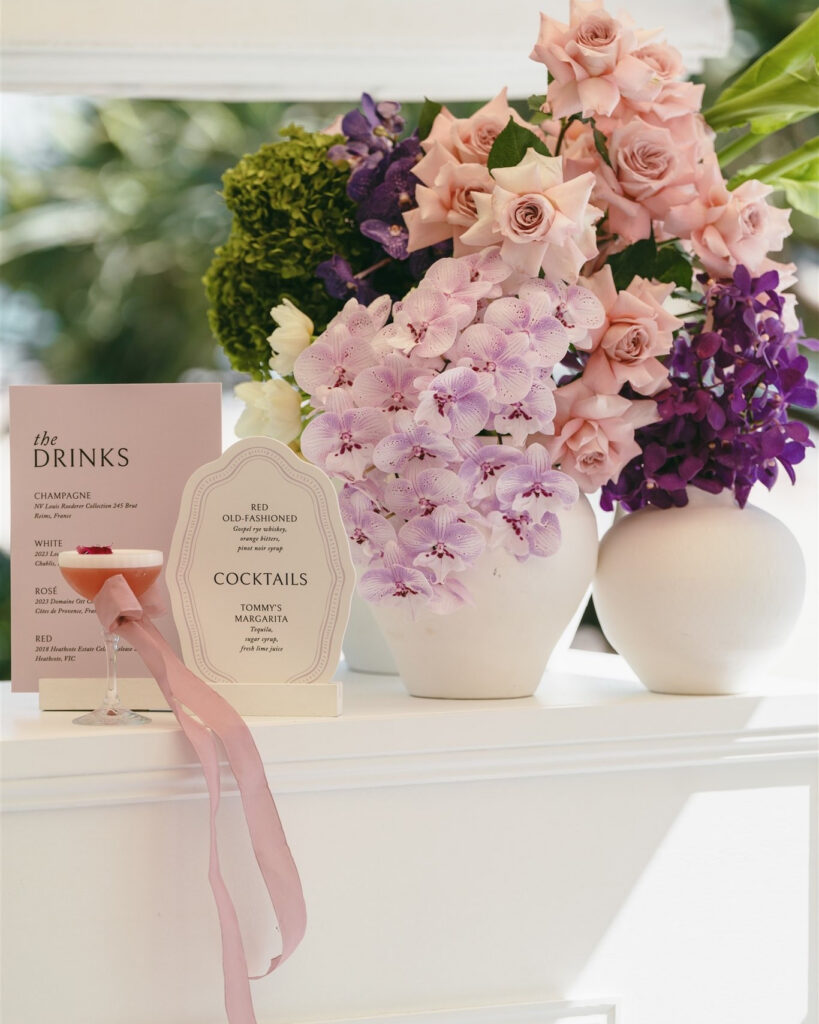
A bar top can carry its color in the flowers alone. Here that means blush garden roses, lilac moth orchids, and deep purple orchids, with a clump of green hydrangea behind them. The vases are matte cream with rounded bellies, so nothing competes with the blooms.
If you can’t get orchids, use stock or lisianthus in lilac, and ranunculus in place of roses. Any off-white ceramic jug or urn works for the vases. Pick two in different sizes and set them side by side.
Pastel Table Numbers
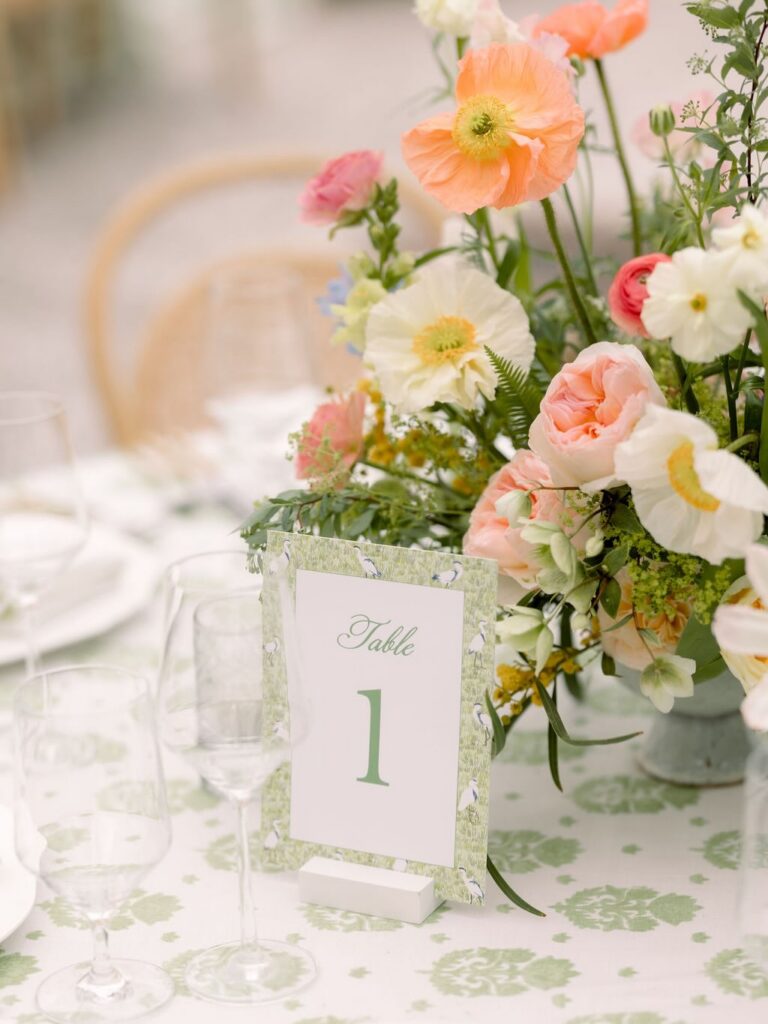
A pastel table number card gives guests a clear marker as they move between reception tables. Set it near the front edge, beside the place settings rather than behind the centerpiece, so the number stays easy to see from the aisle.
A pale botanical border can echo the printed tablecloth without repeating its pattern across every detail. Use the same layout for each number, then let the flowers rise behind it. A small stand keeps the card upright through dinner.
Pastel Floral Monogram Cards
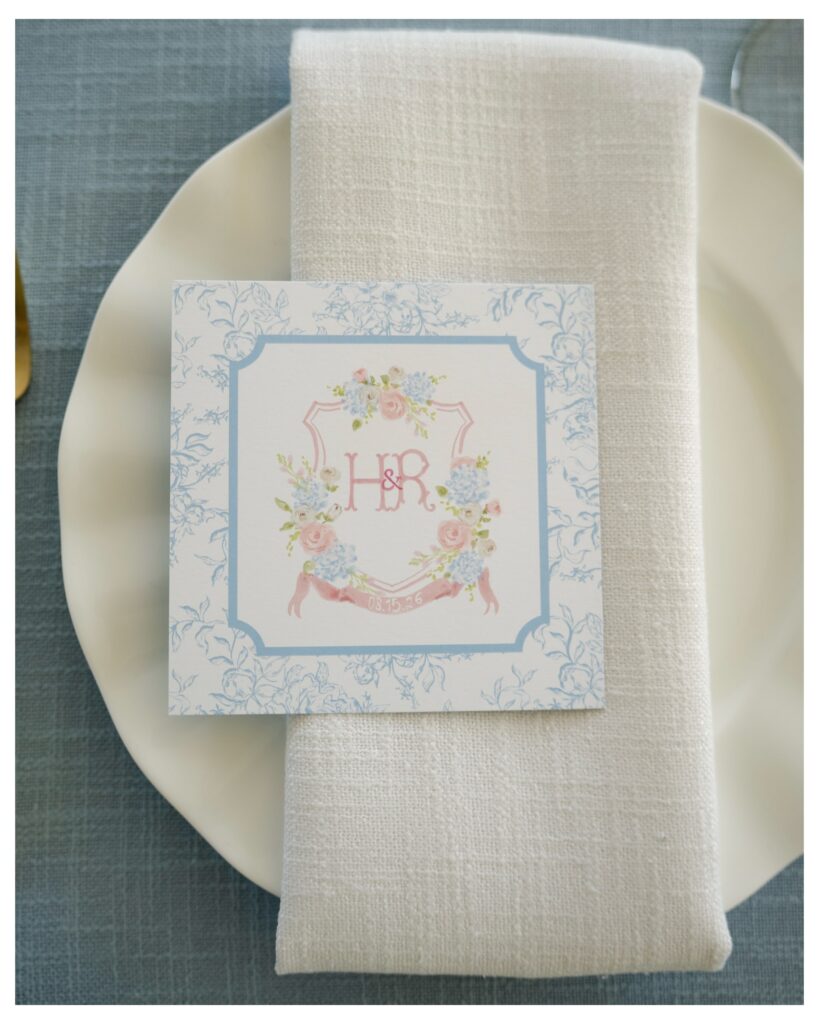
Print your wedding monogram on square cards with a pastel floral border, then lay one across each folded napkin. The blue linework and pink flowers give the initials a frame without needing a larger sheet of paper.
For a greener version, change the blue border to pale sage and leave the flowers pink. That shifts the balance toward the leaves, especially if you use the same green for the initials. Choose a shade dark enough that the fine lines stay visible against cream paper. An ivory linen napkin underneath gives the card a plain background, so the small floral details remain easy to see.
Grouped Floral Arrangements at Different Heights
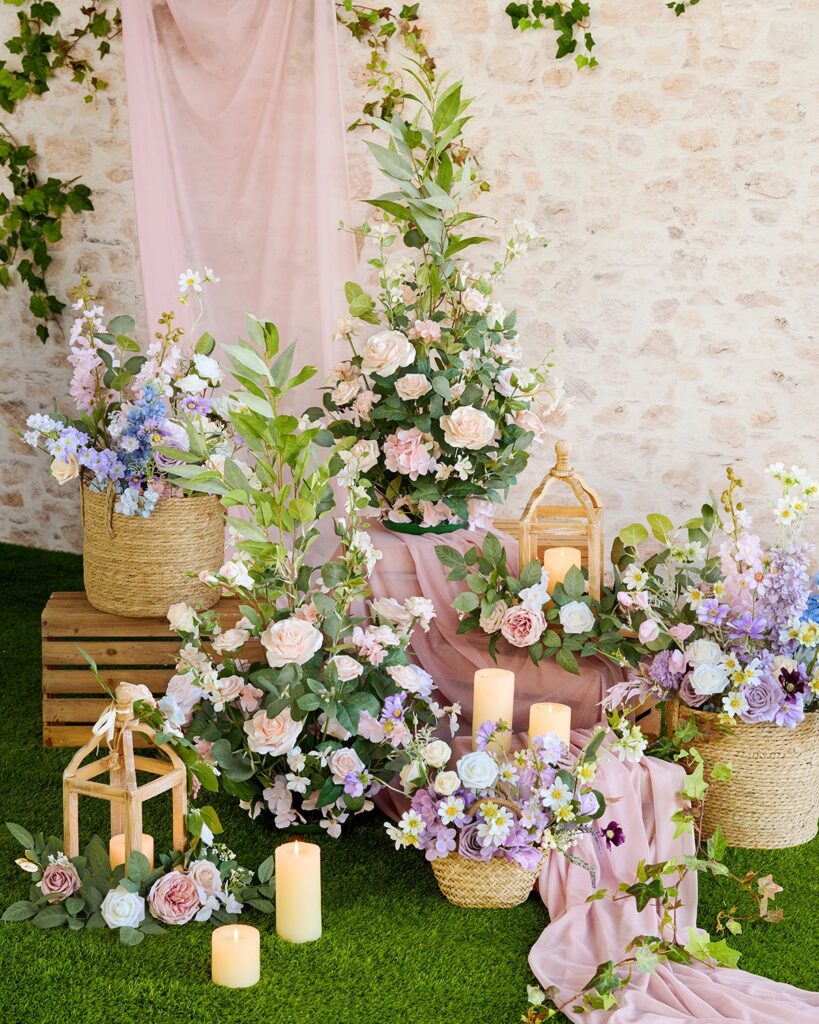
Flowers in one pastel family look best when the containers sit at different levels. Here that means a wooden crate under one basket, a draped table behind a tall arrangement, and candles and lanterns down on the ground. Without the changes in height, the same blooms would sit in a flat row and look like a shelf display.
The common mistake is making every arrangement the same size and the same color. Pick one soft shade for the fabric, then let the flowers vary a little around it, with blush roses, lilac, pale blue and white. Leafy stems add some green between the pinks, and the loose ivy trailing down the wall ties it to the backdrop.
Keep the groups close enough to overlap at the edges. If they sit too far apart, each one looks lost against a big wall. I’d also keep the candles low and in front, so they never block the flowers behind them.
Pastel Hanging Baskets
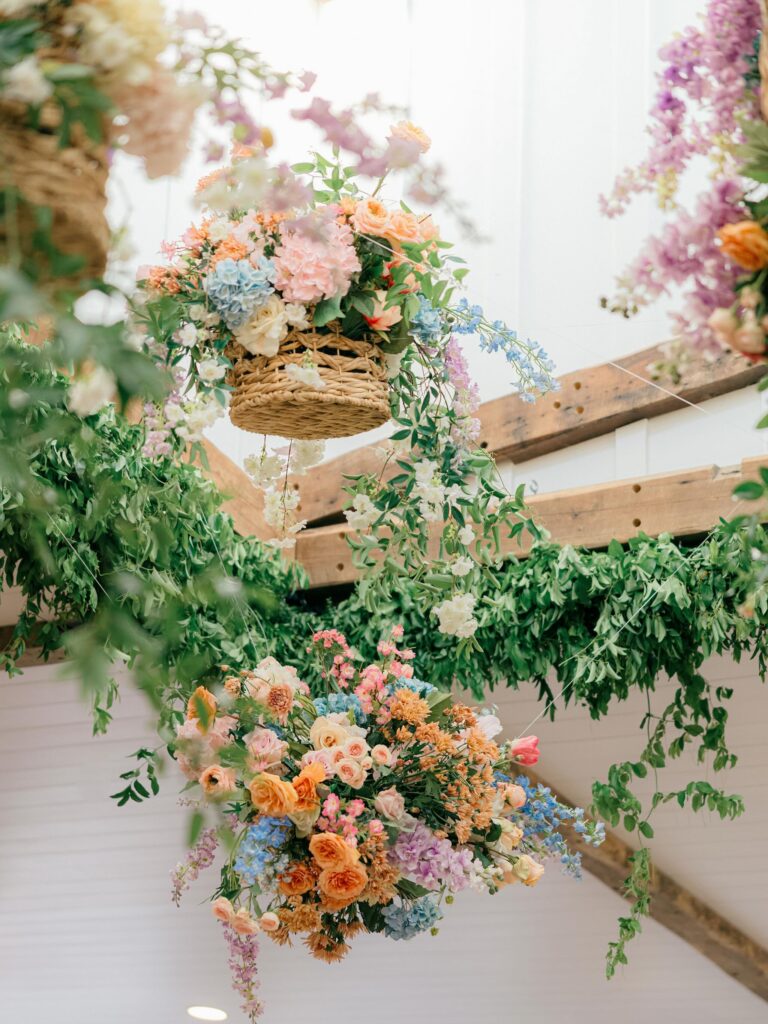
A woven basket filled with pastel blooms can hang above the tables, with trailing greenery linking it to the room. Start by marking the ceiling points and checking what each point can hold; the weight of a soaked floral arrangement is easy to underestimate. This is the step that matters most, since the flowers should never hide a weak hook or improvised support.
Once the rigging is set, hang the empty baskets and check sightlines from the seats. Add water-holding floral foam or another florist-approved support, then build the flowers into the basket, keeping the fullest blooms near the rim and lighter stems above them. Peach, pale pink, blue, and cream flowers give the arrangement its color, while trailing stems soften the basket edge. Finish with greenery attached along the beam or support line, so the overhead flowers feel connected without blocking lights or hanging low over guests.
Raised Pastel Flower Displays
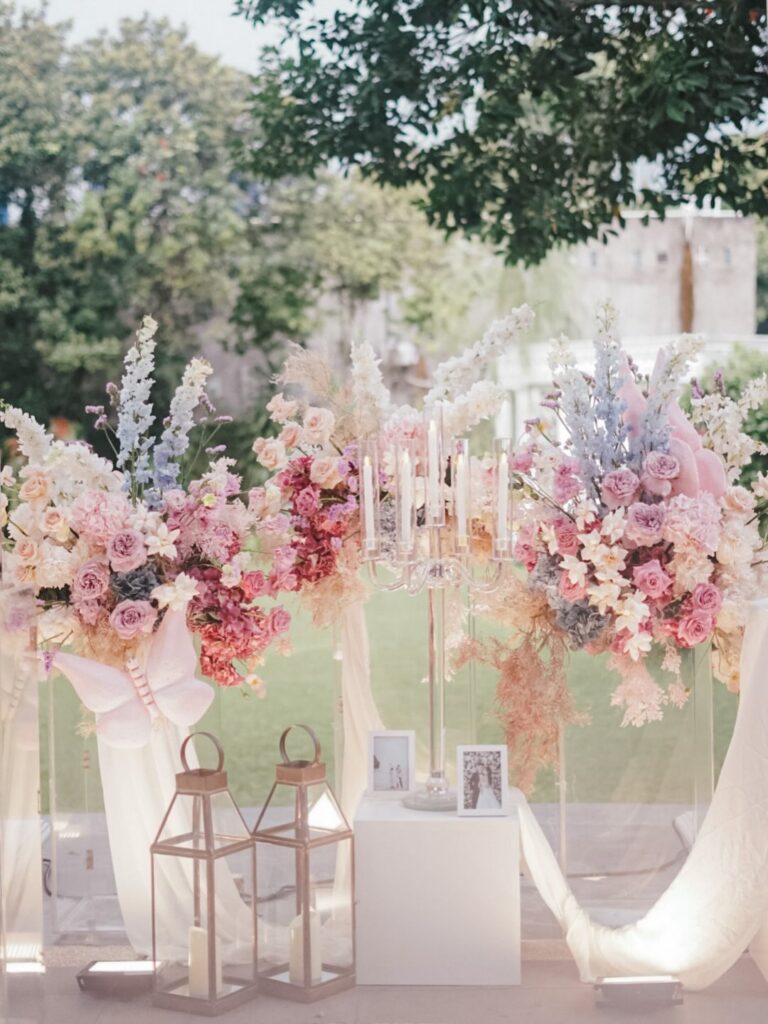
Raise pastel flower arrangements on clear stands when you want a floral backdrop without a full arch. The stands leave space beneath the flowers, while lengths of white fabric soften the gaps between them.
For a couple who wants flowers to be the main decoration, this is a good place to put a larger share of the decor budget. It works best at a ceremony entrance or behind a signing table, where guests can see the full arrangement from a distance. You can leave nearby surfaces mostly bare rather than repeat smaller bouquets throughout the room.
If your priority is conversation across dinner tables, choose a lower arrangement from the list instead. This much height needs a spot away from seated guests and busy walkways. It also makes more sense for couples using a florist than for anyone arranging flowers on the wedding morning. Getting several raised displays into place takes time, and the stands need a level surface before the flowers go on.
Layered Oval Menu Cards
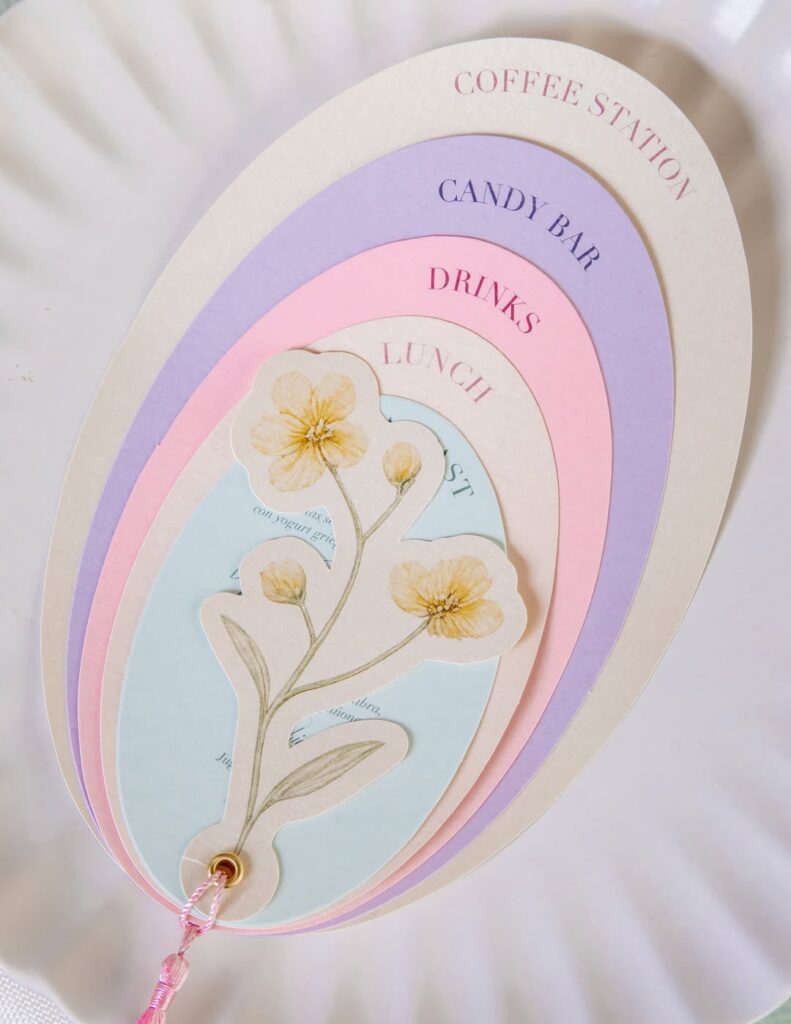
A menu that fans open like a stack of paper petals gives guests the day’s schedule of food in one small object. Each oval is a different size and color, cut from cardstock in cream, lilac, pink and pale blue, with the label printed along the top edge of its own layer. The ovals are punched at the bottom and held together with a brass eyelet and a pink tassel, so they pivot like a hand fan.
The flower on top is a printed illustration cut out around its outline. If you don’t have a cutting machine, print the flower on matte paper and trim it with small scissors, leaving a thin border. A plain ribbon or a loop of embroidery thread will hold the stack if you can’t find eyelets.
Pastel Floral Ceremony Arch
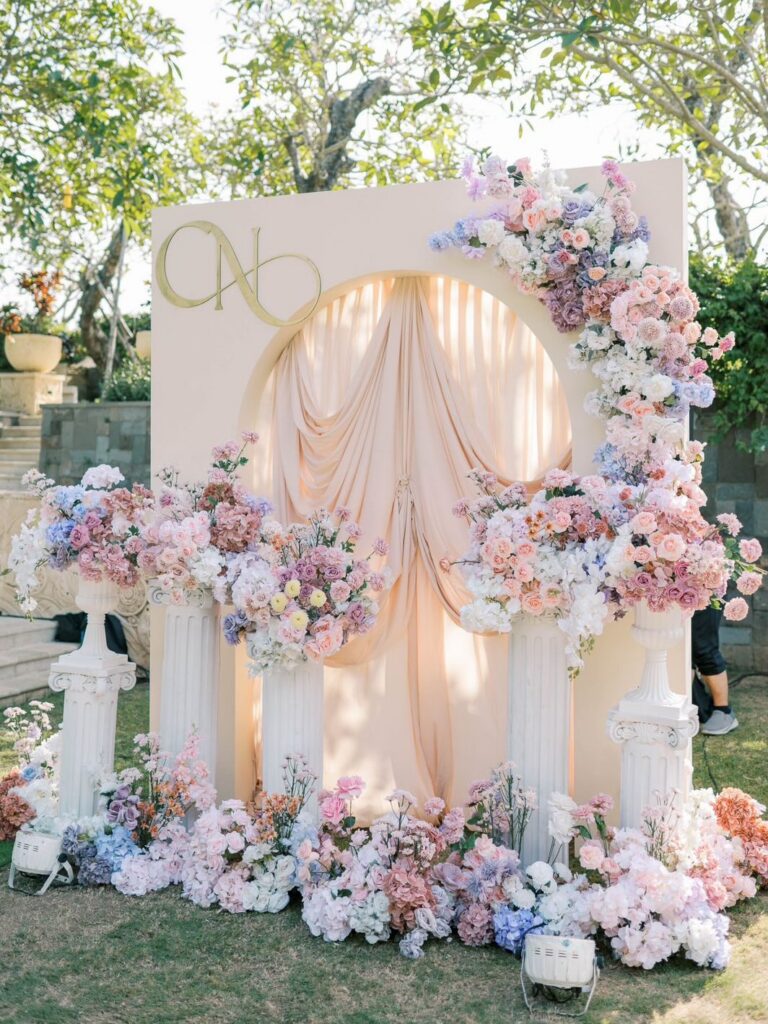
A flower-framed ceremony arch gives the vows a focal point, with gathered fabric softening the opening and blooms trailing down one side. It works for couples who want a full backdrop and have room for large arrangements. Those after a lighter setup may prefer a small floral runner or fabric-only arch.
Pastel Flowers Around the Cake
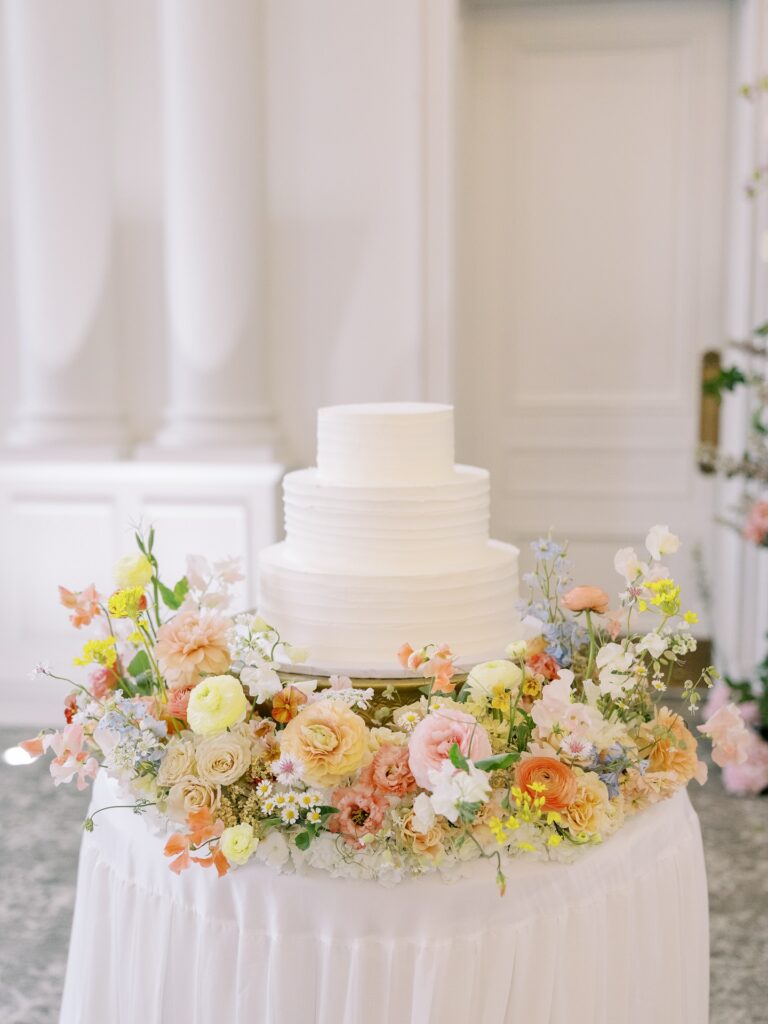
Build a ring of pastel flowers around the base of your cake stand, leaving the cake itself plain. Start with the tablecloth and stand, then have the cake set in place before adding any flowers. Arrange the blooms in low containers that hold water without leaking onto the cloth.
Place the largest blooms first, spreading peach, pale pink, and yellow around the ring rather than grouping each color together. Fill the gaps with smaller flowers, then add a few taller stems at the sides. The most important step is to keep flowers and foliage clear of the icing and cake board. Leave room to reach the stand so the cake can be cut without brushing against the arrangement.
Floral Ring Around the Table
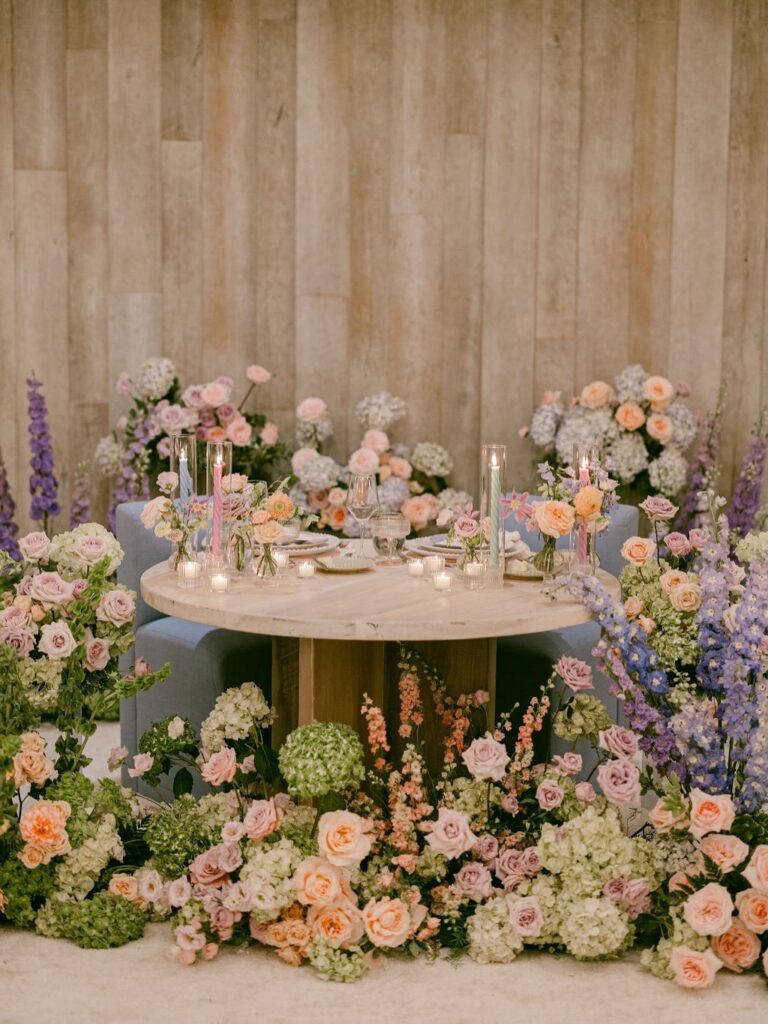
A round table with flowers banked on the floor around its base looks full from every side, but it only works if the heights are planned. Flowers sitting at one level turn into a flat wall. Here the delphiniums rise at the edges, the roses and hydrangea sit low in the middle, and the spiky pink stems fill the gap under the tabletop.
The other trouble is the table itself. Pile blooms too close and guests can’t pull a chair in or get their feet under the edge. Leave a clear band of floor at the seats, and keep the arrangements on top low enough to see across.
Pastels also go muddy when every flower is the same pale tone. Mixing in green hydrangea, as this one does, gives the pinks and lavenders something to stand against.
Blush Seating Chart
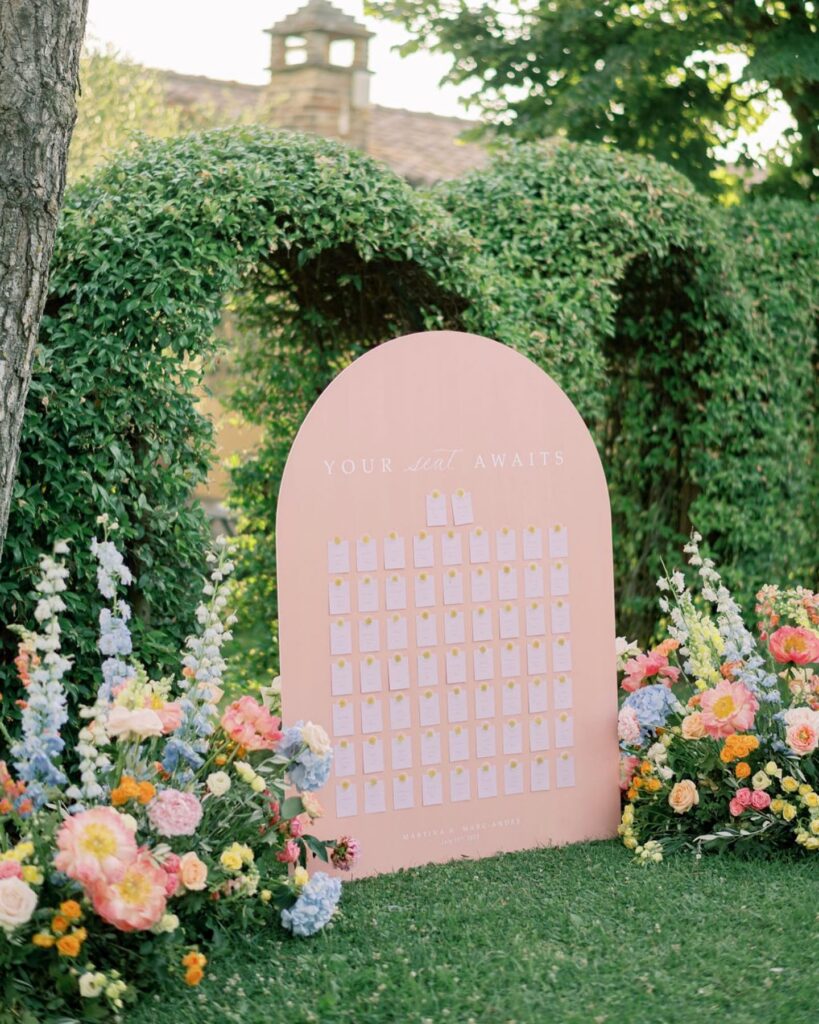
Rows of small name cards give a pastel seating chart its order. Pin them in a clear grid on a blush arched panel, with enough space between rows for guests to scan the names. The rounded top softens the outline, while the repeated rectangles keep the information easy to follow.
Small pale yellow pins add a little contrast without competing with the lettering. Leave room in front for guests to gather, and keep flowers around the base from covering the lowest cards. Without the grid, the cards can look scattered, and the board loses its sense of order.
Butter Yellow Sweetheart Table
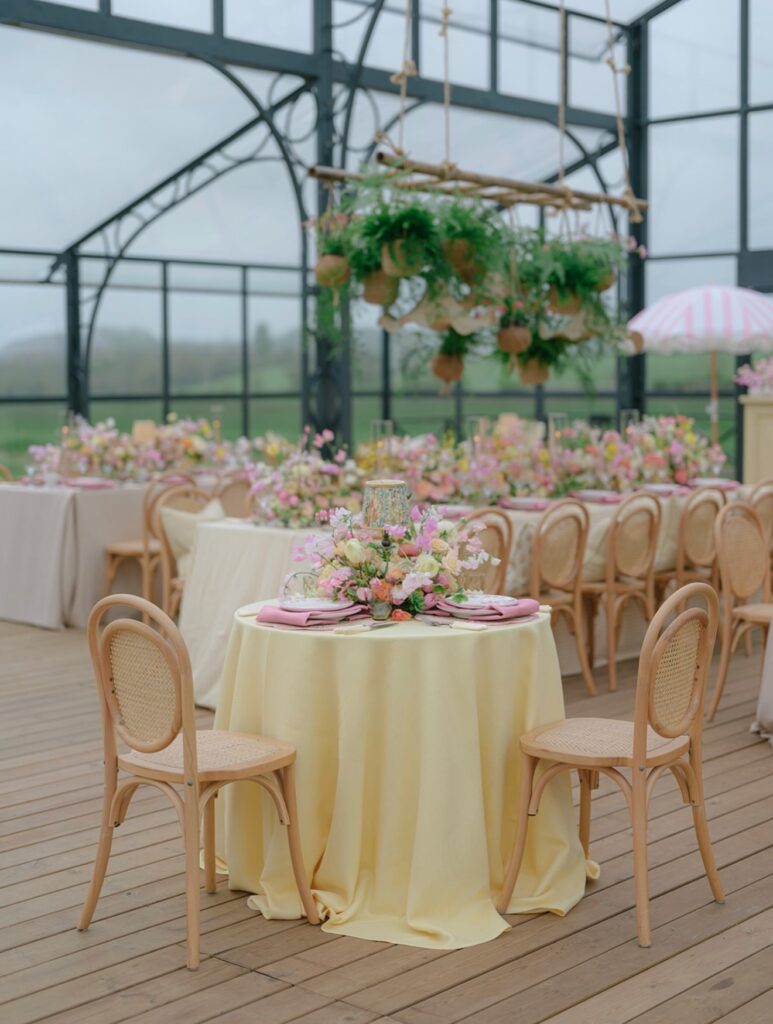
Cover a small sweetheart table with butter-yellow cloth, then use pink napkins to carry a second pastel across the top. A cloth that reaches the floor gives the yellow more room than a runner would, especially on a table set for two.
For a variation, use washed linen rather than satin in the same pale yellow. The matte surface makes the color look softer, while the creases give that long drop some texture. Satin would catch more light and make the folds more noticeable, so choose it if you want the cloth itself to draw more attention. With linen, I’d leave the hem just above the floor rather than pooling it.
Pressed Flower Table Names
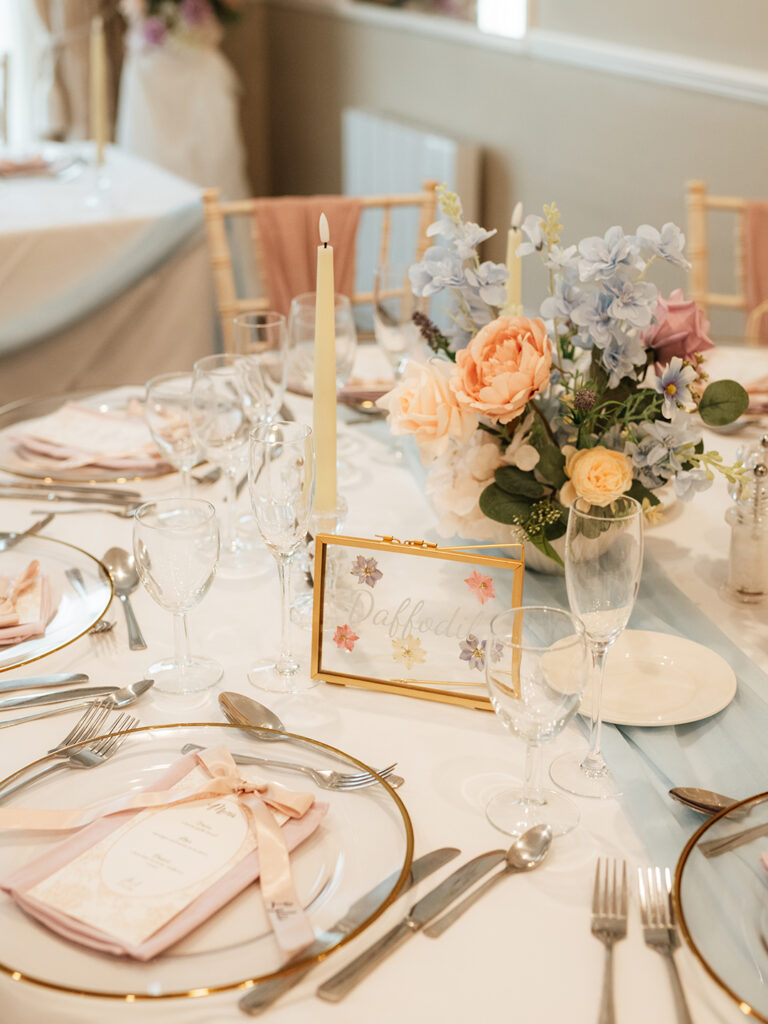
A pressed flower frame in place of a standard table number works best on a round guest table, where the sign sits close to the centerpiece and people see it as they sit down. Here it’s a thin gold frame with small dried blooms and the table name written in script across the glass. Gold matches the plate rims.
I’d name tables after flowers, then use the same blooms in the arrangement beside the sign.
Pastel Fringe Parasols
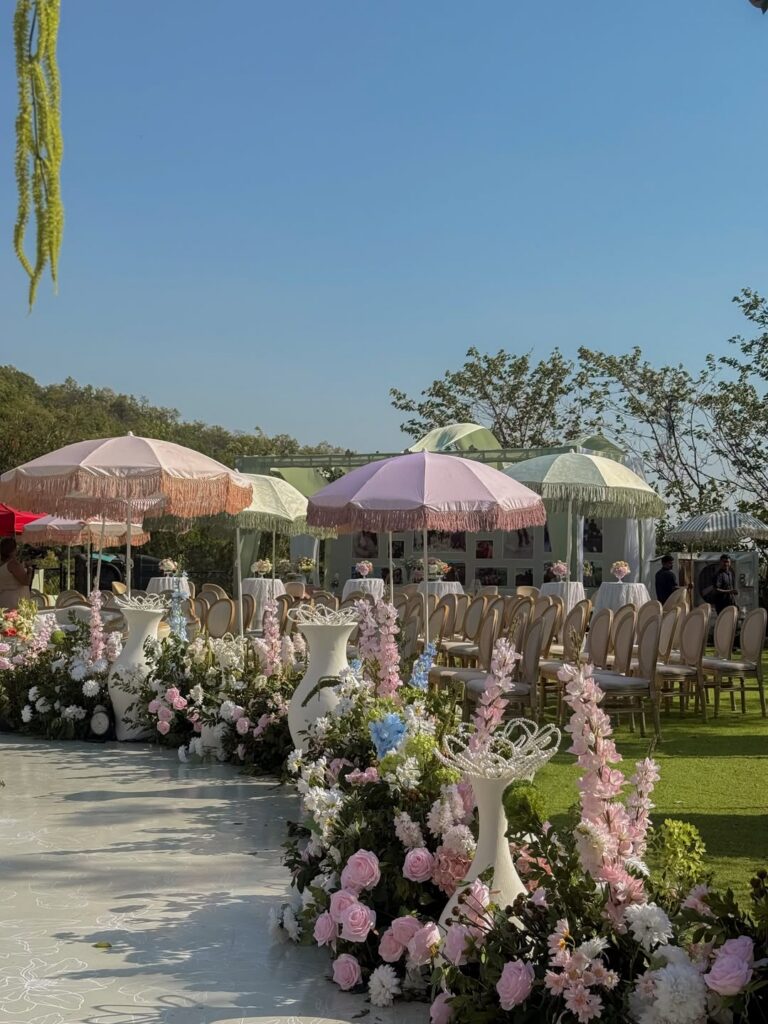
Over the dining chairs, pastel fringe parasols add color above the tables while giving guests a patch of shade. A mix of blush, lavender, and pale green keeps the canopy from looking like one flat block of color. Repeating those shades in the flowers along the aisle links the overhead decor to the ground-level arrangements.
The fringe matters as much as the color. It softens the parasol edges and moves slightly in the breeze, while the fabric still gives each one a clear shape. For a quieter palette, use parasols in a single shade, such as pale lavender, and let the flowers carry the other colors. That keeps the overhead line calm and makes the parasols feel like one part of the setup rather than a separate feature. Keep them at a similar height so they frame the seating without blocking sightlines across the tables.
Flower Framed Welcome Mirror
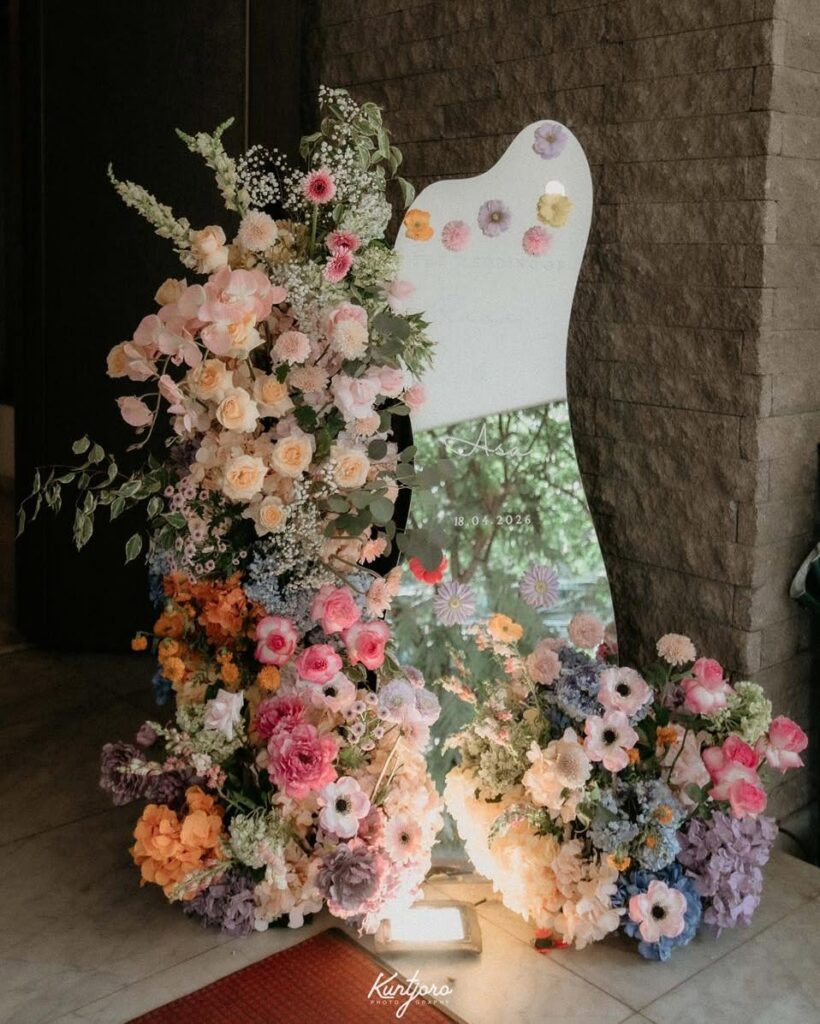
Frame a full-length welcome mirror with pastel flowers, building one side higher than the other. Use roses, orchids and hydrangeas for the larger blooms, then fill the gaps with baby’s breath and trailing greenery. Pink, peach and lilac flowers give you room to mix varieties without needing every stem to match.
At the base, arrange stems in water-filled containers hidden behind the flowers, and use a separate floral stand for the taller section rather than attaching heavy bunches to the glass. If fresh flowers are out of reach, use silk hydrangeas for volume and add a few fresh roses near eye level. A rectangular mirror can replace the curved shape; add small flower decals above the lettering to carry the flowers across the glass.
Draped Velvet Ceremony Backdrop
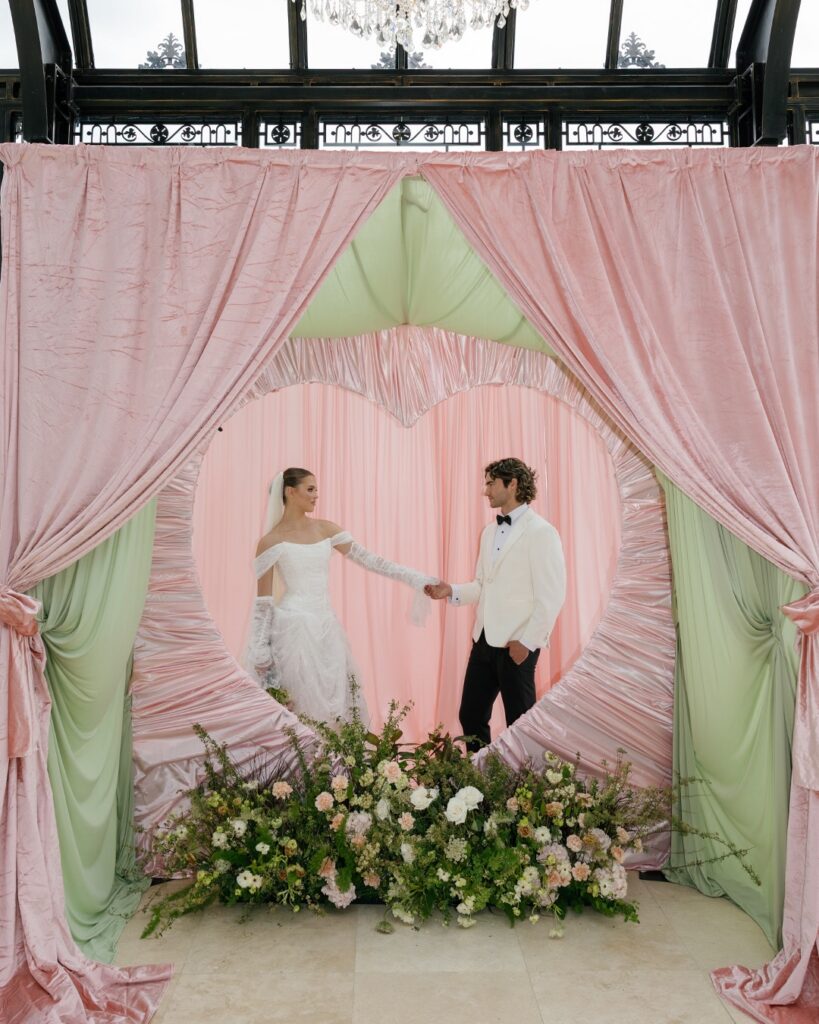
A heart-shaped opening cut into gathered pink fabric, framed by velvet curtains tied back at the sides, gives you a ceremony backdrop that needs almost no extra decoration. Pale green lining shows where the curtains part, and a low mound of white and blush flowers with loose greenery sits along the floor.
This is right for couples who have a big, empty venue and want to fill it without renting an arch or building a structure. A tall room with high ceilings or glass walls can handle this much fabric. The pink and green also hold up well in daylight, so it works for an afternoon ceremony.
If you’re marrying in a small room, pick a different idea from the list. This much velvet would crowd it and leave little space for guests. Couples who want a loose, outdoor look should also pass, because the gathered fabric and the clean heart shape are deliberate and formal. A florist can handle the flowers, but you’ll want someone who sews or rigs fabric for the rest.
Pastel Flower Ceremony Arch
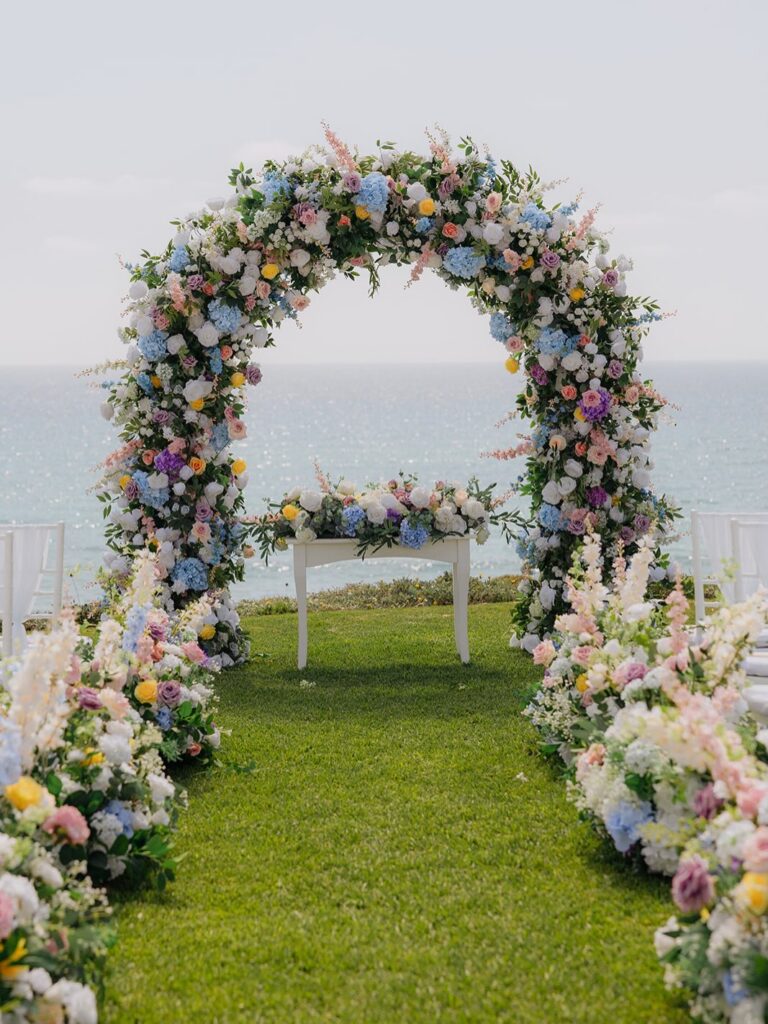
A flower-covered arch marks the ceremony spot while leaving the view beyond it open. Set it at the end of a grass aisle, with the open center framing the water or garden. Low flower clusters along the aisle edge carry the same pink, pale blue, cream, and lavender tones toward the seating.
Place the largest arrangements along the arch’s sides and crown, leaving the center clear for the couple. A small bench or table can sit beneath it for a reading or signing, with enough room for two people to stand comfortably. This setup works well for an outdoor ceremony with an open backdrop.
Put the frame on firm ground and secure it before adding flowers, especially if the ceremony will be held in a breezy spot.
Flower Framed Pastel Lounge
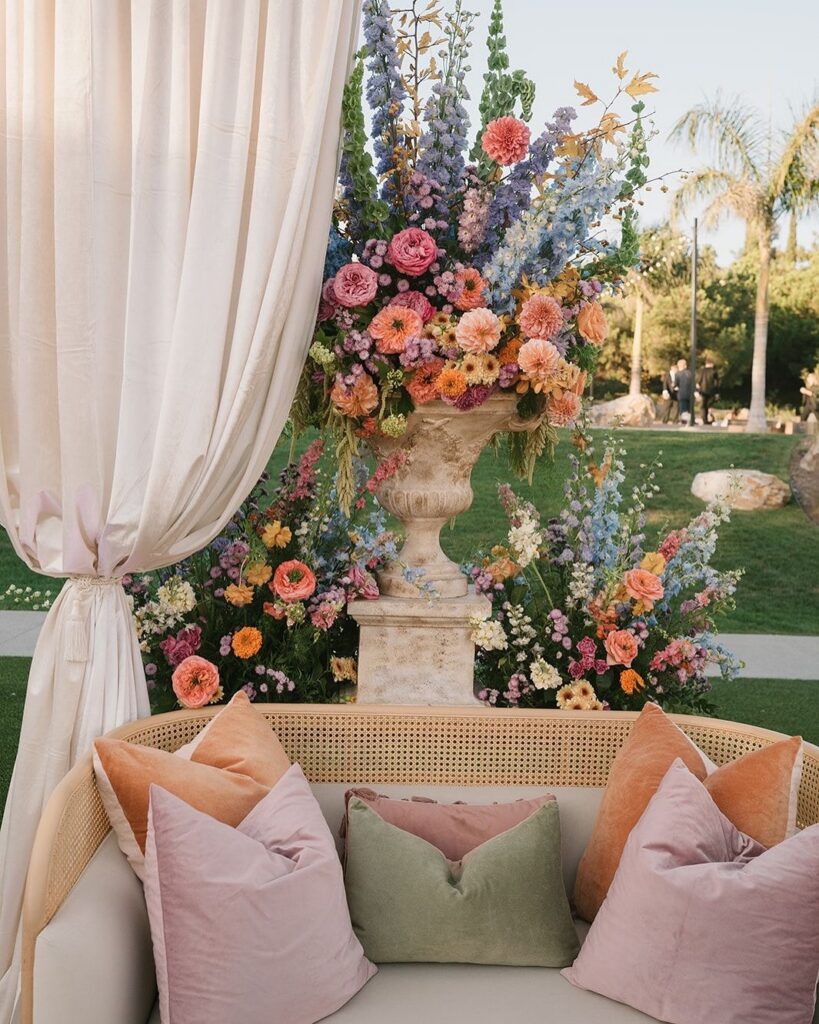
Frame a pastel lounge with flowers behind the sofa rather than around guests’ feet. A tall urn gives the arrangement height, but its base needs to sit securely beyond the seating area, where nobody will knock it while getting up. Leave enough room between the flowers and the sofa for guests to lean back without brushing petals or catching stems.
On a cane sofa, too many cushions can leave almost no room to sit, so use fewer than you would for a display. Carry two or three flower colors into the cushions, and leave the seat clear. Tie nearby drapes back firmly so they cannot blow across the seating.
Lilac Napkins With Blush Plates
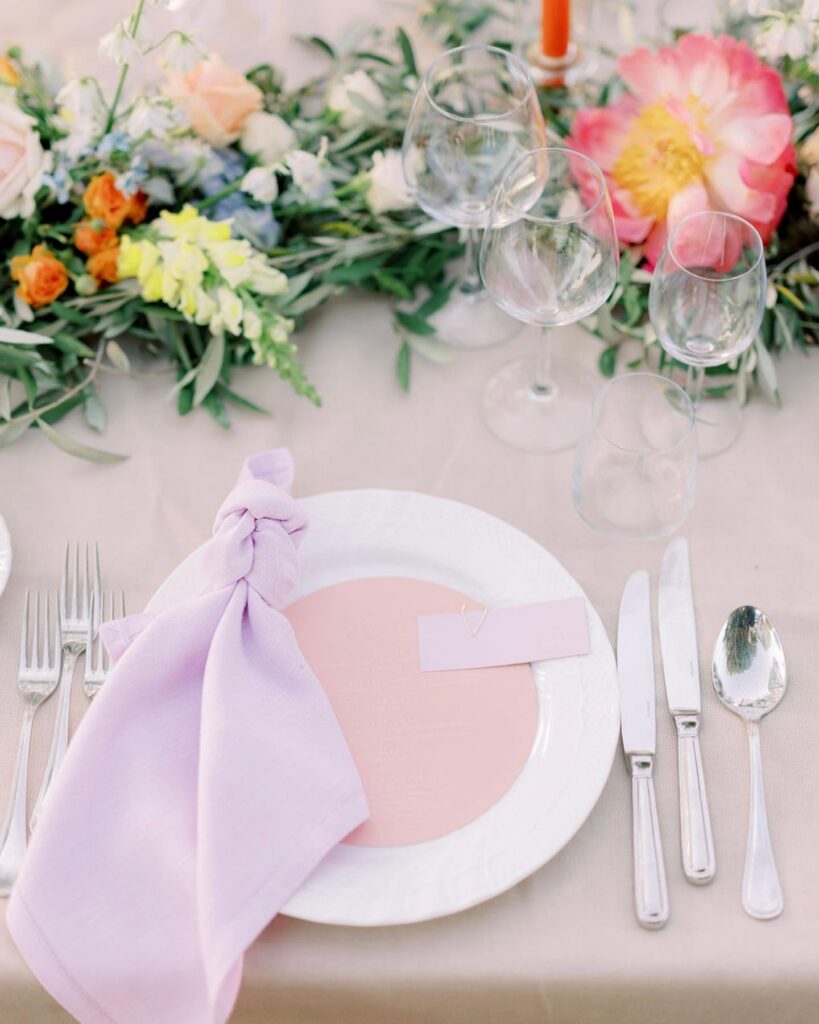
Pick the napkin color first, because linen comes in fewer shades than paper and is harder to match later. Hold a swatch of it against the tablecloth before you order. A lilac napkin on a pale tan cloth shows up clearly, while the same napkin on white can look gray.
Next, choose the paper pieces to sit between those two colors. A round blush menu card set in the middle of a white plate, with a small lilac name card clipped on top, ties the napkin to the plate without adding a new shade. Order the cards last and ask for a printed proof, since pink paper can print darker than it looks on screen.
The step that matters most is the knot. Tie each napkin loosely in a single overhand knot near one corner and let the rest drape off the plate’s edge. Practice on three or four first, so all of them hang at the same angle when you do the full set.
