How to Choose Your Wedding Food & Drink Menu- Trending Food And Drink Ideas
I’m going to let you in on a little secret that every wedding guest has thought, but nobody says out loud. Nobody remembers the centerpieces. Not really. They remember whether the food was good.
They remember the cocktail hour passed, the appetizer that made them audibly gasp. They remember the signature drink that had an actually clever name. They remember the late-night snack that appeared at exactly the right moment when everyone had been dancing for two hours and desperately needed something salty. And unfortunately, they also remember the rubbery chicken that sat under a heat lamp too long and the bar that ran out of something important before nine pm.
Food and drink are not the backdrop of your wedding. They are the experience. They are what keep the energy up, what gets people talking, what makes the whole night feel generous and celebratory and completely worth getting dressed up for.
The good news is that wedding catering has never been more interesting than it is right now. Interactive stations, family-style dining, grazing tables that look like edible art installations, signature cocktails with actual personality, non-alcoholic drinks that don’t feel like an afterthought, there are so many ways to feed people beautifully without defaulting to the same plated dinner everyone has had at the last six weddings they attended.
This guide covers all of it. What’s trending, what’s fading, where to spend and where to save, and the exact questions to ask your caterer so nothing important gets left off the table, literally.
Let’s eat, shall we?.
Part 1: The Big Shifts in Wedding Dining
Before we dive into specific trends, let’s look at how wedding food has changed in the last few years.
- From formal to flexible. Couples are ditching the rigid, multi‑course plated dinner. Instead, they’re choosing family‑style, food stations, and grazing tables where guests can eat what they want, when they want.
- From generic to personal. Menus now tell a story. The couple’s favorite foods, cultural heritage, or the dish they ate on their first date.
- From one‑size‑fits‑all to accommodating everyone. Dietary restrictions (vegan, gluten‑free, allergies) are expected, not optional. Guests no longer feel shy about asking.
- From heavy to mindful. Lighter, fresher, locally sourced ingredients are in. Heavy, over‑sauced, greasy dishes are out.
Keep these shifts in mind as you read; they explain why certain ideas are super popular, while others are not.
Part 2: Current Wedding Food Trends (The Ones Everyone Is Talking About)
A. Interactive Food Stations (Not Just a Buffet)
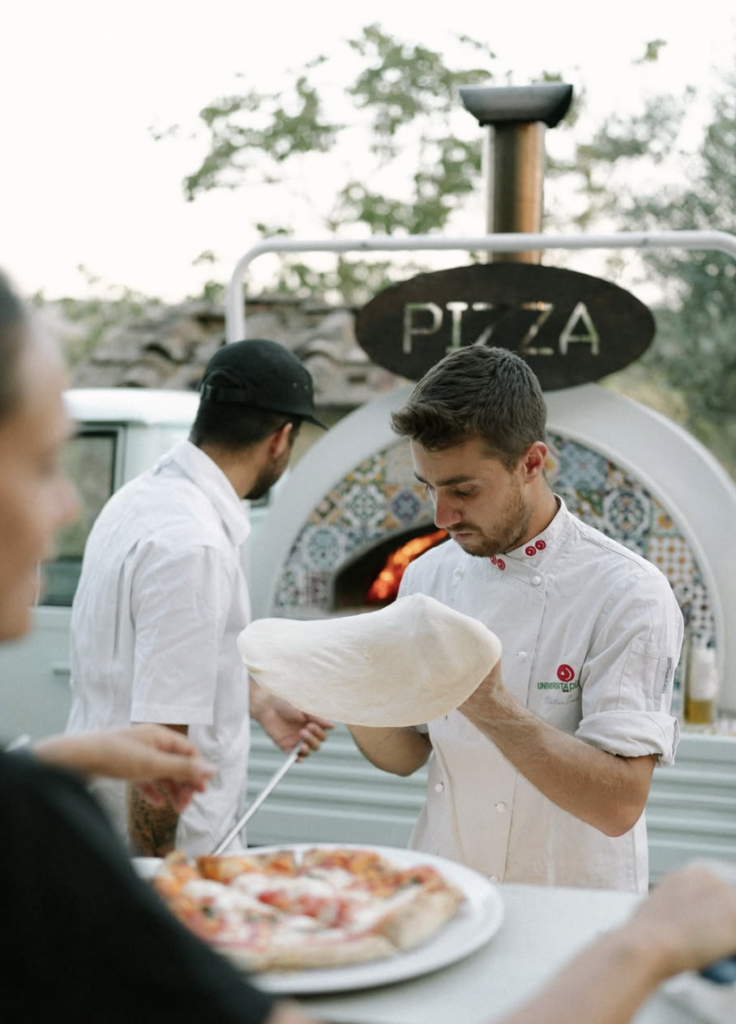
Interactive stations are like mini restaurants set up around your venue. Food is made or assembled in front of guests, which is super cool because what in the Teppanyaki or Omasake man, I am impressed.
Examples:
- Pasta station – choose noodles, sauce, and toppings
- Taco or burrito bar
- Slider or burger station
- Mashed potato bar (bacon, cheese, chives, sour cream)
- Mac & cheese bar
- Sushi rolling station
- Oyster shucking station
The reason that couples love them so much is that guests love choices. Watching a chef make your food is fun. And stations encourage mingling, which means people walk around instead of sitting in one place.
These stations can be cheaper than a plated dinner (less staff) or more expensive (more food variety). Get a quote to have a better idea.
B. Family‑Style Dining
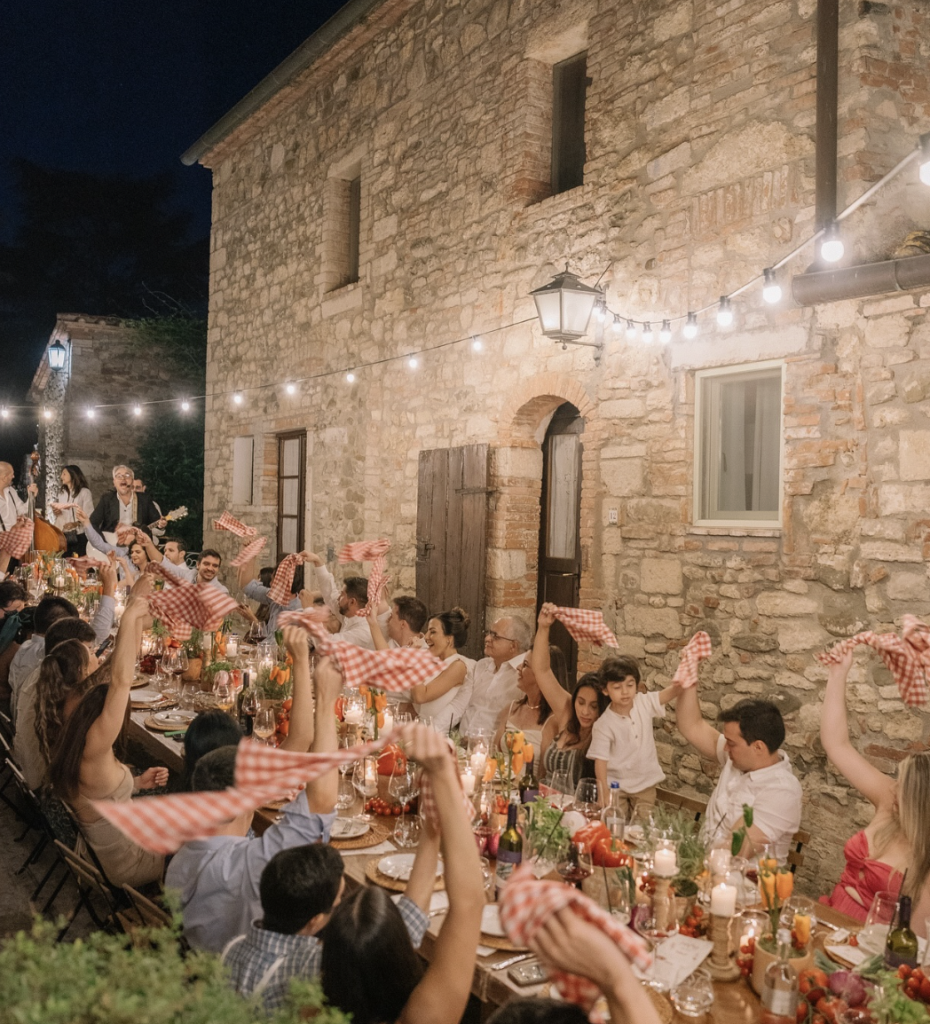
Instead of a buffet line or individual plates, large platters of food are placed on each table. Guests pass them around like Thanksgiving dinner or the line dining hall scene in Harry Potter, and like Ron, your uncle will be enjoying those chicken bites.
It’s more intimate than a buffet, less formal than plated, and encourages conversation. No one waits in line, which your guests will love.
Although this is perfect for smaller weddings (under 100 guests), because large tables make passing easier. For 150+ people, it can get chaotic. Make sure your tables aren’t too wide. Guests should be able to reach across.
C. Grazing Tables & Charcuterie
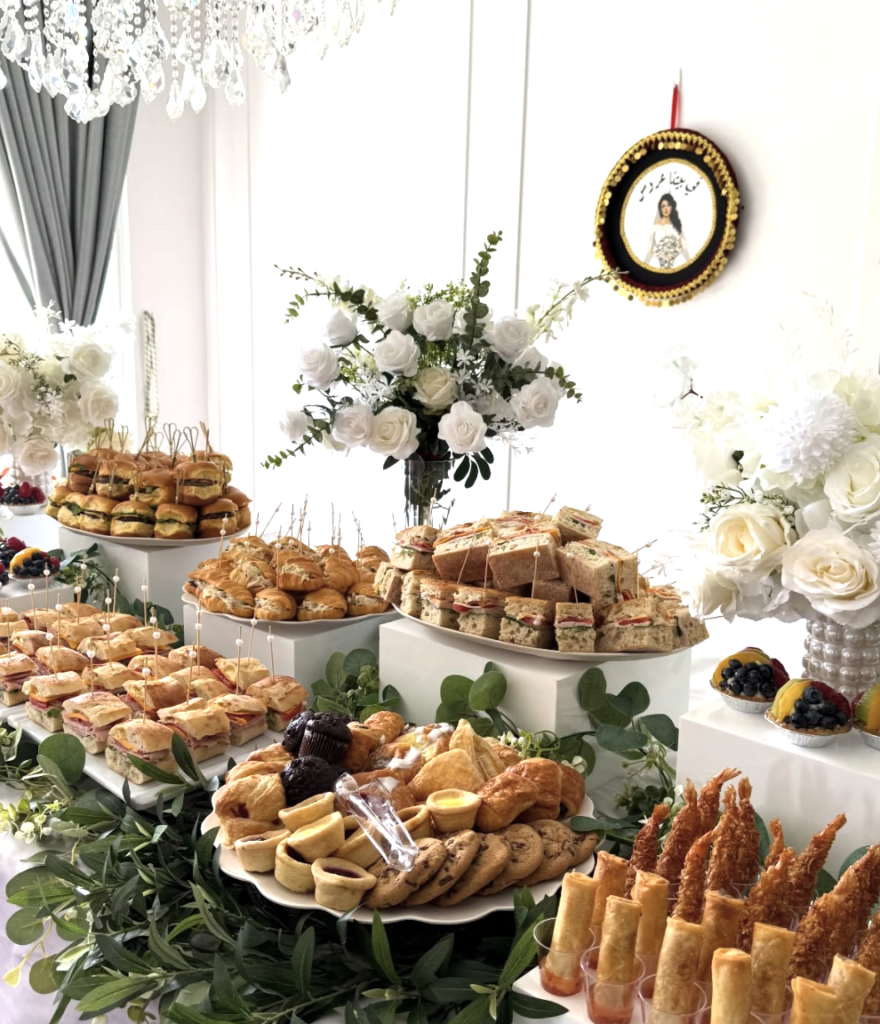
Okay, I know what you’re thinking, that was my exact thought. It sounds funny, but let me tell you what they are. A grazing table is a long table covered with cheeses, meats, fruits, nuts, breads, olives, and dips. Guests help themselves during cocktail hour.
This is super trending because it’s visually stunning (great for those Insta photos), encourages mingling, and eliminates the need for servers walking around with trays. It feels abundant and welcoming.
This can be cheaper than passed appetizers because you need fewer staff. But you need a lot of food to make the table look full. Ask your caterer for a price per person.
D. Late‑Night Snacks (Still Going Strong)
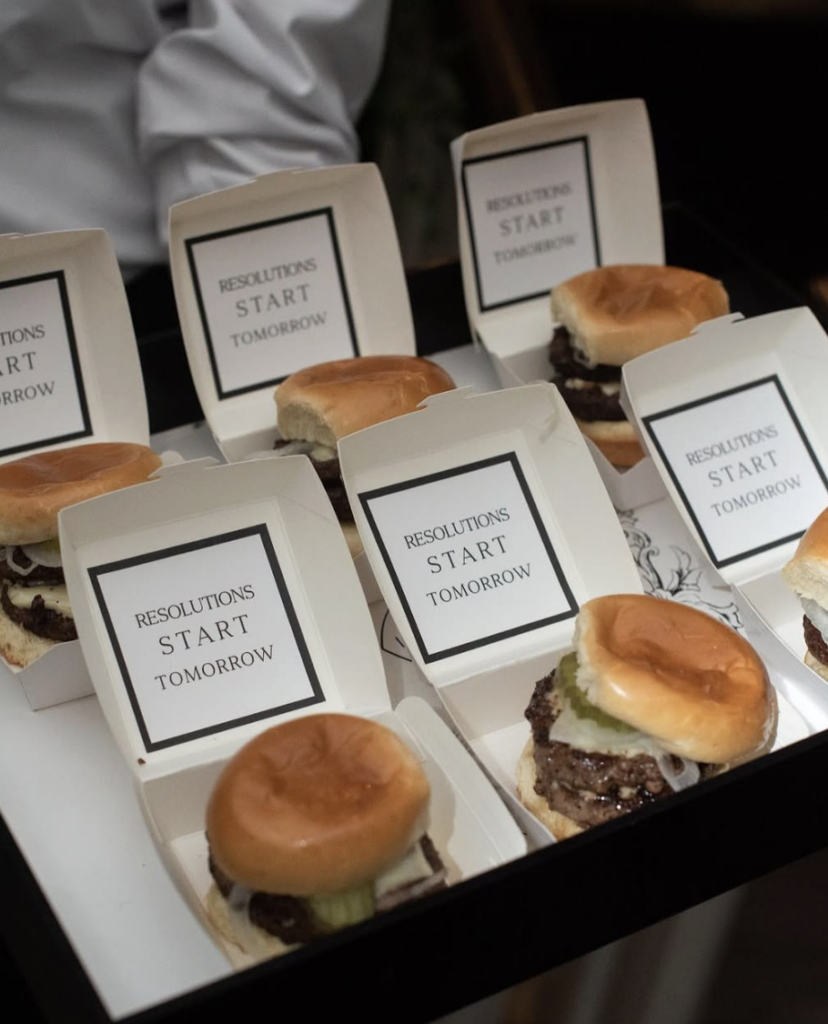
Served 1–2 hours after dinner (usually 10–11 PM), late‑night snacks are a crowd favorite. But the options have evolved.
What’s trending now (not just pizza):
- Mini sliders and fries
- Breakfast sandwiches (egg, cheese, bacon on a mini roll)
- Soft pretzels with beer cheese
- Donut walls or warm cookie shots
- Ramen or grilled cheese stations
- Tater tot bar
Don’t overdo it. One or two options are enough. And make sure the snack is easy to eat, hits all the sweet spots after a dance sesh, or even while dancing or holding a drink.
E. Global & Cultural Menus
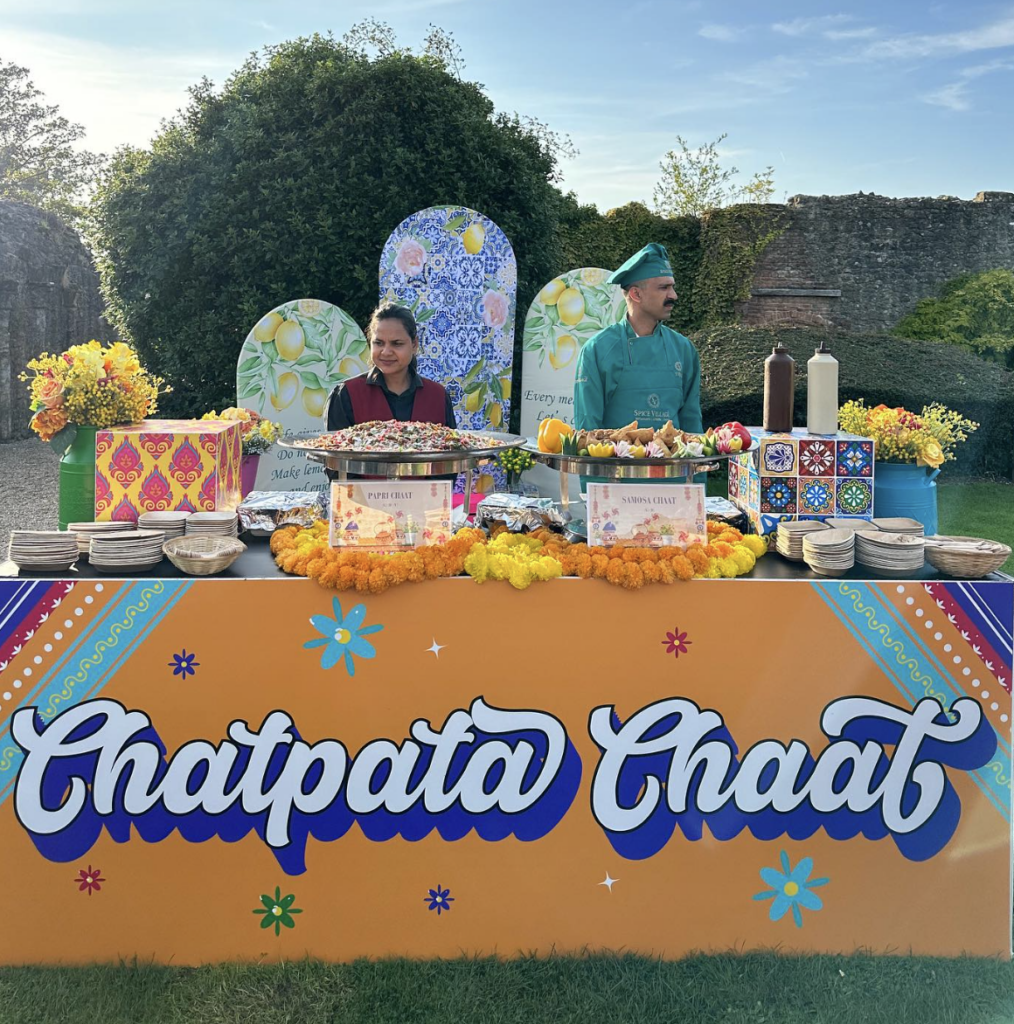
I see these days more couples are serving food from their heritage or favorite travel destinations. It’s personal, memorable, and often cheaper than generic “wedding chicken.” Which I am absolutely adoring.
Examples:
- Italian – pasta, risotto, antipasti
- Mexican – tacos, elote, churros
- Korean – bulgogi, kimchi, rice bowls
- Mediterranean – hummus, falafel, lamb skewers
- Indian – butter chicken, naan, samosas
Guests remember a meal they can’t get anywhere else, and you’ll get to hear compliments you will remember forever. You can often save money by skipping expensive cuts of steak.
F. Sustainable & Local Sourcing
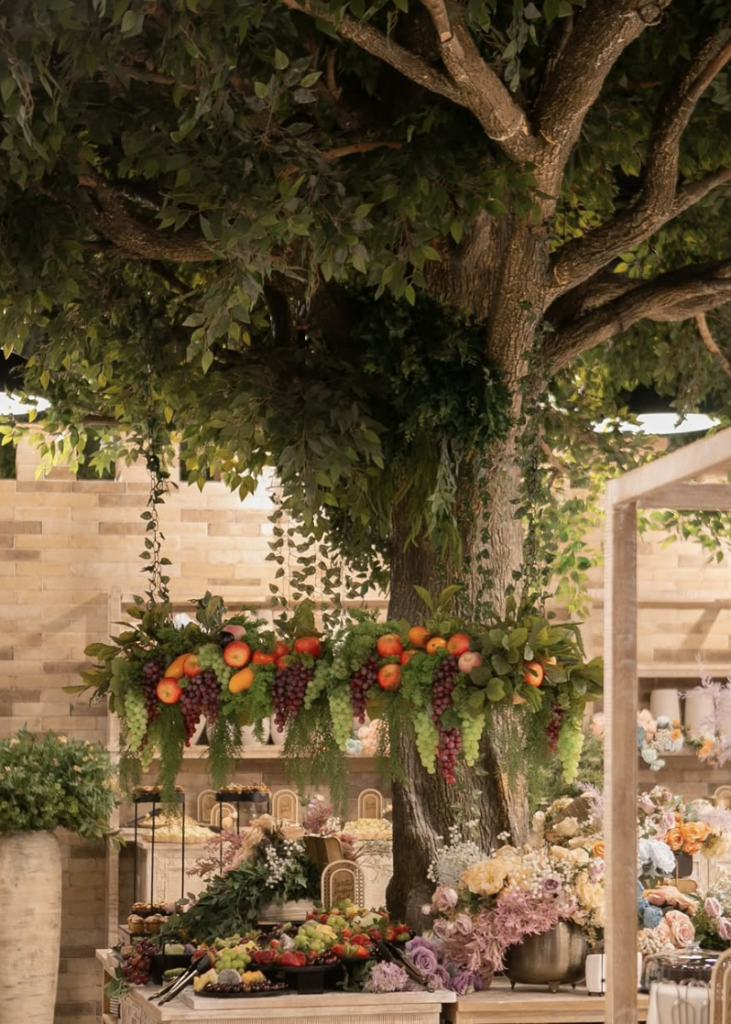
Couples care about where their food comes from. Farm‑to‑table menus, seafood from local waters, and produce from nearby farms are big trends. It reduces environmental impact, supports local businesses, and the food often tastes fresher.
Make sure to ask your caterer, “Can you source from local farms? Is there an extra cost?” Many caterers already do this.
G. “Experience” Dining (Food as Entertainment)
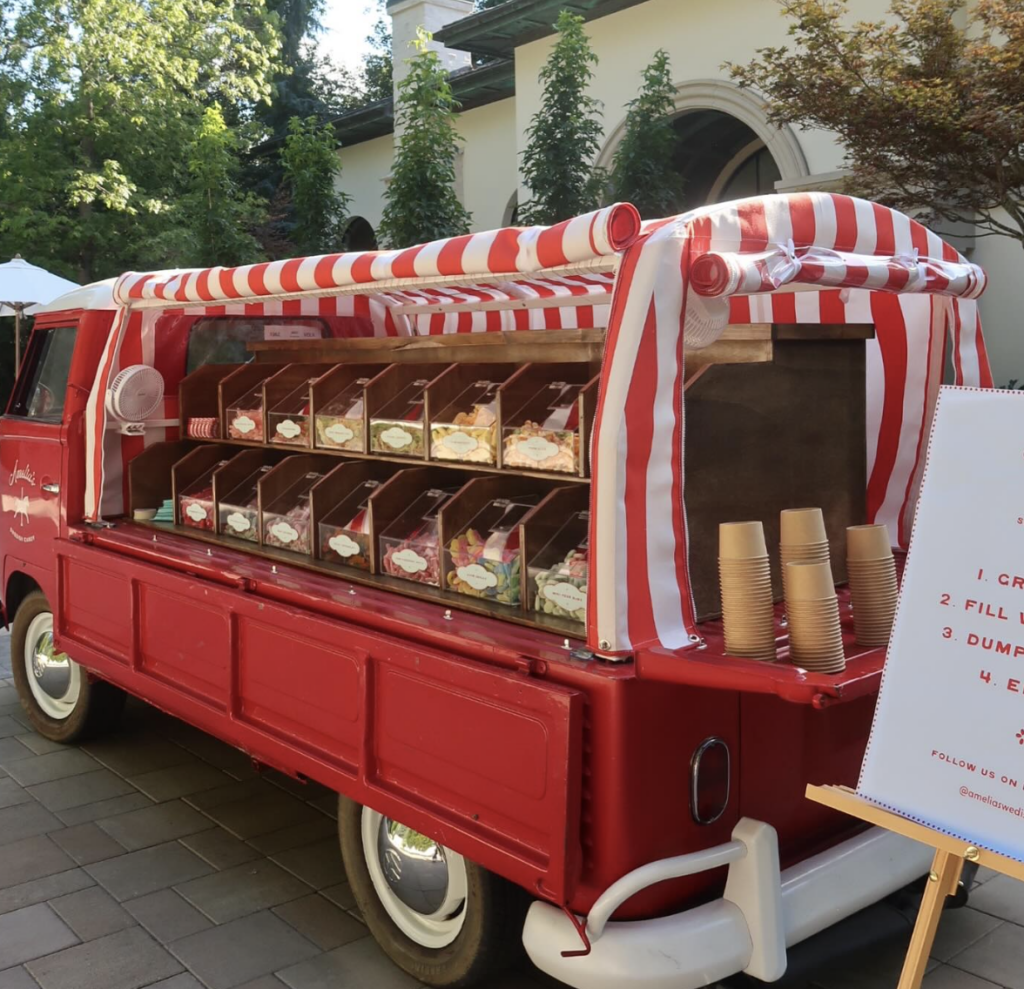
This is food that comes with a show. Guests don’t just eat, they indulge, and you’d want that experience for them.
Examples:
- Live action stations – a chef carving meat, making pasta, or shucking oysters
- Dessert experiences – liquid nitrogen ice cream, flambéed bananas foster
- Interactive s’mores bar with a small fire pit
Couples who want memorable photos and guest engagement. But it can be expensive and requires extra staff, so beware of that expense.
Part 3: Current Wedding Drink Trends (Beyond Basic Open Bar)
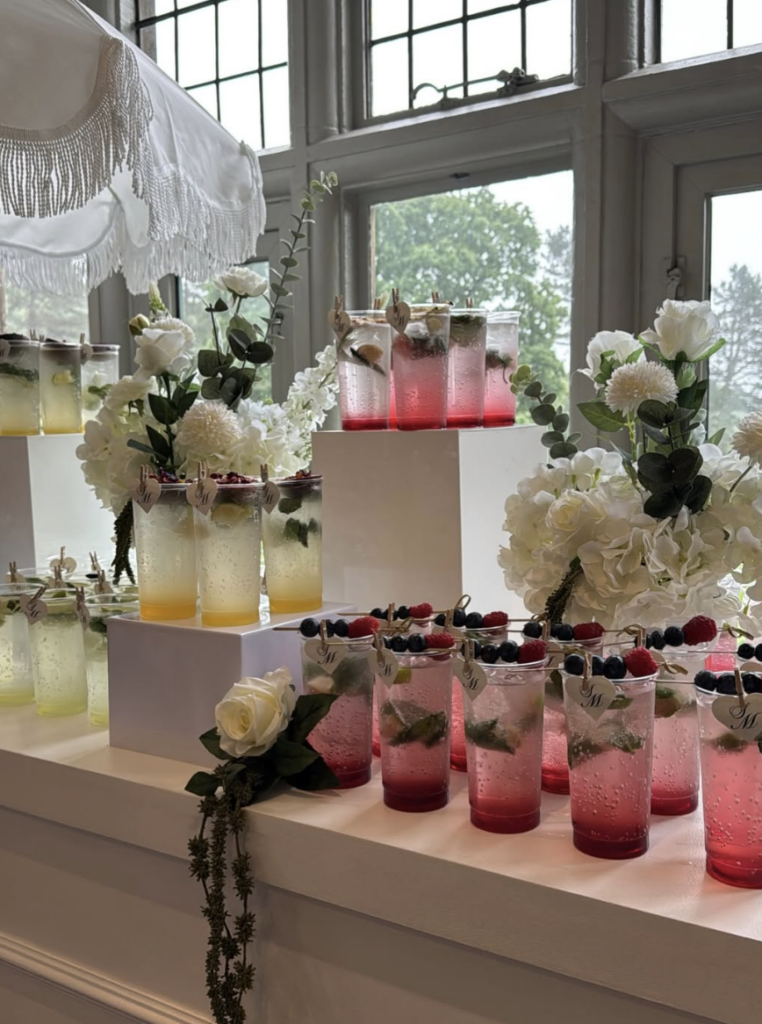
A. Signature Cocktails (Still a Must‑Have)
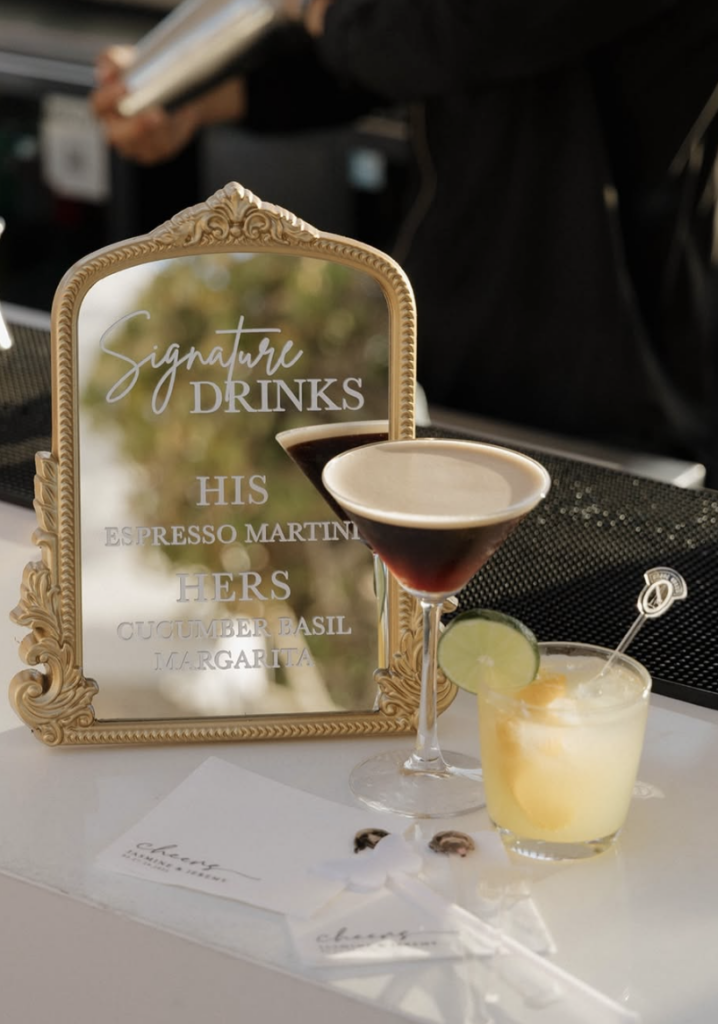
One or two signature cocktails are now standard. The new twist: a “his” and “hers” drink, plus a non‑alcoholic version? Everyone can enjoy the experience! Give them fun names like “The Groom’s Old Fashioned” or “Happily Ever After Spritz.”
Trendy ingredients:
- Mezcal instead of tequila
- Elderflower liqueur (St‑Germain)
- Fresh herbs (basil, rosemary, mint)
- Spicy (jalapeño, habanero)
- Smoked or barrel‑aged cocktails
B. Non‑Alcoholic & Low‑ABV Drinks (Biggest Trend Right Now)
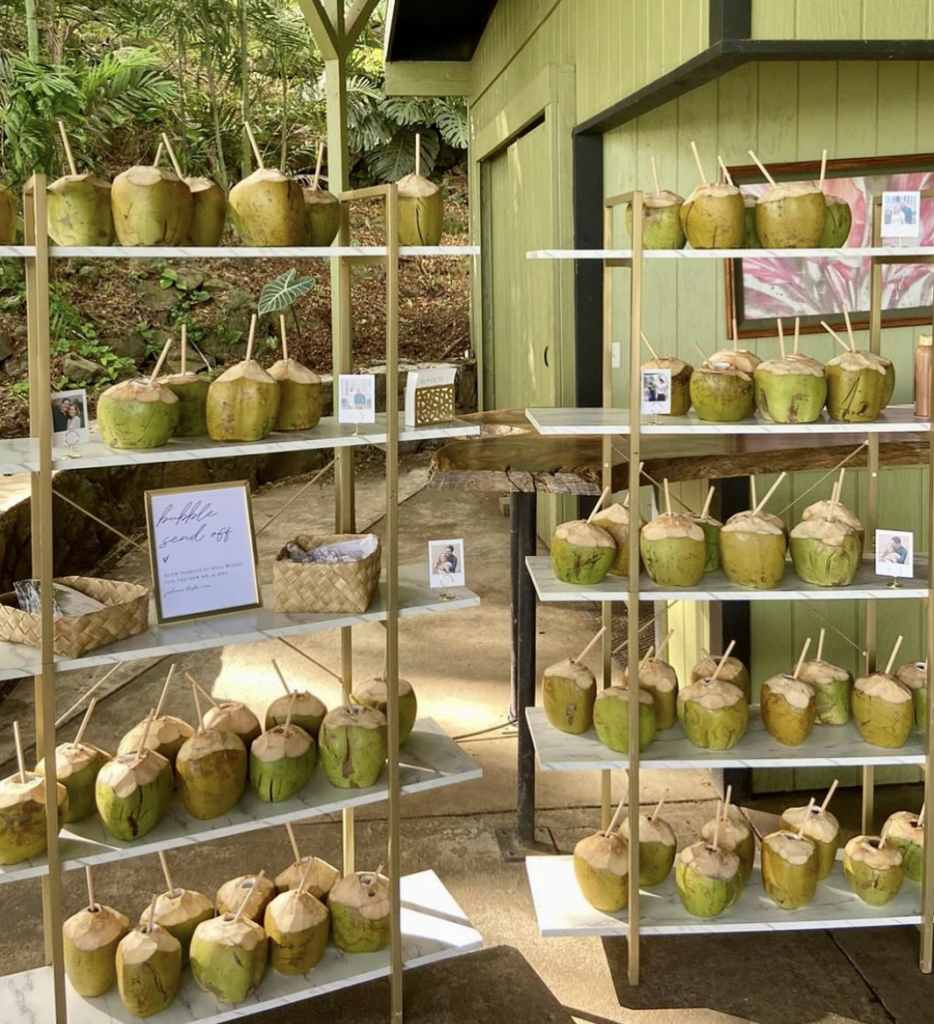
This is huge. More guests are skipping alcohol. Those who are sober curious, designated drivers, have health reasons, or are pregnant. A good wedding offers delicious non‑alcoholic options. Serve mocktails in the same fancy glasses as cocktails. Don’t make them look like an afterthought.
Trendy options:
- Mocktails made with fresh juices, herbs, and sparkling water (not just soda)
- Non‑alcoholic spirits (Seedlip, Lyre’s)
- Low‑alcohol spritzes (Aperol, Campari)
- Craft sodas and kombucha on tap
- A fun coconut setup (like the one in the picture)
C. Experiential Bars (More Than Just a Bartender)
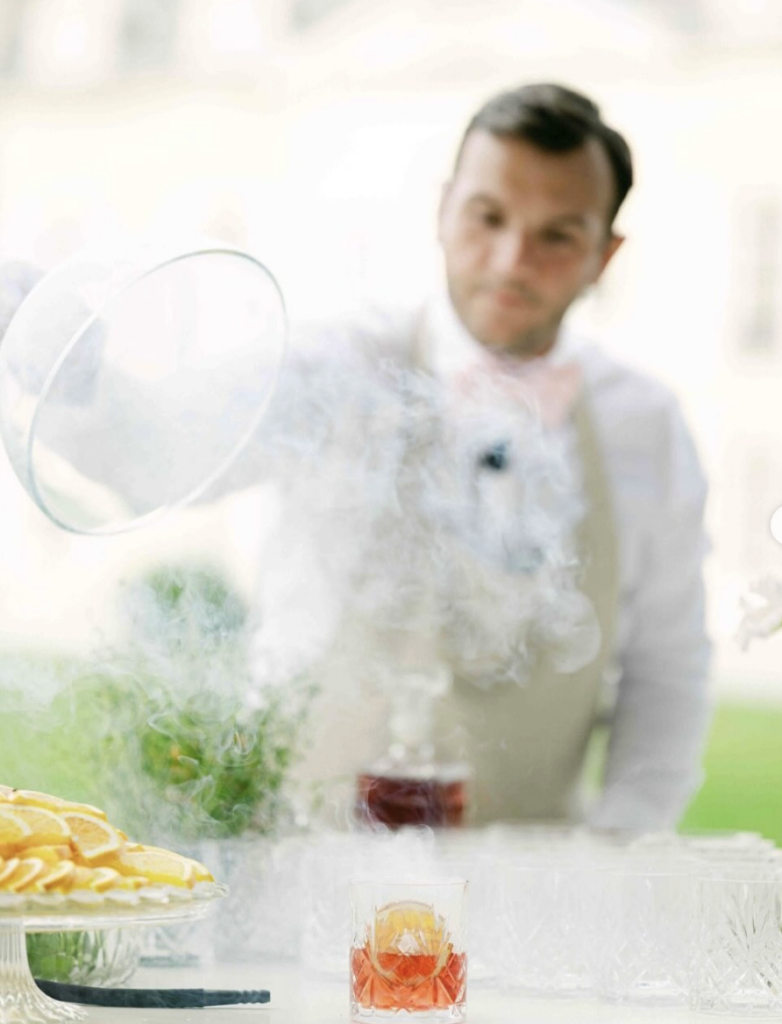
These bars give guests something to do, something to experience, and woo their way through taking beautiful videos of this.
Examples:
- DIY garnish bar – Guests add their own citrus, herbs, berries, or spices.
- Whiskey or tequila tasting station – Small pours of premium spirits.
- Champagne tower – Dramatic and photogenic (but tricky to pull off – practice first).
- Flavored ice cubes – Ice cubes with edible flowers, fruit, or herbs frozen inside.
- Cigar and bourbon bar – For after dinner (outdoors only).
D. Local Beer & Wine (Ditch the Big Brands)
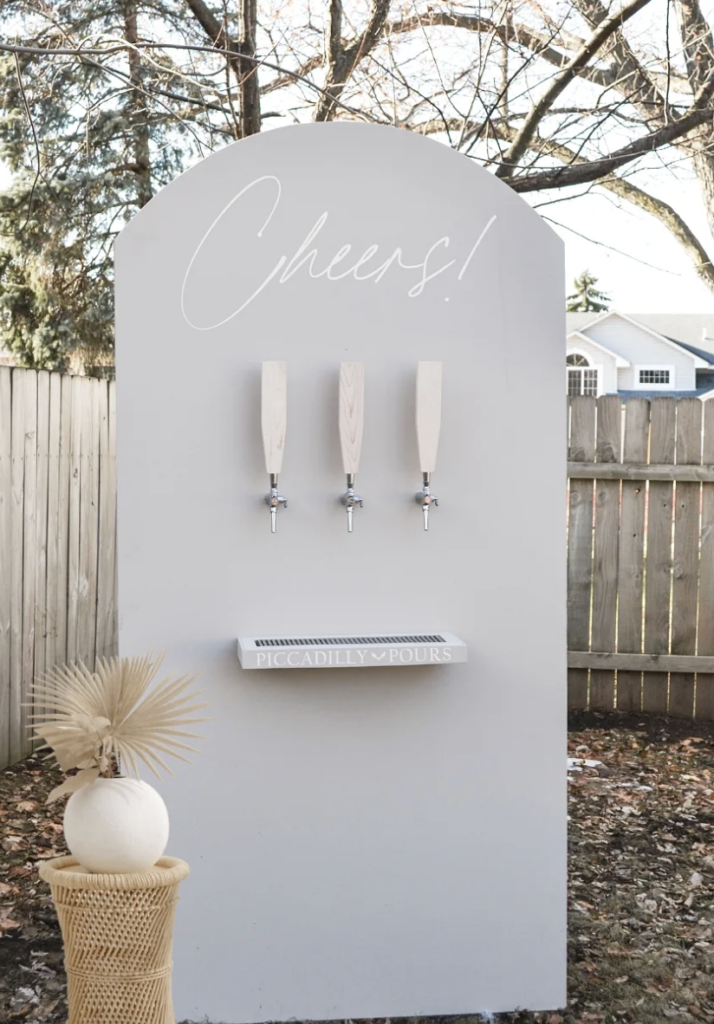
Instead of Bud Light and Yellow Tail, serve craft beer from local breweries and wine from nearby vineyards. It is super in trend because it supports local, tastes better, and often costs the same as national brands.
Guests appreciate the story behind the drink, and bonus points for the fun setup. Ask your caterer or venue to source local options. Many will say yes.
E. Coffee & Tea Bars (Especially for Winter Weddings)
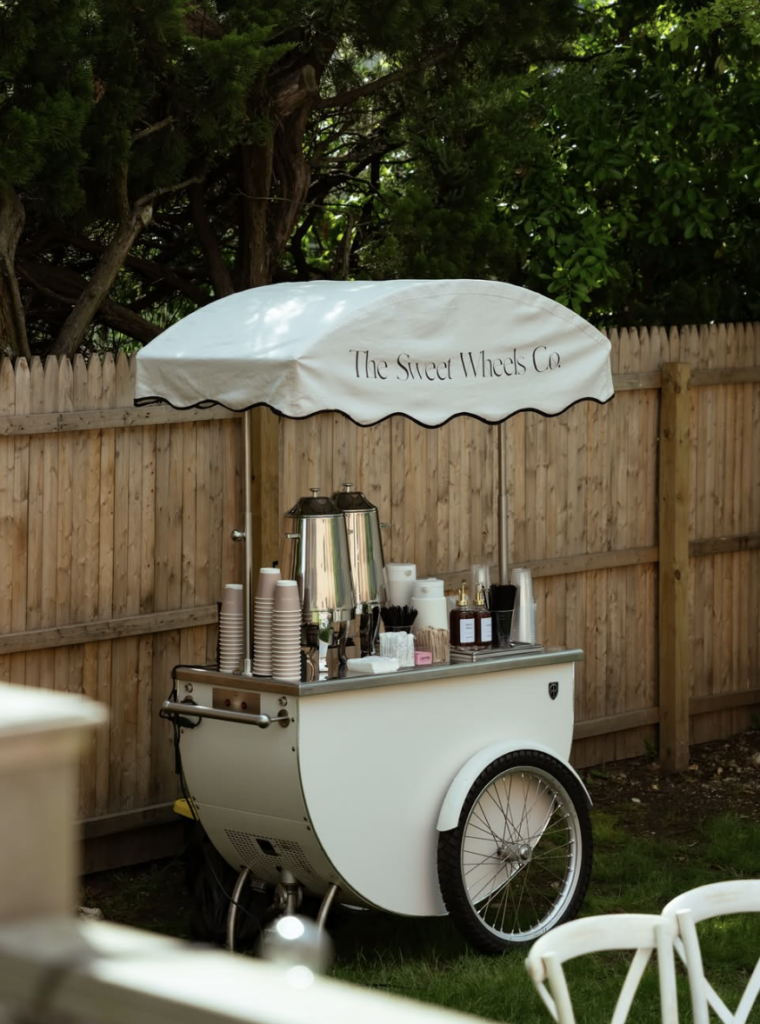
A dedicated station with espresso, lattes, cappuccinos, and fancy teas, or maybe just the good ol’ coffee cart everyone will appreciate. It is perfect after dinner or as a late‑night pick‑me‑up.
You can even add flavored syrups (lavender, caramel, hazelnut), whipped cream, and chocolate shavings. This one is easy on the pocket, often cheaper than a full bar. Some caterers charge a flat fee.
F. Batch Cocktails (Faster, Cheaper, Less Waste)
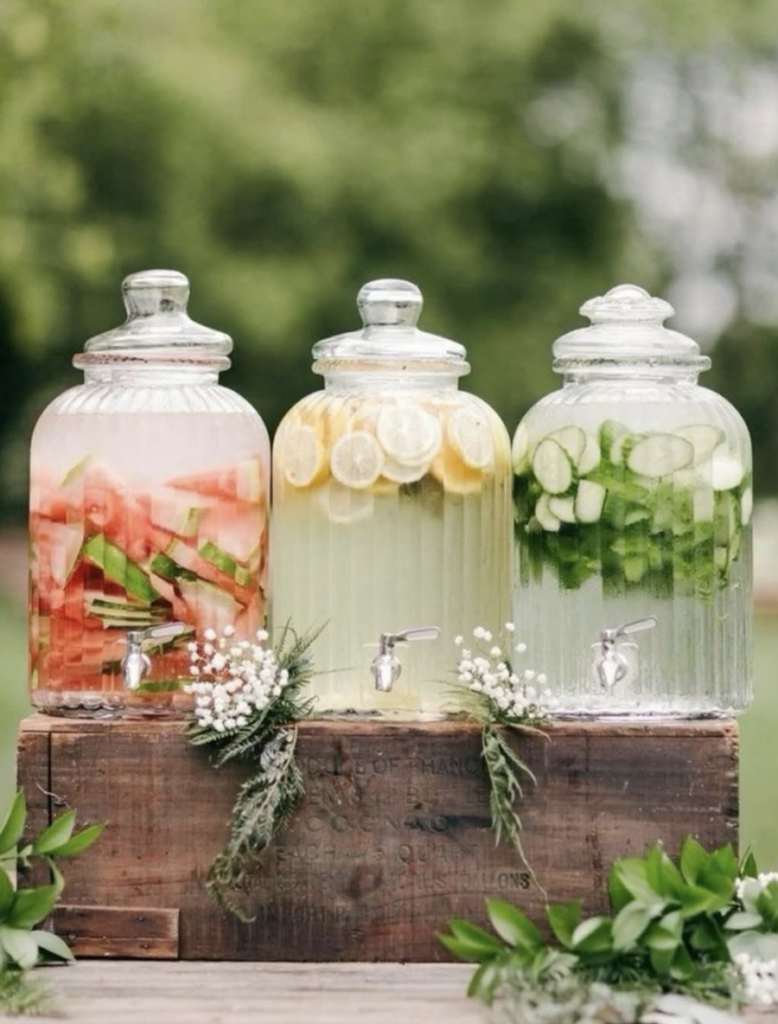
Pre‑mixed cocktails in large dispenser jars (like at a brunch spot) are both easy & fun. Guests pour their own & can have as much as they want. There is no wait at the bar, consistent taste, less alcohol waste, and beautiful presentation.
This is usually great for signature cocktails, sangria, mimosas, or punch and cheaper than a per‑drink open bar because you control portions.
Part 4: Dietary Trends You Cannot Ignore
A. Plant‑Based & Vegan Options (Expected, Not Optional)
A sad salad is no longer enough. Vegan guests expect a real entree. You can opt for a cauliflower steak, mushroom wellington, jackfruit tacos, or lentil loaf. Make sure to label everything clearly: “Vegan,” “Gluten‑Free,” “Contains Nuts,” so guests don’t have to ask or end up with a last-minute EpiPen saving.
B. Gluten‑Free & Allergy‑Aware
This means separate preparation areas to avoid cross‑contamination. Removing croutons from a salad is not enough. For these guests, you can try gluten‑free pasta, bread, and desserts that actually taste good.
Do ask your caterer, “Do you have a dedicated space for gluten‑free prep?”
C. Low‑Carb & Keto Options
Many guests watch their carbs. Offer one low‑carb option like zucchini noodles instead of pasta, cauliflower rice, or lettuce wraps.
D. “Build Your Own” for Allergies
A salad or bowl bar where guests choose their own ingredients is the safest option for severe allergies. No hidden ingredients.
Part 5: Presentation & Service Trends (How Food & Bevvy Looks)
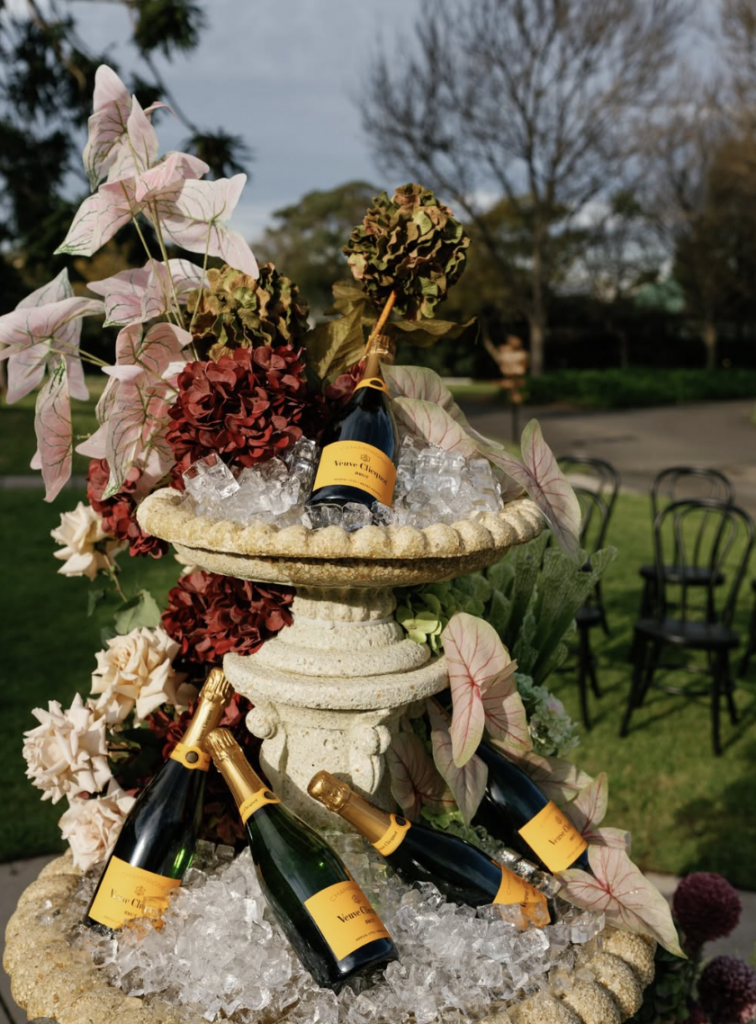
A. Eco‑Friendly & Compostable Serveware
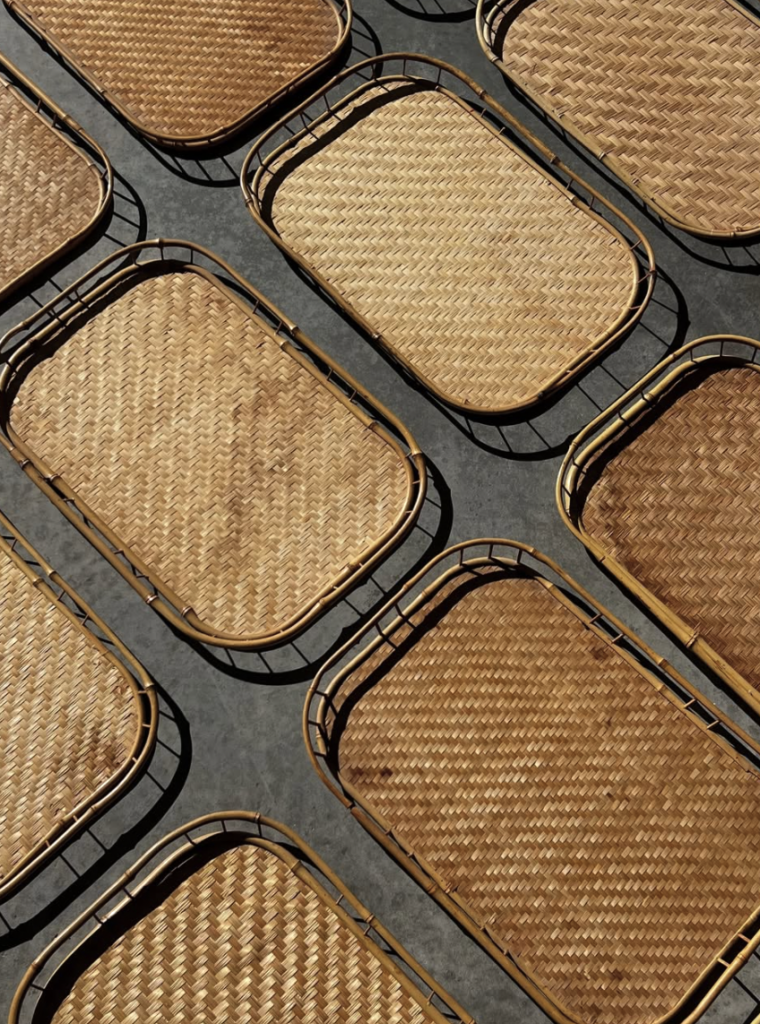
Bamboo plates and palm leaf bowls are proof that being kind to the planet and having a beautiful table are no longer mutually exclusive. These natural textures photograph incredibly well, and guests actually notice them. Just check with your venue first because some still require real crockery, but most are completely on board.
B. Mismatched China & Vintage Glassware
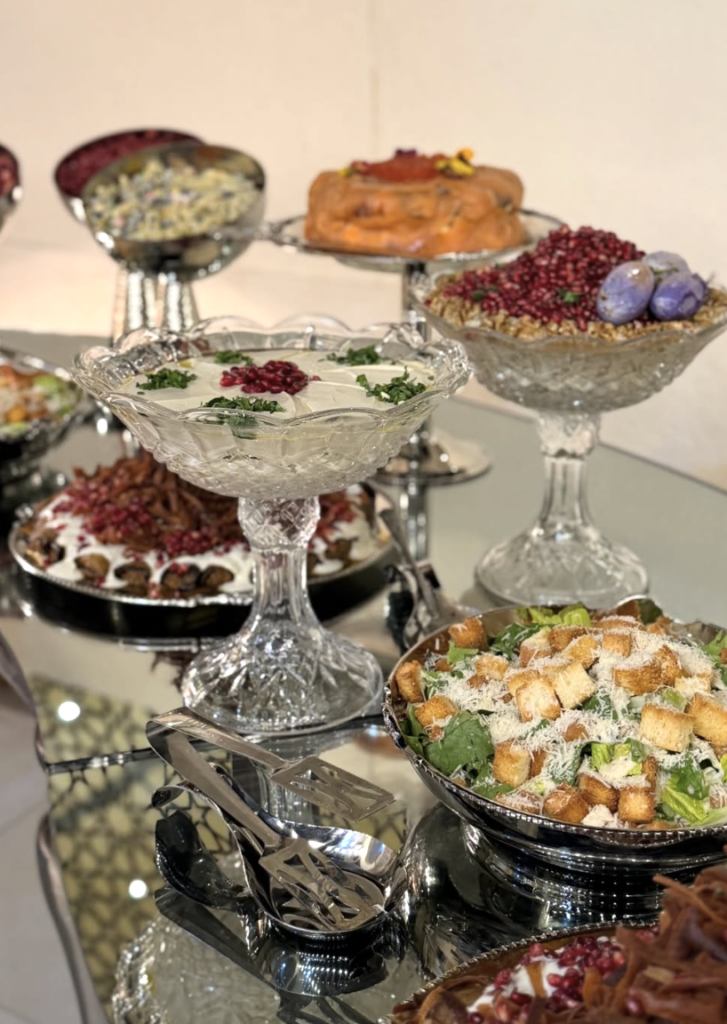
The most charming tables right now aren’t matching sets ordered from a catalogue; they’re intentionally eclectic mixes of vintage glassware and different plate patterns that look collected, personal, and genuinely beautiful. Rent them, thrift them, or raid your grandmother’s cabinet and call it aesthetic research.
C. “Naked” Cakes & Smaller Desserts
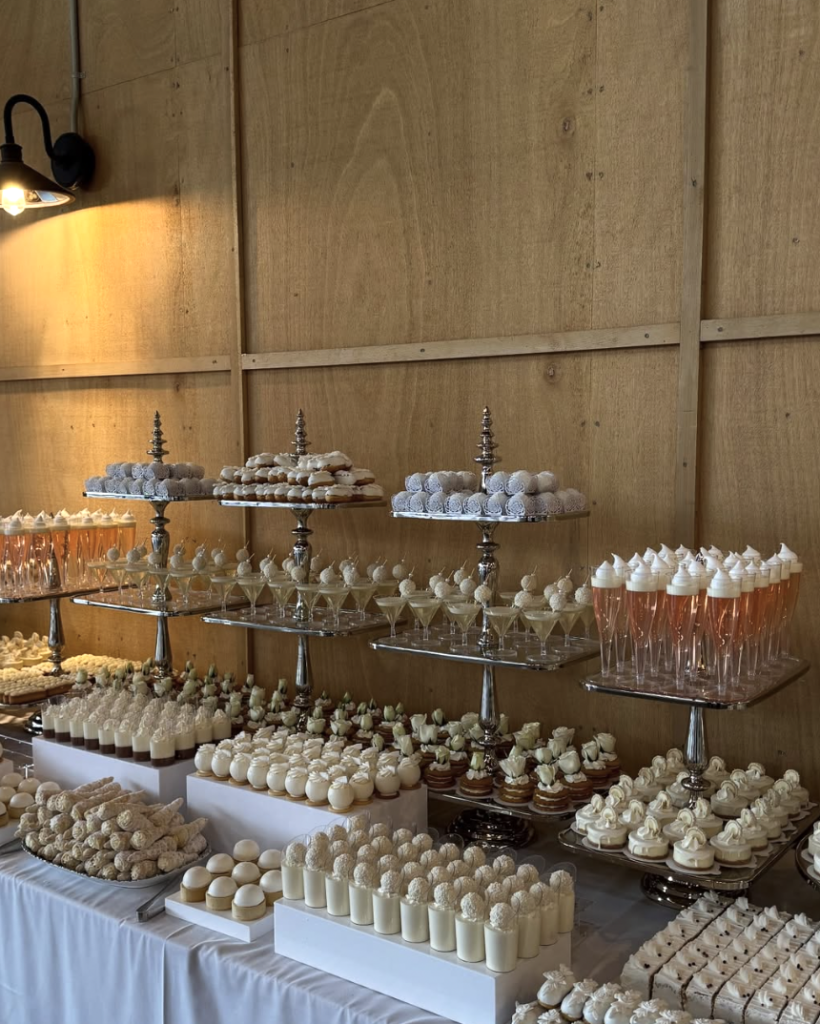
Naked cakes are still having their moment, but the real star is the dessert table are anything mini. Be it pies, mousse cups, brownies, and cookies that let guests graze and go back twice without the social judgment of asking for a second slice. No cutting, no plates, no pretending anyone only wants a small piece.
D. Chafing Dishes Are Out – Beautiful Serving Vessels Are In
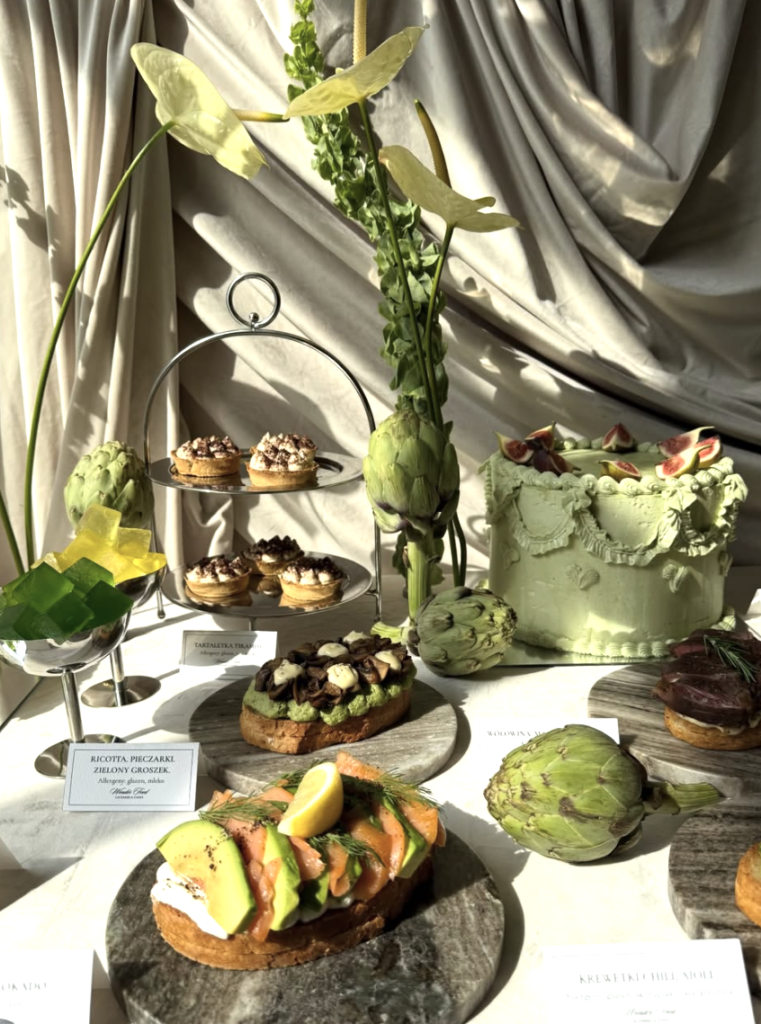
Silver chafing dishes belong at a corporate conference, not your wedding. Swap them for cast-iron skillets, wooden boards, copper pots, and slate tiles that make the exact same food look like it came from a farmhouse kitchen. Same meal, completely different feeling, infinitely better photos.
Part 6: What’s Fading (Trends That Are Over)
- Overly complex plated dinners (too many courses, too long to serve).
- Giant, towering wedding cakes (smaller cakes + sheet cake or dessert bars are the norm).
- Cash bars, guests strongly dislike them. Do a limited open bar (beer, wine, signature cocktails) instead.
- Champagne toast only. Most guests prefer a full drink in hand.
- All‑white or all‑beige food is boring. Bring color with roasted vegetables, herbs, and edible flowers.
Part 7: How to Choose Which Trends Work for You
Before you jump on any trend, ask yourself these five questions:
- Does this trend fit our budget? (Interactive stations can be cheaper or more expensive. Get quotes.)
- Does it work with our venue? (Food trucks need parking; grazing tables need space; family‑style needs large tables.)
- Does it match our guest count? (Family‑style is hard with 200+ guests. Stations work better.)
- Will our guests actually like it? (Know your crowd. Elderly relatives may not love a taco bar.)
- Is it just for the photo, or does it add real value? (Champagne towers look great but often spill and waste.)
The “One Trend” Rule
Pick one or two trends to focus on. A grazing table + signature cocktails + late‑night pizza is great. Trying to do every trend on this list will be chaotic and expensive.
Part 8: Questions to Ask Your Caterer About Trends
Use these questions when you talk to potential caterers.
- “Do you offer family‑style or interactive food stations?”
- “Can you source local beer, wine, or produce?”
- “What non‑alcoholic drink options do you have beyond soda and water?”
- “Can you accommodate a grazing table instead of passed appetizers?”
- “Do you offer plant‑based and gluten‑free entrees that taste good?”
- “What is your policy on guests bringing their own dietary meals?” (Some caterers allow outside food for allergies.)
- “Can you do a late‑night snack? What’s the most popular option?”
- “Do you have eco‑friendly serveware options?”
Questions to Ask About Bar Trends
- “Can we do two signature cocktails plus a non‑alcoholic version?”
- “Do you offer batch cocktails? Is it cheaper than per‑drink service?”
- “Can we bring our own non‑alcoholic spirits or mixers?”
- “Do you have local craft beer options?”
- “What is the corkage fee if we provide our own wine?”
- “Can we do a coffee bar after dinner? What’s the cost?”
Part 9: Budget Tips for Trendy Food & Drinks
You don’t need a huge budget to use these trends. You can try these money‑savers:
- Family‑style is often cheaper than plated (less staff) and cheaper than a premium buffet.
- Grazing tables can be cheaper than passed apps, but ask for a price per person.
- Batch cocktails save money compared to a full open bar (less waste, faster service).
- Non‑alcoholic signature drinks are very cheap, like fresh juice, soda water, and herbs.
- Late‑night snacks can be as cheap as $3–$5 per person (popcorn, soft pretzels, cookies).
- Skip the champagne toast and just have guests raise whatever they’re drinking.
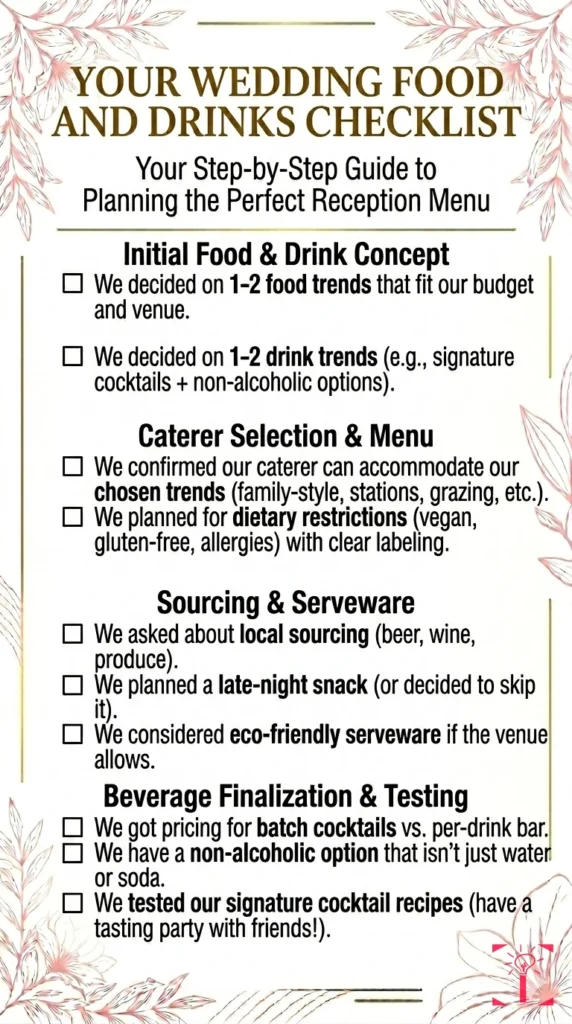
Final Checklist – Planning Trendy Wedding Food & Drink
Print this checklist and use it as you plan.
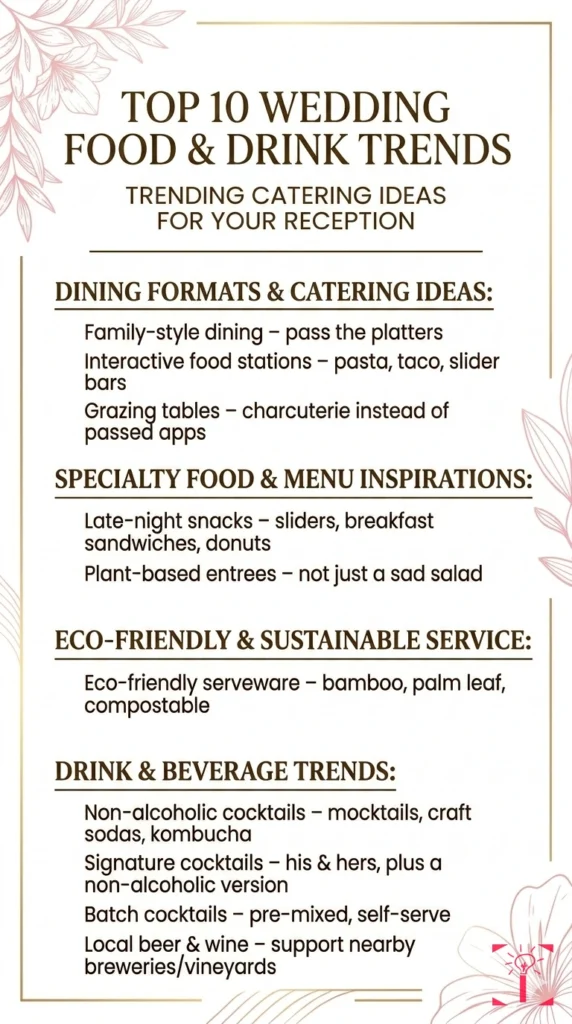
Quick Reference Card – Top 10 Wedding Food & Drink Trends Right Now
Save this list on pinterest or print it out.
Make Trends Work for You, Not the Other Way Around
Trends are inspiration, not rules. At the end of the night, when the flowers have wilted, and the dancing shoes are off and everyone is quietly making their way home, the thing they’ll be talking about in the car is the food.
The station they went back to twice, the cocktail they’re going to try to recreate at home, the late-night snack that appeared like a gift from the universe at exactly the right moment. Feed your people well, make them feel like you, and the rest of the night takes care of itself.